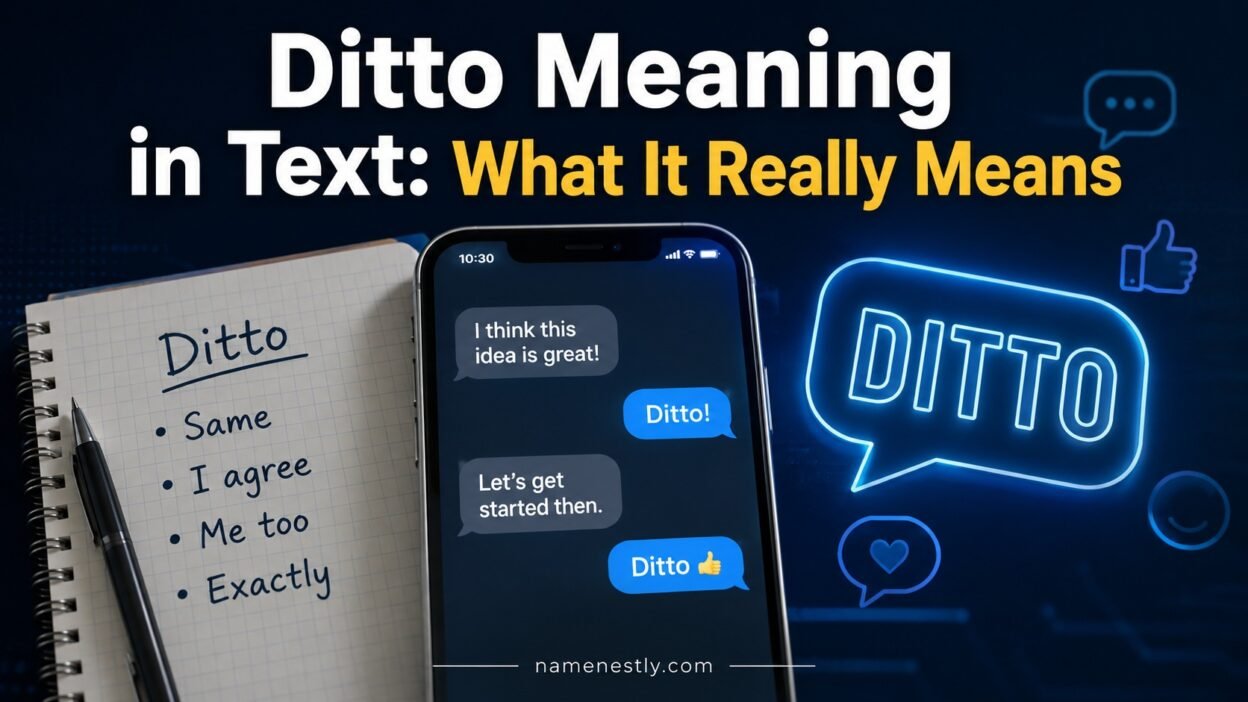
You’ve likely come across the word “ditto” in a text message and paused for a second. It feels simple. It looks harmless. Yet, it carries meaning that depends heavily on context. That’s exactly why people still use it today.
In a world where speed matters, nobody wants to repeat the same sentence again and again. So instead, they drop a quick “ditto” and move on. It saves time. It keeps conversations flowing. Still, if you use it wrong, it can sound lazy or even confusing.
This guide breaks everything down in a clear and practical way. You’ll learn what ditto means in text, how people use it, when it works, and when you should avoid it. By the end, you’ll know exactly how to use it like a natural speaker.
Quick Answer
Ditto in text means “the same as what was just said” or “me too.” People use it to agree with someone without repeating their exact words.
For example:
- Friend: “I’m tired today.”
- You: “Ditto.”
It’s quick. It’s simple. It works best in casual conversations.
Comparison Overview
| Phrase | Meaning | Tone | Best Use Case |
| Ditto | Same as above | Casual | Repeating statements |
| Me too | Same feeling | Neutral | Emotional agreement |
| Same | Exact same situation | Very casual | Quick reactions |
| Likewise | Same idea, more formal | Polished | Professional tone |
| Agreed | You support the statement | Neutral | Discussions or debates |
Each option fits a slightly different situation. Choosing the right one depends on tone and context.
What Does Ditto Mean in Text
At its core, ditto means “the same as what was said before.” It replaces repetition. Instead of typing the same sentence again, you use one word.
Think of it like a shortcut. You’re telling the other person, “I feel the same” or “I agree with that.”
It works in three main ways:
- Agreement
- Shared feelings
- Repetition avoidance
That’s why it shows up often in texting, social media, and quick chats.
The Origin of Ditto
The word ditto comes from the Italian word “detto,” which means “said.” Over time, people used it in writing to avoid repeating information.
In old bookkeeping systems, clerks would use ditto marks (″) to repeat values in lists. Instead of writing the same word again, they just marked it.
Fast forward to today, and the meaning stayed the same. Only the platform changed. Now, instead of paper, people use it in digital conversations.
How Ditto Is Used in Text Messages
People use ditto in text mainly to respond quickly. It keeps conversations smooth and natural.
Here are common ways it appears:
Agreement
- “That movie was amazing.”
- “Ditto.”
Shared Feelings
- “I’m exhausted after work.”
- “Ditto.”
Avoiding Repetition
- “I’ll bring snacks and drinks.”
- “Ditto.”
Instead of typing everything again, you just mirror the message.
Real-Life Examples of Ditto in Text
Seeing real examples makes things clearer.
Casual Chat
- “I love pizza.”
- “Ditto.”
Friend Conversation
- “That exam was tough.”
- “Ditto, I barely passed.”
Workplace Chat
- “Let’s keep the design simple.”
- “Ditto.”
Social Media
- Comment: “Best show ever.”
- Reply: “Ditto!”
Each example shows how flexible the word can be.
Different Meanings Based on Context
Even though ditto seems simple, its tone changes depending on the situation.
Friendly Agreement
It feels warm and relatable.
- “I miss those days.”
- “Ditto.”
Romantic Tone
It can sound emotional or meaningful.
- “I love you.”
- “Ditto.”
Neutral Response
It works as a basic acknowledgment.
- “Let’s meet at 5.”
- “Ditto.”
Risk of Sounding Lazy
Sometimes it feels low-effort.
- Long message
- Reply: “Ditto”
That’s why context matters.
Is Ditto Formal or Informal
Ditto is mostly informal. You’ll see it in casual conversations, not in serious writing.
Acceptable Situations
- Text messages
- Social media
- Friendly emails
Avoid in Formal Settings
- Business reports
- Academic writing
- Professional presentations
If clarity matters, skip ditto and write the full response.
When Should You Use Ditto
You should use ditto when it improves clarity and saves time.
Best Situations
- Quick chats with friends
- Repeating simple ideas
- Showing agreement casually
Why It Works
- Saves time
- Keeps messages short
- Feels natural in conversation
Used correctly, it feels smooth and effortless.
When NOT to Use Ditto
Sometimes, using ditto can backfire.
Avoid It When
- The message is unclear
- The topic is serious
- You’re in a formal setting
- The original statement is long
For example:
- “Here are five important project steps…”
- Reply: “Ditto”
That feels careless. It’s better to respond clearly.
Alternatives to Ditto in Texting
Sometimes, you need variety. Using ditto too often sounds repetitive.
Better Alternatives
- Me too – for emotions
- Same here – casual agreement
- Agreed – more confident tone
- Likewise – slightly formal
- Exactly – strong agreement
Each option gives you a slightly different tone.
Ditto vs Same vs Me Too
| Feature | Ditto | Same | Me Too |
| Tone | Casual | Very casual | Neutral |
| Emotion Level | Medium | Low | High |
| Clarity | Depends | Clear | Very clear |
| Best Use | Repetition | Quick reply | Shared feeling |
This comparison helps you choose the right phrase quickly.
Main Differences Between Ditto Meaning in Text
The main difference comes down to how and why you use it.
- Ditto replaces repetition
- Me too expresses emotion clearly
- Same feels more modern and casual
- Likewise sounds polished and formal
Another key difference is clarity. Ditto relies on previous context. Without it, the meaning breaks.
Common Mistakes People Make with Ditto
Many people misuse ditto in text without realizing it.
Common Errors
- Using it without context
- Overusing it in conversations
- Using it in emotional moments
- Replying with ditto to complex messages
Example of a Mistake
- “I’m going through a tough time.”
- “Ditto.”
That response feels cold. A better reply would show empathy.
Tone and Impression of Using Ditto
The word you choose shapes how people see you.
Positive Impression
- Efficient
- Easygoing
- Friendly
Negative Impression
- Lazy
- Uninterested
- Dismissive
The difference depends on how often and where you use it.
How Ditto Is Used on Social Media
Social media thrives on quick reactions. That’s where ditto fits perfectly.
Common Uses
- Comments under posts
- Quick replies
- Meme reactions
Example:
- Post: “This song is underrated.”
- Comment: “Ditto!”
It’s fast. It matches the pace of online conversations.
Emoji and Ditto Combinations
Adding emojis changes the tone instantly.
Popular Combinations
- Ditto 😂 – shared humor
- Ditto ❤️ – emotional connection
- Ditto 👍 – agreement
- Ditto 😩 – shared frustration
Emojis add emotion that words alone might miss.
Should You Still Use Ditto in 2026
Yes, but with balance.
Ditto is not outdated. People still use it because it’s efficient. However, newer phrases like “same” are more common among younger users.
When It Feels Natural
- Casual chats
- Short replies
- Friendly tone
When It Feels Forced
- Formal settings
- Serious conversations
- Long discussions
Use it wisely, and it still works perfectly.
Quick Cheat Sheet for Ditto Meaning in Text
Use Ditto When
- You agree with someone
- The message is short
- The context is clear
Avoid Ditto When
- You need clarity
- The topic is serious
- The setting is formal
Best Tip
Match your tone with the conversation. That’s what makes communication feel natural.
Advanced Usage of Ditto in Digital Conversations
As conversations evolve, people use ditto in text in more nuanced ways. It’s no longer just about repeating words. It often reflects tone, personality, and even relationship dynamics.
For example, in close friendships, a simple “ditto” can carry emotional weight. It signals understanding without needing long explanations. In fast-moving group chats, it keeps things efficient. Nobody wants to scroll through repeated messages.
However, in mixed groups, clarity becomes more important. If someone joins late, they might not understand what “ditto” refers to. That’s where overusing it creates confusion.
Key Insight
Ditto works best when everyone shares the same context. Without that, it loses meaning.
Read More: ISK Meaning in Text: What It Really Means in 2026 Guide
Psychological Impact of Using Ditto
Words influence perception. Even a small word like ditto shapes how others see you.
When you use it thoughtfully, it shows confidence. You don’t feel the need to over-explain. You respond quickly and naturally.
On the other hand, frequent use can signal disengagement. People might feel you’re not fully invested in the conversation.
How People Interpret Ditto
- Efficient and relaxed communicator
- Someone who agrees easily
- Or someone who avoids effort
That interpretation depends entirely on timing and frequency.
Case Study: Ditto in Real Conversations
Let’s break down how ditto meaning in text changes in real situations.
Scenario One: Friendly Chat
- Person A: “I’m craving burgers today.”
- Person B: “Ditto.”
Result: Natural and relatable. No issues.
Scenario Two: Emotional Situation
- Person A: “I’ve been feeling really stressed lately.”
- Person B: “Ditto.”
Result: Feels distant. Lacks empathy.
Scenario Three: Workplace Discussion
- Manager: “We need to improve communication and meet deadlines.”
- Employee: “Ditto.”
Result: Sounds vague. Doesn’t add value.
Lesson Learned
Use ditto when the message is simple. Avoid it when depth matters.
Cultural Relevance of Ditto
Language trends change over time. Yet, ditto has survived for decades. That says a lot about its usefulness.
In older generations, it feels familiar and practical. In younger groups, it still appears, though less frequently than words like “same.”
Why It Still Exists
- It’s short and efficient
- It avoids repetition
- It feels natural in conversation
Even with new slang, ditto holds its place because of its simplicity.
Ditto in Professional Communication
While ditto meaning in text leans casual, it still appears in semi-professional environments like team chats.
Where It Works
- Internal messaging tools
- Quick confirmations
- Informal team discussions
Where It Fails
- Client emails
- Reports
- Formal presentations
Better Approach
Instead of “ditto,” say:
- “I agree with this point.”
- “This aligns with my thoughts.”
That keeps communication clear and professional.
Practical Tips to Use Ditto Naturally
If you want to sound natural, follow these simple guidelines.
Do This
- Use ditto in short replies
- Match the tone of the conversation
- Keep it occasional
Avoid This
- Using it repeatedly in one chat
- Replying with ditto to long messages
- Using it in serious discussions
Quick Rule
If you can replace it with “me too” or “same,” you’re using it correctly.
FAQs:
What does ditto mean in slang
In slang, ditto means “same here” or “I agree.”
Is ditto rude
Not usually. It only feels rude when used in serious conversations.
Can ditto be used professionally
It’s better to avoid it in formal communication.
Is ditto outdated
No, but it’s less common than modern alternatives like “same.”
What’s the best alternative to ditto
“Me too” or “same here” works in most situations.
Conclusion:
The word ditto may look small, but it carries real power in conversation. It helps you respond quickly, avoid repetition, and keep things simple. Still, context is everything. Use it in the right moment, and it feels smooth and natural. Use it carelessly, and it can sound lazy or confusing.
The key is balance. Mix it with other phrases. Match your tone to the situation. When you do that, your communication feels more human, more engaging, and far more effective. If you want, I can now optimize this article further for featured snippets and ranking keywords to boost traffic.