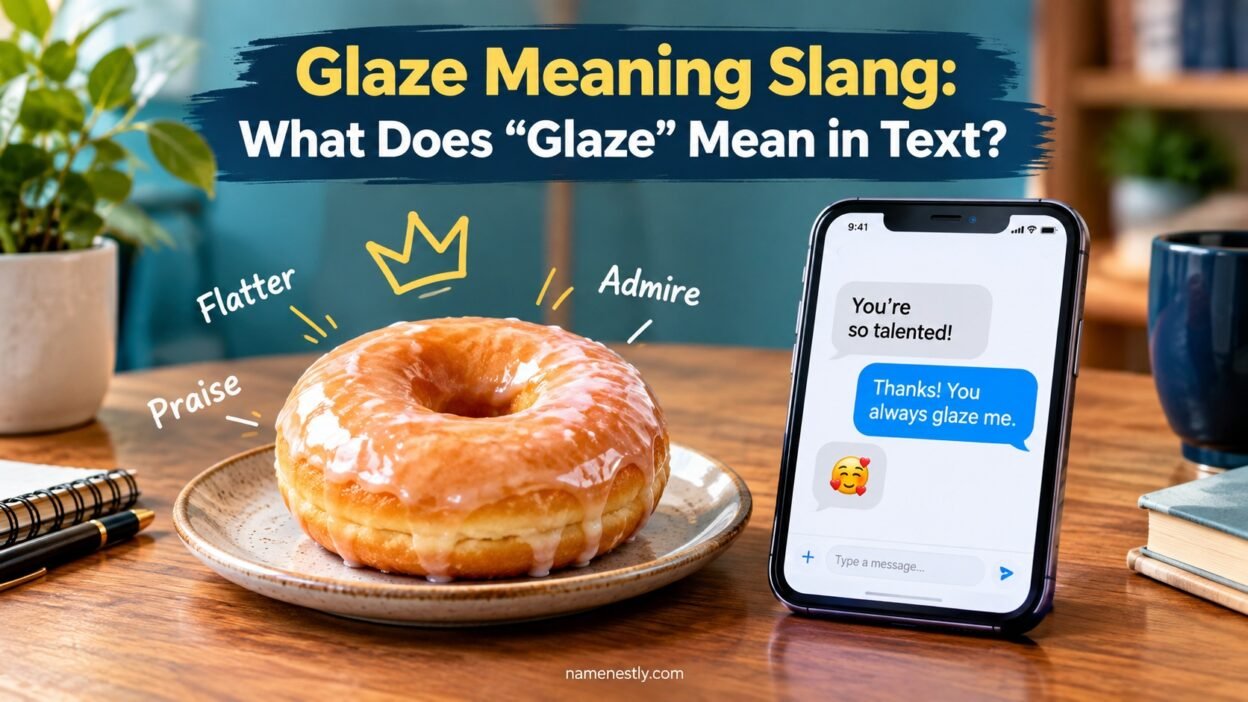
Internet slang changes quickly. A word that once described a food coating can suddenly become a popular way to call someone out online. Glaze is one of those words. Today, people commonly use it on TikTok, Instagram, YouTube, Discord, gaming communities, sports discussions, and group chats.
When someone says, “Stop glazing him,” they usually aren’t talking about food or pottery. They mean the person is praising, defending, or hyping someone excessively.
The word often carries a playful, sarcastic, or critical tone. However, its exact meaning depends on the conversation. A person can praise an athlete once without “glazing” them. The term usually appears when that praise becomes excessive, repetitive, exaggerated, or overly biased.
Quick Answer
Glaze in slang means excessive praise, admiration, or support toward someone. If someone says you’re “glazing” a person, they’re suggesting that you’re praising or defending that person far more than necessary.
For example:
“Bro, stop glazing that player. He had one good game.”
Here, glazing means giving the player unusually strong praise.
The word can also appear as:
- Glaze — excessive praise or admiration.
- Glazing — the act of excessively praising someone.
- Glazer — someone who frequently does this.
- Stop glazing — stop praising or defending someone so much.
- You’re glazing him — you’re showing excessive admiration for him.
The expression usually sounds informal. People often use it jokingly among friends, although it can also criticize someone seriously.
Comparison Overview
The slang meaning becomes easier to understand when you compare it with related expressions.
| Term | Meaning | Typical Tone |
| Glaze | Excessive praise or admiration | Mocking or playful |
| Glazing | The act of excessively praising someone | Casual |
| Glazer | Someone who constantly praises another person | Teasing or critical |
| Stop glazing | Stop overpraising someone | Usually mocking |
| Simping | Excessive devotion toward someone, often romantically | Critical or humorous |
| Hype | Strong excitement or promotion | Often positive |
| Flattery | Praise intended to please someone | Neutral or positive |
| Overpraise | More praise than something deserves | Neutral or critical |
The important distinction is excessiveness. Normal praise doesn’t automatically qualify as glazing.
Main Differences Between Glaze Meaning Slang
Glaze meaning slang focuses on excessive admiration rather than ordinary appreciation. Someone might genuinely enjoy a singer’s music, support an athlete, or admire a creator without glazing them.
The difference usually appears when the praise becomes extreme.
For example, saying:
“That was a great performance.”
is ordinary praise.
Saying:
“He’s the greatest human being alive and nobody comes close.”
after one decent performance could invite someone to say:
“Bro is glazing.”
The slang therefore works as a social reaction. It tells someone to dial back the praise.
Another important difference involves intent. A person may genuinely believe what they’re saying, while another person uses “glazing” because the praise seems excessive from the outside.
What Does “Glaze” Mean Online?
Online, glaze usually describes exaggerated admiration toward another person.
The person receiving the praise might be:
- A professional athlete
- A musician
- A movie star
- A YouTuber
- A TikTok creator
- A streamer
- A gamer
- A fictional character
- A friend
- A public figure
- A particular sports team
The slang doesn’t necessarily mean the praise is completely false. Instead, it suggests that the speaker overdoes it.
Imagine a basketball fan watching their favorite player score 20 points. They might say:
“He’s incredible tonight.”
That’s normal enthusiasm.
If they spend the next ten minutes explaining why every other player is terrible and their favorite player is unbeatable, someone might respond:
“You’re glazing him hard.”
That’s where the slang becomes useful.
What Does “Glazing” Mean?
Glazing means repeatedly praising, hyping, defending, or admiring someone to an excessive degree.
The term often appears as a verb:
- “Why are you glazing him?”
- “Everyone is glazing this player.”
- “Stop glazing that streamer.”
- “You’re glazing way too much.”
- “The comments are full of glazing.”
It can describe praise based on appearance, talent, achievements, personality, popularity, or almost anything else.
What Does “Glazer” Mean?
A glazer is someone who regularly engages in this behavior.
For example:
“He’s such a glazer. Every post turns into praise for that player.”
The word doesn’t necessarily describe a person’s entire personality. It often refers to a specific online habit.
Someone might call a person a “glazer” after noticing a pattern of constant support or exaggerated compliments.
Is Glaze a Compliment or an Insult?
Usually, glaze is not a straightforward compliment.
Most people use it to tease or criticize someone for giving excessive praise. Still, the tone matters enormously.
Among friends, the word might be harmless banter.
For example:
“You bought his jersey, watched every game, and defend every mistake. You’re glazing!”
The speaker may simply be joking.
In a heated online argument, however, the same phrase can sound more insulting:
“Stop glazing him and look at the actual statistics.”
Here, the speaker accuses the other person of allowing admiration to override objective judgment.
When Glazing Is Usually Harmless
Glazing often stays playful when:
- Friends use it jokingly.
- Everyone understands the exaggeration.
- Nobody takes the comment personally.
- The conversation involves harmless fandom.
- The phrase follows an obviously exaggerated compliment.
When Glazing Sounds More Critical
It becomes more negative when someone:
- Defends obvious mistakes.
- Ignores evidence.
- Repeats exaggerated praise.
- Attacks anyone who disagrees.
- Treats a favorite person as incapable of failure.
- Makes extreme claims without support.
Context determines the temperature of the word.
Glaze Meaning in Text Messages
Texting has helped slang spread because short phrases can communicate an entire attitude.
Someone might simply send:
“Stop glazing 💀”
That short message can mean:
“You’re praising this person way too much.”
Other common constructions include:
| Text Expression | Meaning |
| Stop glazing | Stop excessively praising someone |
| You’re glazing him | You’re praising him too much |
| Bro is glazing | That person is excessively praising someone |
| Certified glazer | Someone known for excessive praise |
| That’s crazy glaze | The praise seems unusually excessive |
| You’re glazing too hard | Your admiration has become extreme |
| Professional glazer | A humorous exaggeration for a frequent glazer |
These expressions don’t always carry the same intensity. Friends may throw them around casually without genuinely criticizing one another.
Glaze Meaning on TikTok and Social Media
Social media provides the perfect environment for this slang because users constantly react to public figures.
A celebrity posts a photograph. Someone comments:
“Nobody has ever looked this good.”
Another person might reply:
“The glazing is insane.”
The second person isn’t necessarily saying the celebrity looks bad. They’re criticizing the extreme level of praise.
TikTok comments especially favor short expressions. A single word like “glazing” can replace a much longer criticism.
The term can also appear under:
- Sports clips
- Celebrity interviews
- Gaming highlights
- Viral videos
- Music performances
- Movie scenes
- Influencer content
- Fan edits
Why Social Media Encourages Glazing
Online communities often form strong fan groups. Once people identify with a favorite celebrity, athlete, creator, or team, emotional reactions can become intense.
Algorithms also reward engagement. Dramatic praise can attract replies, likes, and arguments. That environment naturally creates more opportunities for people to accuse others of “glazing.”
Glaze Meaning in Gaming
Gaming communities use glazing when players excessively praise a gamer, streamer, professional player, or character.
Suppose a streamer wins one difficult match. A viewer comments:
“Nobody plays this game better than him.”
Another viewer might answer:
“Bro is glazing.”
The response doesn’t necessarily deny the player’s skill. It challenges the degree of the compliment.
Gaming discussions often involve strong opinions. Players compare skill levels, rankings, strategies, equipment, and tournament performances. Because these debates become competitive, “glazing” works as a quick way to accuse someone of being overly biased.
Glaze Meaning in Sports
Sports might be one of the clearest environments for understanding this slang.
Fans naturally praise their favorite athletes. However, debates can become exaggerated quickly.
For example:
“He had one amazing game. You guys are glazing him already.”
That statement suggests the athlete deserves credit but not the enormous amount of praise being given.
Sports fans may use the term when someone:
- Calls an athlete the greatest after one performance.
- Excuses repeated mistakes.
- Dismisses every criticism.
- Compares a young player to a legendary athlete too quickly.
- Praises a player despite weak statistics.
- Treats every ordinary play as extraordinary.
Case Study: One Great Performance
Imagine an athlete scores 35 points in one game.
A reasonable reaction would be:
“He played extremely well tonight.”
A glazing reaction might sound like:
“He’s already better than every legend who ever played.”
The second statement makes a much larger claim from limited evidence. Someone calling it “glazing” is essentially saying, “You’re taking the praise too far.”
Examples of Glaze Used in Slang
Examples make the difference easier to spot.
Example 1: Celebrity Praise
Alex: “She’s literally the most beautiful person alive.”
Sam: “Bro, stop glazing.”
Here, Sam thinks Alex’s compliment has become exaggerated.
Example 2: Sports Discussion
Alex: “He missed three easy shots, but he’s still perfect.”
Sam: “That’s some serious glazing.”
The phrase criticizes Alex for ignoring obvious weaknesses.
Example 3: Gaming
Alex: “Nobody can beat this streamer. He’s on another level.”
Sam: “You’re glazing him again.”
The response suggests that Alex consistently overpraises the streamer.
Example 4: Social Media
Comment: “This creator has never made a bad video.”
Reply: “The glazing is crazy.”
The reply challenges an absolute claim.
Example 5: Group Chat
Mike: “That song is the greatest track ever made.”
Josh: “You listened to it twice. Relax with the glazing.”
This example shows the playful side of the slang.
Glaze vs. Normal Compliment
Not every positive statement counts as glazing. That’s an important distinction.
| Normal Compliment | Glazing |
| “That was a great performance.” | “Nobody has ever performed better.” |
| “She’s talented.” | “She’s better than every artist alive.” |
| “He played well today.” | “He’s completely unbeatable.” |
| “That’s a good song.” | “This is the greatest song ever created.” |
| “He’s funny.” | “Nobody on Earth is funnier.” |
The line isn’t always fixed. Glazing depends partly on context and perception.
A compliment can become “glazing” when it feels disproportionate to the evidence.
Read More: Snow Bunny Meaning Slang: What Does Snow Bunny Mean?
Why Do People Say “Stop Glazing”?
“Stop glazing” is probably one of the most recognizable expressions built around this slang.
It essentially means:
“Stop praising this person so excessively.”
People may use it after hearing several exaggerated compliments in a row.
For example:
“He’s the best player, the smartest player, and nobody understands basketball like him.”
Someone might respond:
“Bro, stop glazing.”
The phrase can also challenge biased defense.
Suppose an athlete makes an obvious mistake. A fan keeps creating excuses for the mistake. Another person might say:
“Stop glazing and admit he played badly.”
Here, “glazing” describes excessive defense rather than simple praise.
Glaze, Glazing, and Glazer: What’s the Difference?
These three forms come from the same slang idea, but they function differently.
| Word | Grammatical Role | Meaning |
| Glaze | Noun/verb | Excessive praise or the act of praising excessively |
| Glazing | Verb/noun | Excessively praising someone |
| Glazer | Noun | A person who frequently does it |
Consider this example:
“That comment is pure glaze.”
Here, glaze describes the excessive praise.
“Why are you glazing him?”
Here, glazing describes the action.
“He’s a professional glazer.”
Here, glazer describes the person.
The forms differ grammatically, yet they share the same basic idea.
Is Glaze the Same as Simping?
Glazing and simping overlap, but they aren’t exact synonyms.
Simping often describes excessive attention, devotion, or admiration toward someone. In many contexts, it carries romantic or attraction-related implications.
Glazing is broader.
You can glaze:
- An athlete
- A gamer
- A singer
- A fictional character
- A streamer
- A friend
- A celebrity
Romantic interest isn’t necessary.
For example, someone can say:
“You’re glazing that basketball player.”
Nothing romantic needs to exist between the fan and athlete.
That’s one reason glazing has become useful across many online communities.
Is Glaze the Same as Dickriding?
The terms can overlap in internet conversations, especially when someone aggressively supports another person.
However, dickriding is much more vulgar and explicit slang. It can describe excessive loyalty, praise, defense, or agreement.
“Glazing” usually sounds less explicit. People often use it casually in comments and group chats.
Both expressions can accuse someone of being excessively supportive. Their tone and level of vulgarity differ considerably.
Where Did the Slang “Glaze” Come From?
The word glaze has existed in English for centuries with completely unrelated literal meanings. Food can have a glaze. Pottery can receive a glaze. Those meanings remain standard today.
The internet slang developed separately.
Modern online usage became increasingly visible through social-media and meme communities, where people began using glazing to describe excessive praise or admiration. The expression then spread across platforms and communities.
Because internet slang develops organically, its exact origin isn’t always tied to one individual or one clearly documented event. Online communities often modify existing words, jokes, and expressions until they develop new meanings.
That matters when discussing slang history. A viral post may popularize a term without necessarily being the point where the expression was first created.
FAQs:
What does glaze mean in slang?
Glaze means excessive praise, admiration, or support toward someone. People often use it when someone’s compliments seem exaggerated or overly enthusiastic.
What does glazing someone mean?
Glazing someone means praising, hyping, or defending them excessively. The expression commonly appears in sports, gaming, celebrity discussions, and social-media comments.
What does “stop glazing” mean?
“Stop glazing” means “stop praising or defending that person so much.” Friends often use the phrase jokingly, while online arguments may use it as genuine criticism.
What is a glazer?
A glazer is someone who repeatedly gives excessive praise or support to another person. The term often describes fans who seem unusually biased toward an athlete, celebrity, creator, or gamer.
Is glazing the same as simping?
Not exactly. Glazing is broader and usually focuses on excessive praise, while simping often involves excessive devotion or attraction toward someone. The two terms can overlap in some online conversations.
Conclusion:
Glaze meaning slang is fairly simple once you understand the context. Online, glaze usually refers to excessive praise, admiration, hype, or defense of another person. Glazing describes the action, while a glazer describes the person doing it.
The term appears frequently across TikTok, social media, gaming, sports, entertainment, and group chats. People often use it humorously when someone’s admiration becomes exaggerated.