Have you ever come across MDNI in someone’s social media bio, post, or online conversation? This abbreviation can look confusing if you’ve never encountered it before. However, its meaning becomes clear once you understand the context.
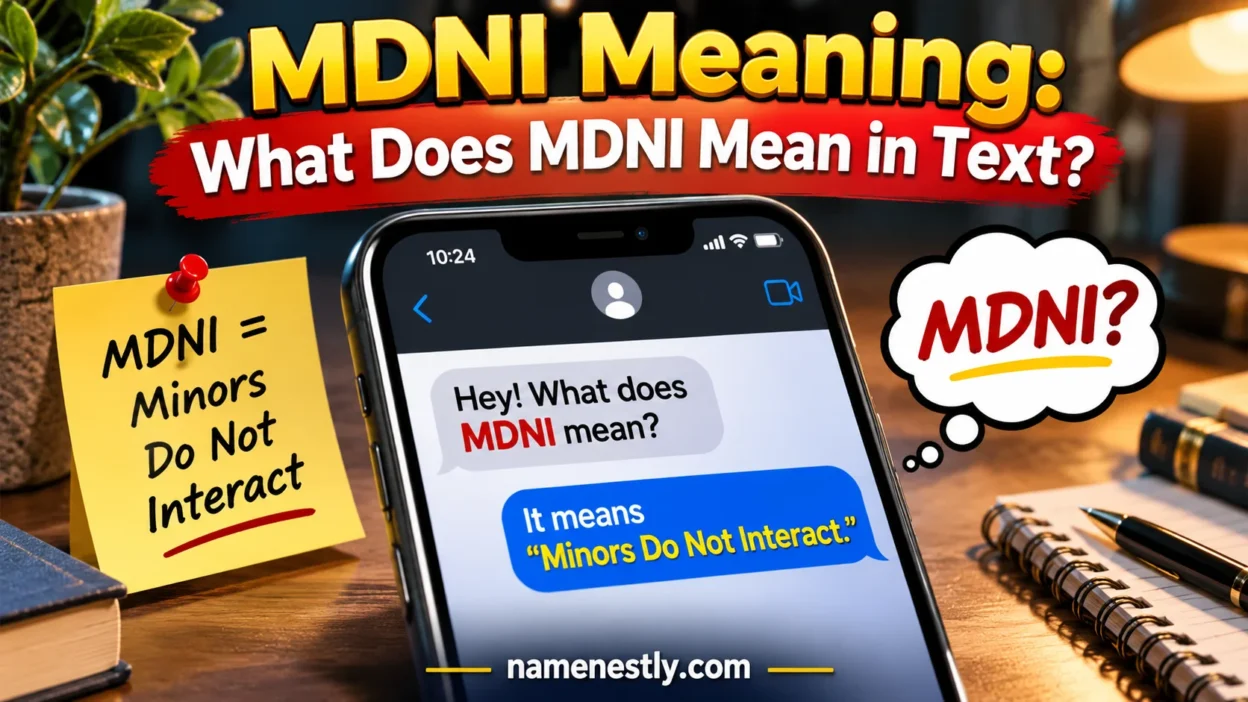
MDNI stands for Minors Do Not Interact. People commonly use this abbreviation to establish age-related boundaries around online content. It tells anyone under 18 that the creator doesn’t want them interacting with their posts, accounts, or communities.
Understanding this abbreviation matters because online spaces contain different types of content and audiences. Knowing what MDNI communicates helps you recognize age restrictions and respect the boundaries creators establish.
Quick Answer
MDNI means Minors Do Not Interact. It’s an internet abbreviation that asks people under 18 to avoid interacting with a particular account, creator, post, or online community. People typically use it around mature, adult-oriented, or age-restricted content to establish clear audience boundaries.
Comparison Overview
MDNI belongs to a broader group of internet abbreviations that communicate content restrictions and personal boundaries. Although these expressions sometimes appear together, each one serves a different purpose.
| Abbreviation | Full Form | Meaning |
| MDNI | Minors Do Not Interact | People under 18 should not interact. |
| DNI | Do Not Interact | A general request for certain people to avoid interaction. |
| 18+ | 18 and Older | Content intended for adults. |
| NSFW | Not Safe For Work | Content that may be inappropriate for professional or public settings. |
| MINORS DNI | Minors Do Not Interact | An explicit request for minors to stay away. |
| MDNI 18+ | Minors Do Not Interact, 18+ | An adult-only audience boundary. |
The biggest difference is that MDNI specifically addresses minors, while DNI can apply to anyone or any group.
For example, someone might write MDNI in a profile to discourage underage users from following or messaging them. Another person might use DNI to discourage unwanted interactions from particular individuals.
What Does MDNI Mean?
MDNI stands for Minors Do Not Interact. It’s an online abbreviation that communicates an age-related boundary between content creators and their audiences.
The expression combines three parts:
- M: Minors
- D: Do
- NI: Not Interact
In everyday online communication, minors generally refers to people younger than 18. The abbreviation asks those individuals not to engage with the account or content displaying the warning.
However, MDNI isn’t simply another internet slang expression. It communicates a specific expectation about who should access or interact with certain online spaces.
Why Does MDNI Refer to People Under 18?
The term uses the word minors because many countries treat people under 18 as children for important legal purposes. Although the legal age of adulthood varies by jurisdiction, 18 is a common threshold in online age restrictions.
Content creators sometimes discuss subjects intended exclusively for adults. These topics might include sexual themes, mature fictional material, explicit discussions, or other sensitive subjects.
An MDNI notice helps creators communicate that younger audiences aren’t welcome in those spaces.
Is MDNI an Internet Slang Term?
Yes. MDNI is internet slang because people use it as shorthand in digital communication.
Unlike expressions such as LOL or BRB, however, MDNI communicates a boundary rather than an emotion or conversation response.
You might encounter it in:
- Social media biographies.
- Online community descriptions.
- Content warnings.
- Posts containing mature themes.
- Creator profiles.
- Private online groups.
Its meaning generally remains consistent across these different settings.
What Does MDNI Mean in Text Messages?
When someone uses MDNI in a text message, they usually want to communicate an age restriction. The abbreviation can appear in direct messages, group chats, or conversations about online content.
For example, imagine someone shares a link to an adult-oriented discussion group. They might add MDNI to explain that younger users shouldn’t join.
Here are some examples:
Example 1:
Person A: What’s that account about?
Person B: It’s an adult discussion page. MDNI.
Meaning: The account is intended for adults rather than minors.
Example 2:
Person A: Can my younger brother follow your page?
Person B: Sorry, MDNI.
Meaning: The person doesn’t want minors following or interacting with their page.
Example 3:
Person A: Why does your profile say MDNI?
Person B: My content is intended for adults only.
Meaning: The creator uses MDNI to establish an age-related audience boundary.
How Should You Respond When Someone Says MDNI?
Your response depends on the situation and whether the boundary applies to you.
If you’re under 18, the appropriate response is to respect the request and avoid interacting with that content.
If you’re an adult and simply want clarification, you can ask politely.
Some natural responses include:
- “Got it, thanks for clarifying.”
- “I understand the age restriction.”
- “No problem. I’ll respect your boundaries.”
- “Does MDNI mean your content is adults-only?”
You don’t need to argue about the abbreviation. Its purpose is to communicate a straightforward audience restriction.
What Does MDNI Mean on Social Media?
Social media platforms provide different ways for creators to communicate with their audiences. MDNI is one abbreviation people use to make age-related expectations clear.
You’ll commonly find it in profiles, captions, hashtags, and community descriptions.
MDNI Meaning on TikTok
On TikTok, MDNI may appear in creator biographies, captions, or discussions about mature content.
A creator might include the abbreviation to tell younger viewers that their account isn’t intended for them.
For example:
“18+ content | MDNI | Adult audience only”
This wording communicates that the creator expects only adults to interact with the account.
However, an MDNI label doesn’t automatically prevent minors from viewing or following a profile. It communicates a boundary rather than providing technical age verification.
MDNI Meaning on Instagram
Instagram users sometimes include MDNI in their biographies or captions when discussing mature subjects.
For example, an account might display:
“Adult themes | MDNI | Respect boundaries”
This helps communicate the intended audience before someone engages with the account.
People may also use MDNI when sharing artwork, fictional writing, or discussions containing mature themes.
MDNI Meaning on Tumblr
Tumblr has a long history of fandom communities, creative writing, artwork, and interest-based discussions.
Within these communities, MDNI can appear alongside content warnings and audience restrictions.
For example, a writer might label a mature fictional post with an MDNI warning. This communicates that younger readers shouldn’t interact with that material.
The abbreviation can also appear in profile descriptions or pinned posts.
MDNI Meaning on X (Twitter)
On X, users may include MDNI in their bios, pinned posts, or content descriptions.
For example:
“Adult creator | 18+ | MDNI”
This tells visitors that the account targets adults and discourages minors from engaging.
The abbreviation may also appear in discussions about online boundaries and creator preferences.
Why Do People Use MDNI?
People use MDNI for several practical reasons. Most importantly, it helps creators communicate who should and shouldn’t interact with their content.
Here are the main reasons behind its popularity.
To Establish Age-Related Boundaries
Online creators don’t always want every type of audience engaging with their work.
Someone who publishes mature discussions may prefer to interact exclusively with adults. MDNI provides a short way to communicate that expectation.
Instead of explaining the restriction repeatedly, creators can display the abbreviation in their profiles.
To Discourage Minors From Viewing Mature Content
Some online material contains themes that aren’t suitable for younger audiences.
These might include:
- Adult-oriented discussions.
- Sexual themes.
- Explicit fictional writing.
- Mature artwork.
- Discussions involving sensitive adult subjects.
MDNI signals that minors should avoid interacting with this material.
However, the label doesn’t replace platform age restrictions or content moderation.
To Communicate Audience Expectations
Clear expectations can prevent misunderstandings between creators and visitors.
For example, an adult creator might receive messages from younger users who don’t realize the account contains mature material.
Adding MDNI to a profile makes the intended audience easier to identify.
To Maintain Online Boundaries
Online communities work better when members understand their boundaries.
MDNI helps creators communicate an important limit before interactions begin. It can also reduce unwanted messages and discourage inappropriate engagement.
MDNI Meaning in Different Online Contexts
Although MDNI has a consistent basic meaning, its placement can change how people interpret the warning.
Understanding these differences makes the abbreviation easier to recognize.
MDNI in Social Media Bios
A social media bio provides a quick introduction to an account.
When someone places MDNI there, they’re communicating an ongoing audience restriction rather than warning about just one post.
Example:
“Artist | Adult themes | 18+ | MDNI”
This tells visitors that the account targets adults.
MDNI in Posts and Captions
Sometimes creators use MDNI directly in individual posts.
This approach makes sense when a particular publication contains mature themes, even if the rest of the account contains general-audience material.
Example:
“New mature artwork today. MDNI.”
Here, the warning applies to the specific content being shared.
MDNI in Online Communities
Private groups, fandom spaces, and discussion communities may display MDNI in their descriptions.
The abbreviation helps establish an audience expectation before someone joins.
Community moderators might also include additional rules covering age requirements, acceptable behavior, and content restrictions.
MDNI in Private Messages
Someone might use MDNI when sharing an adult-oriented profile or discussing a restricted online space.
For instance:
“Please don’t send this account to anyone under 18. MDNI.”
In this context, the abbreviation reinforces the age boundary surrounding the shared material.
Read More: ISG Meaning in Text: What Does ISG Mean in Texting?
MDNI Examples in Realistic Conversations
The easiest way to understand MDNI is to see how people use it in everyday online situations.
Here are several practical examples.
Example 1: MDNI in a Social Media Bio
Profile:
“Digital artist | Mature themes | MDNI | 18+”
Meaning: The artist creates content for adults and asks minors not to interact.
Example 2: MDNI in a Content Warning
Post:
“New fictional story contains mature themes. MDNI.”
Meaning: The writer warns younger audiences against interacting with the post.
Example 3: MDNI in an Online Community
Group description:
“Adult discussion community. MDNI. Members must follow the group’s age requirements.”
Meaning: The group intends to restrict participation to adults.
Example 4: Someone Explaining an MDNI Boundary
Conversation:
Person A: Why does your account have MDNI in the bio?
Person B: Because I share mature content and want an adult audience.
Meaning: The account owner uses MDNI to communicate an audience restriction.
Example 5: MDNI in a Direct Message
Conversation:
Person A: Can I invite my younger cousin?
Person B: Please don’t. MDNI means minors shouldn’t interact.
Meaning: The person doesn’t want underage users joining the discussion.
These examples demonstrate that MDNI usually communicates the same basic message across different platforms.
Is MDNI the Same as DNI?
No. MDNI and DNI are related abbreviations, but they don’t communicate exactly the same thing.
DNI means Do Not Interact. It’s a general expression people use when they don’t want particular individuals or groups engaging with their content.
MDNI specifically identifies minors as the group that shouldn’t interact.
For example, someone might write DNI to discourage harassment, unwanted messages, or interactions from particular groups.
Another creator might write MDNI because their content targets adults.
Key Differences Between MDNI and DNI
| Feature | MDNI | DNI |
| Full form | Minors Do Not Interact | Do Not Interact |
| Main audience | People under 18 | Any specified person or group |
| Primary purpose | Establish age boundaries | Establish interaction boundaries |
| Common placement | Adult-oriented profiles and posts | Bios, posts, and community rules |
| Age-related | Yes | Not necessarily |
| Scope | Specifically targets minors | Depends on the creator’s instructions |
The important distinction is simple: MDNI focuses on age, while DNI can cover many different reasons for avoiding interaction.
Main Differences Between MDNI and Other Internet Abbreviations
MDNI often appears beside other internet expressions. However, these terms don’t all mean the same thing.
Understanding their differences helps you recognize content warnings and audience restrictions.
MDNI vs. 18+
Both expressions can communicate adult-only expectations, but they serve slightly different purposes.
- MDNI: Specifically asks minors not to interact.
- 18+: Indicates that content or an account is intended for adults aged 18 and older.
For example, a creator might write “18+ MDNI” to communicate both the intended age group and the interaction boundary.
MDNI vs. NSFW
NSFW stands for Not Safe For Work.
People use it to warn others that content may contain material unsuitable for workplaces or public settings.
NSFW doesn’t automatically mean that content is restricted to adults. For example, a harmless joke containing strong language might receive an NSFW label.
MDNI, on the other hand, specifically communicates an age-related restriction.
MDNI vs. DNI
DNI is a broader interaction boundary.
Someone might use DNI to discourage certain groups from contacting them. MDNI specifically addresses minors.
MDNI vs. MINORS DNI
These expressions communicate essentially the same message.
- MDNI is a shortened abbreviation.
- MINORS DNI spells out the targeted group more clearly.
Both ask people under 18 to avoid interacting.
Frequently Asked Questions
What Does MDNI Stand For?
MDNI stands for Minors Do Not Interact. People use it online to ask anyone under 18 to avoid engaging with particular accounts, posts, or communities.
What Does MDNI Mean on TikTok?
On TikTok, MDNI generally means Minors Do Not Interact. Creators may include it in their bios or captions to communicate that their content targets adults.
Does MDNI Mean Minors Cannot Interact?
Yes. MDNI communicates that people under 18 shouldn’t interact with the account or content displaying the abbreviation. It’s generally an age-related boundary rather than an automatic technical restriction.
Is MDNI the Same as DNI?
No. DNI means Do Not Interact and can target any specified person or group. MDNI specifically asks minors to avoid interacting.
Does MDNI Mean 18+?
Not exactly. MDNI means Minors Do Not Interact, while 18+ indicates an adult audience or age requirement. People frequently use both expressions together.
What Does MDNI Mean on Instagram?
On Instagram, MDNI usually appears in bios, captions, or content descriptions. It tells visitors that the creator doesn’t want minors interacting with their account or posts.
Conclusion:
Understanding MDNI meaning is simple once you know what the abbreviation represents. It stands for Minors Do Not Interact and communicates that people under 18 should avoid engaging with particular online content or accounts.
You’ll commonly encounter MDNI on TikTok, Instagram, Tumblr, X, and other online communities. Creators use it to establish age-related boundaries and communicate their intended audience.