You’ve probably seen someone say “PM me” in a comment or message and paused for a second. What does it actually mean? Is it about time, work, or something private? That tiny abbreviation carries more weight than it looks.
In today’s fast-moving digital conversations, short forms rule. People type quickly. They skip full words. As a result, meanings depend heavily on context. PM meaning in text is a perfect example of that confusion. It can mean one thing in a chat and something completely different in a meeting.
Understanding it isn’t hard once you break it down. Stick around, and you’ll learn exactly what PM means, when to use it, and how to avoid embarrassing mix-ups.
Quick Answer: PM Meaning in Text
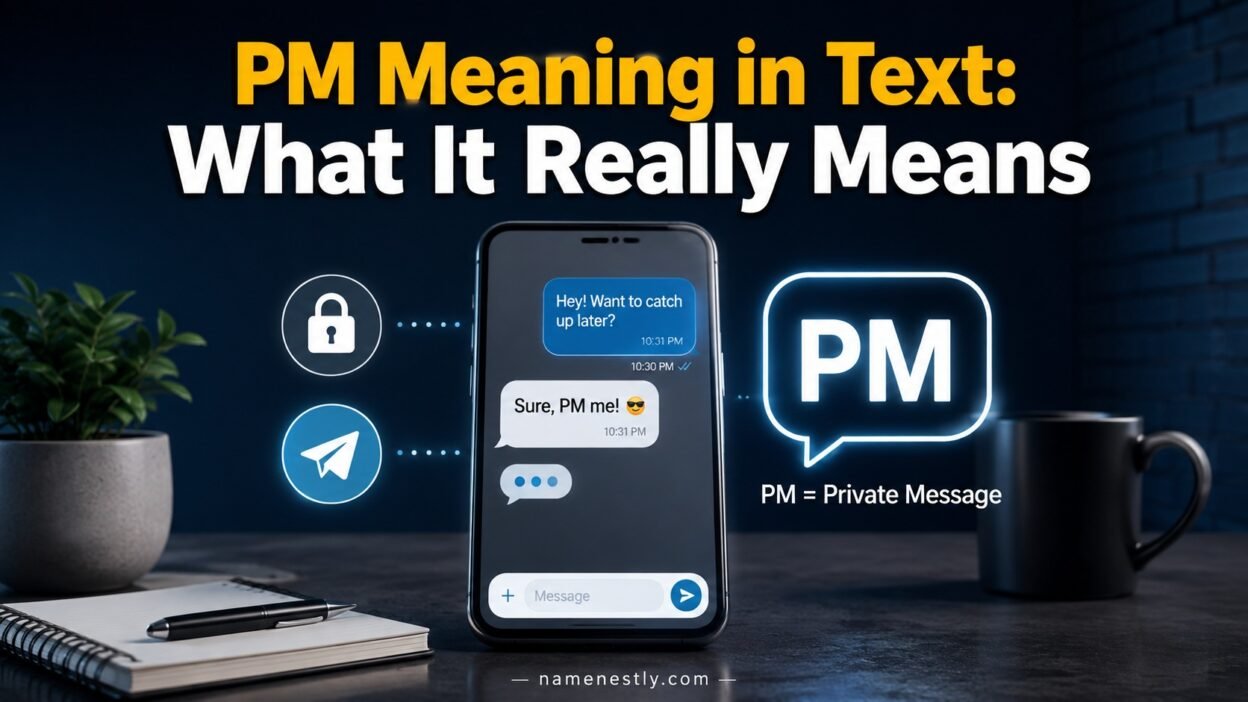
PM in text usually means “Private Message.”
People use it when they want to move a conversation from public to private. For example:
- “PM me for details”
- “I’ll PM you the link”
However, that’s not the only meaning. In different contexts, PM can also stand for:
- Post Meridiem (time after noon)
- Project Manager
- Prime Minister
Context decides everything.
Comparison Overview
| Term | Full Form | Common Use | Context |
| PM | Private Message | Social media, chats | Informal communication |
| PM | Post Meridiem | Time (after 12 noon) | Formal and casual |
| PM | Project Manager | Workplace | Professional setting |
| PM | Prime Minister | Politics | News and formal talk |
This table shows why confusion happens. One abbreviation. Multiple meanings. Different situations.
What Does PM Mean in Text?
At its core, PM meaning in text refers to Private Message. It’s a way to tell someone, “Let’s talk privately.”
Instead of continuing a conversation in public comments, users shift to direct communication. This helps keep things personal, secure, or more detailed.
Why People Use PM
- To share private information
- To avoid cluttering public threads
- To discuss business or deals
- To maintain privacy
Think of it like stepping aside during a conversation to speak quietly.
Other Meanings of PM in Text (Context Matters)
Although “Private Message” dominates online chats, ignoring other meanings can lead to confusion.
Post Meridiem (Time)
Used to describe time after noon.
- Example: “The meeting is at 6 PM”
Project Manager
Common in workplace communication.
- Example: “The PM will review the report”
Prime Minister
Used in political or news discussions.
- Example: “The PM gave a speech today”
Key Insight
Same letters. Different meanings. Context acts like a compass.
How to Tell What PM Means in a Message
You don’t need to guess blindly. A few clues make it easy.
Look at the Platform
- Social media → likely Private Message
- Office tools → likely Project Manager
Check the Sentence
- “PM me” → private message
- “7 PM” → time
Notice the Tone
- Casual tone → messaging
- Formal tone → professional meaning
Example Breakdown
- “PM me your number” → Private Message
- “Call me at 8 PM” → Time
- “Ask the PM about approval” → Project Manager
Once you train your eye, it becomes second nature.
PM Meaning in Social Media (Instagram, Facebook, TikTok)
Social platforms rely heavily on short forms. PM meaning in text here almost always means Private Message.
Common Uses
- “PM me for price”
- “Send me a PM”
- “Check your PM”
These phrases appear everywhere. Especially in:
- Marketplace posts
- Business pages
- Influencer comments
Why People Prefer PM on Social Media
- Keeps conversations private
- Helps close deals quietly
- Avoids spam in comment sections
It’s like moving from a crowded room into a quiet corner.
PM Meaning in Texting and Chat Apps
In apps like WhatsApp or Messenger, the meaning stays similar but feels more personal.
Typical Examples
- “I’ll PM you the address”
- “PM me when you’re free”
Here, the tone becomes friendly and direct. People use it naturally without thinking much.
Difference in Tone
- Social media → semi-public
- Chat apps → personal
Even though the meaning stays the same, the vibe shifts.
PM vs DM: What’s the Difference?
This is one of the most searched questions related to PM meaning in text.
Quick Comparison
| Feature | PM | DM |
| Meaning | Private Message | Direct Message |
| Usage | Older platforms | Modern platforms |
| Popularity | Declining slightly | Growing fast |
| Platforms | Facebook, forums | Instagram, Twitter |
Simple Explanation
- PM came first
- DM became trendy later
Today, many people use both interchangeably. However, younger users lean toward DM.
Main Differences Between PM Meaning in Text
Understanding the differences helps you use the term correctly without confusion.
Private vs Public Context
PM focuses on private communication. It moves conversations away from public view.
Platform Preference
Some platforms favor PM. Others prefer DM. The difference is cultural more than technical.
Tone and Formality
PM feels slightly older. DM sounds modern and casual.
Usage Style
- PM → “PM me details”
- DM → “DM me details”
Both mean the same thing. Only the wording changes.
Common Examples of PM in Conversations
Real examples make everything clearer.
Everyday Usage
- “Can you PM me your number?”
- “I’ll PM you the file”
- “Let’s continue in PM”
Business Context
- “PM for pricing details”
- “Please PM for collaboration”
Casual Chat
- “PM me when you’re online”
- “I’ll PM you later tonight”
Each sentence shows how flexible and common the term is.
When You Should Use PM in Text
Knowing when to use it matters just as much as knowing what it means.
Best Situations
- Sharing personal details
- Discussing sensitive topics
- Handling business inquiries
- Moving long conversations
Why It Works
It keeps things organized. It protects privacy. It feels more direct.
When NOT to Use PM
Sometimes, using PM can backfire.
Avoid Using PM In
- Formal emails
- Professional reports
- Academic writing
Why Avoid It
It can look unprofessional. Not everyone understands shorthand. Clarity always wins in formal settings.
Common Mistakes People Make with PM
Even simple abbreviations cause confusion.
Frequent Errors
- Mixing PM (time) with PM (message)
- Using it in formal communication
- Assuming everyone understands it
Example Mistake
“Meeting in PM me”
This sentence sounds confusing because meanings overlap.
Better Version
“Meeting at 5 PM. Message me privately.”
Clarity improves instantly.
Is PM Still Popular or Outdated?
Language evolves quickly. So does digital slang.
Current Trend
- PM is still widely used
- DM is becoming more popular
Where PM Still Dominates
- Facebook groups
- Online forums
- Marketplace listings
Where DM Wins
- Modern apps
PM isn’t outdated. It’s just sharing space with newer terms.
Quick Tips to Use PM Correctly
Want to sound natural and clear? Follow these tips.
- Always check context first
- Keep it casual
- Avoid using it in formal writing
- Use full words if unsure
- Match the platform language
Small adjustments make a big difference.
Case Study: Real-Life Usage of PM
Imagine someone selling a product online.
Scenario
A seller posts:
“Brand new shoes available. PM for price.”
What Happens Next
Interested buyers send private messages. The seller shares details without exposing pricing publicly.
Why This Works
- Keeps negotiation private
- Avoids unnecessary comments
- Creates direct communication
This simple use of PM helps businesses operate smoothly.
Interesting Facts About Text Abbreviations
- Over 90% of online users use abbreviations daily
- Short forms save time and increase response speed
- Younger users adopt new terms faster than older users
Language keeps evolving. Abbreviations like PM reflect that change.
Advanced Context: PM Meaning in Professional Communication
While most people associate PM meaning in text with casual chats, it plays a very different role in professional environments. Here, clarity becomes critical. Misunderstanding a simple abbreviation can lead to delays or confusion.
PM in Workplace Conversations
In offices, especially in project-based industries, PM usually means Project Manager. This role carries responsibility for planning, execution, and delivery.
Example
- “The PM approved the timeline”
- “Send the report to the PM”
In this context, using PM incorrectly could create misunderstandings. Imagine thinking it means “private message” in a corporate email. That would feel out of place.
How Professionals Avoid Confusion
- They use full forms in formal emails
- They define abbreviations early in documents
- They rely on context-specific communication
Clear communication always wins in professional settings.
Psychology Behind Using Abbreviations Like PM
Why do people even use abbreviations? The answer lies in human behavior and efficiency.
Speed and Convenience
Typing shorter words saves time. In fast conversations, every second counts. Saying “PM me” feels quicker than writing “send me a private message.”
Social Identity
Using abbreviations signals familiarity with digital culture. It shows you belong to the online community.
Cognitive Ease
Short forms reduce mental effort. The brain processes familiar abbreviations faster than full sentences.
However, overusing them can create confusion. Balance is key.
PM Meaning in Text Across Different Age Groups
Not everyone uses or understands PM the same way.
Younger Users
- Prefer DM over PM
- Use abbreviations frequently
- Adapt quickly to new slang
Older Users
- More likely to use PM
- Prefer clarity over shorthand
- May avoid abbreviations in formal contexts
Key Insight
Generational differences shape how language evolves. What feels natural to one group might confuse another.
Global Usage of PM in Text
Language varies across regions, but PM meaning in text remains surprisingly consistent.
Common Patterns Worldwide
- Social media → Private Message
- Time references → Post Meridiem
- Workplace → Project Manager
Even in non-English speaking regions, people adopt PM in digital communication. It has become part of global internet language.
Read More: Moots Meaning in Text: What It Really Means
PM in Business and Marketing Communication
Businesses rely heavily on private conversations. That’s where PM becomes a powerful tool.
How Brands Use PM
- Responding to customer inquiries
- Handling complaints privately
- Closing sales through direct interaction
Example
A brand posts:
“Limited offer available. PM us now.”
This approach creates urgency and drives engagement.
Benefits for Businesses
- Builds trust through personal interaction
- Keeps sensitive discussions private
- Improves conversion rates
Private messaging often leads to stronger customer relationships.
PM Meaning in Text: Real Conversation Breakdown
Let’s analyze a real conversation to see how context changes meaning.
Scenario
User A: “Hey, can you PM me the details?”
User B: “Sure, check your PM.”
What’s Happening
- Both users refer to Private Message
- The conversation shifts from public to private
- Information exchange becomes more direct
Now compare that with:
User A: “Let’s meet at 7 PM.”
Here, PM clearly refers to time.
FAQs:
Does PM always mean private message?
No. It depends on context. It can also mean time or job roles.
Is PM the same as DM?
Yes, in most cases. Both refer to private communication.
What does PM mean on Instagram?
It usually means sending a direct or private message.
Can PM mean time?
Yes. It stands for Post Meridiem, meaning after noon.
Is PM formal or informal?
It is mostly informal and used in casual communication.
Conclusion:
PM meaning in text may seem small, but it carries multiple meanings. Context decides everything. In most online conversations, it means Private Message. In other cases, it might refer to time or professional roles.
Once you learn to read the situation, confusion disappears. You start recognizing patterns. You respond faster. You communicate better. Language is always evolving. Staying sharp with these small details gives you an edge. Next time someone says “PM me,” you’ll know exactly what to do.