Have you ever received a text that says “I’m doing great, WBU?” and wondered what those last three letters mean? You’re not alone. Short abbreviations appear everywhere in digital conversations, from private messages to social media comments.
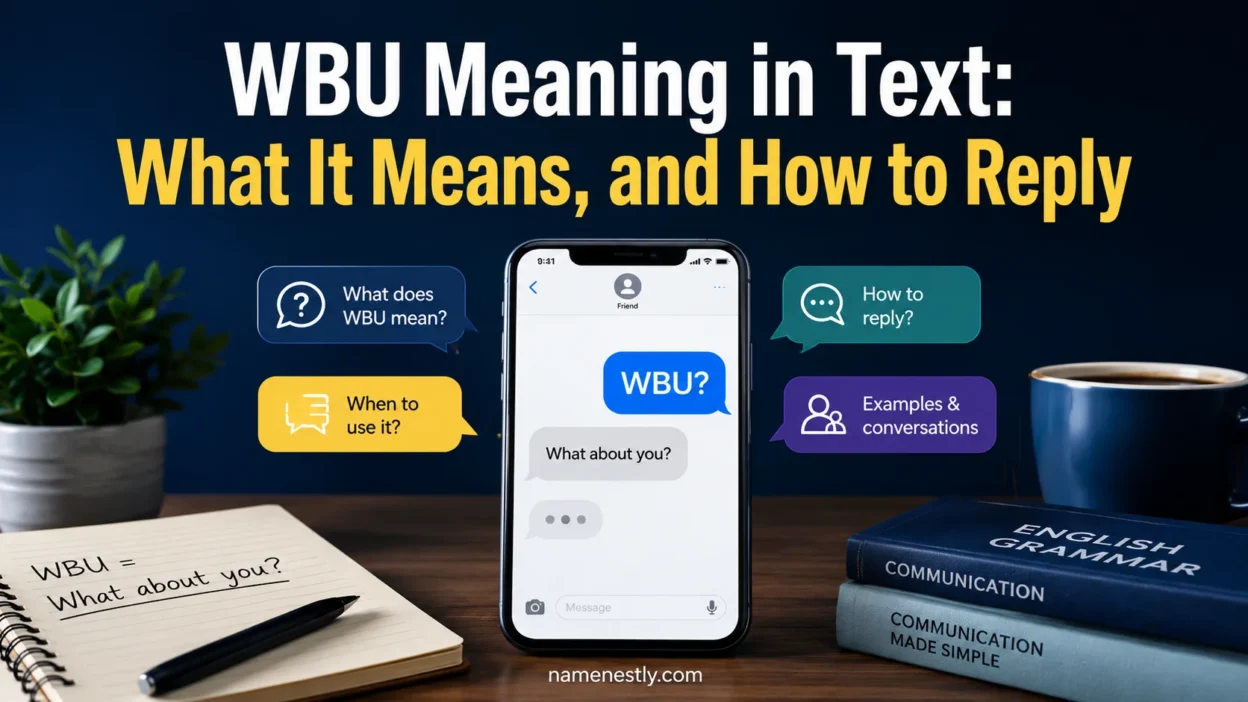
WBU means “What About You?” People use it to return a question, ask about your experience, or keep a conversation going without typing a longer sentence. For example, if someone asks how your day is going, you might answer, “Pretty good! WBU?”
Although WBU looks simple, its tone depends on the conversation. It can sound friendly, casual, curious, or even slightly flirtatious when the surrounding messages suggest that tone.
This guide explains the WBU meaning in text, how people use it on Snapchat and other platforms, how to reply naturally, and how it differs from similar abbreviations such as HBU and WYD.
Quick Answer: What Does WBU Mean in Text?
WBU stands for “What About You?” It’s an informal texting abbreviation people use to ask the same question back or learn about another person’s thoughts, feelings, plans, or experiences.
For example:
- Person A: “I’m having a relaxing weekend.”
- Person B: “Nice! WBU?”
- Meaning: “Nice! What about you?”
In this conversation, the second person wants to know about the other person’s weekend.
| Detail | Explanation |
| Full form | What About You? |
| Main purpose | Return a question or invite a response |
| Tone | Usually casual and conversational |
| Common platforms | Text messages, Snapchat, Instagram, TikTok, and WhatsApp |
| Typical audience | Friends, family, acquaintances, and online contacts |
| Formality | Informal |
| Common alternative | HBU (How About You?) |
The main thing to remember is that WBU usually refers to the topic already being discussed. If someone talks about their mood, they’re probably asking about yours. If they mention their plans, they’re likely asking about yours.
Comparison Overview
WBU belongs to a larger group of abbreviations that make online conversations quicker. Some ask questions, while others express reactions or share information.
| Abbreviation | Full Form | What It Usually Asks or Communicates |
| WBU | What About You? | Asks about your corresponding experience or opinion |
| HBU | How About You? | Asks the same question in a slightly different way |
| WYD | What You Doing? | Asks what you’re doing |
| WYA | Where You At? | Asks where you are |
| WSG | What’s Good? | Offers a casual greeting or asks what’s happening |
| IDK | I Don’t Know | Expresses uncertainty |
| NM | Not Much | Gives a brief response about activity or what’s happening |
WBU and HBU are the closest alternatives. Both invite the other person to share information, and they often work in the same situations.
WYD and WYA serve different purposes. They ask specifically about an activity or location rather than returning a broader question.
Main Differences Between WBU in Text
The meaning of WBU stays fairly consistent, but its purpose can change slightly depending on the message before it. Understanding those small differences helps you read conversations more accurately.
WBU vs. HBU
WBU means “What About You?” while HBU means “How About You?” Both abbreviations return a question to another person.
For example:
- WBU: “I love watching horror movies. WBU?”
- HBU: “I love watching horror movies. HBU?”
Both messages ask whether the other person enjoys horror movies, too. In everyday texting, most people can understand either version without confusion.
The difference is mainly grammatical. “What about you?” is a broad way to ask about someone else’s situation. “How about you?” often sounds like a direct invitation to share a similar preference, opinion, or experience.
WBU vs. WYD
WBU asks about the other person’s situation or opinion in relation to the current topic. WYD means “What You Doing?” and focuses on what someone is doing.
Examples:
- WBU: “I’m watching a new series. WBU?”
- WYD: “Hey, WYD?”
The first asks about the other person’s activity in a conversational exchange. The second asks what the recipient is doing right now.
WBU vs. WYA
WBU means “What About You?” while WYA means “Where You At?” The distinction is straightforward: one returns a question, and the other asks about someone’s location.
For example:
- “I’m at the mall. WBU?” asks about the other person’s situation.
- “I’m at the mall. WYA?” asks where the other person is.
These abbreviations aren’t interchangeable. Choosing the right one helps prevent misunderstandings.
What Does WBU Stand for in Texting?
WBU is a shortened form of “What About You?” People use it because typing three letters is quicker than writing the complete phrase.
Here’s how the abbreviation works:
- W stands for What.
- B stands for About.
- U stands for You.
The letter U replaces the word “you,” a common feature of informal digital shorthand. Other familiar examples include “CU” for “See You” and “R” for “Are” in some casual messages.
WBU isn’t a separate word with an unrelated definition. Its meaning comes from the phrase it represents.
Does WBU Have Different Capitalizations?
You’ll commonly see WBU written in several ways:
- WBU: Standard uppercase abbreviation.
- wbu: A relaxed, lowercase version.
- Wbu: An initial capital followed by lowercase letters.
These variations generally mean the same thing. Capitalization doesn’t normally change the abbreviation’s meaning or signal a special emotional message.
For instance, “WBU?” and “wbu?” can both ask how you’re doing. The surrounding conversation matters more than the letter case.
Why Do People Use WBU Instead of the Full Phrase?
Short abbreviations make casual conversations faster and easier to type. Rather than writing a complete question every time, people can use WBU to keep a conversation moving.
Consider this exchange:
Without abbreviations
- Person A: “I’m planning to visit my cousins this weekend. What about you?”
- Person B: “I’m probably going to watch a movie.”
With abbreviations
- Person A: “Visiting my cousins this weekend. WBU?”
- Person B: “Probably watching a movie.”
Both conversations communicate the same basic information. The shorter version simply uses fewer words.
However, speed isn’t the only benefit. WBU also signals an informal communication style that suits conversations with friends and familiar contacts.
How Is WBU Used in Everyday Conversations?
WBU is useful whenever someone wants to return a question or invite another person to share something similar. The exact meaning depends on the topic already under discussion.
Asking About Someone’s Feelings
People often use WBU after describing their mood or emotional state. It gives the other person an easy opportunity to respond.
Example conversation:
- Alex: “I’m feeling much better today.”
- Jordan: “Glad to hear that! WBU yesterday?”
Here, the wording asks about someone’s experience. In a more typical exchange, someone might write, “I’m feeling great today. WBU?” to ask how the recipient feels.
Asking About Weekend or Evening Plans
WBU also works when people discuss upcoming plans, free time, or social activities.
Example conversation:
- Mia: “I’m going to a concert on Saturday. WBU?”
- Sam: “I’m meeting some friends for dinner.”
Mia shares her plans and then invites Sam to share his. This keeps the exchange balanced instead of making it a one-sided conversation.
Asking for Someone’s Opinion
When people share their views about music, movies, food, or other interests, WBU can invite a different perspective.
Example conversation:
- Taylor: “I think the new movie was fantastic. WBU?”
- Chris: “I liked it, but the ending felt rushed.”
The abbreviation doesn’t mean the recipient must agree. It simply asks for their opinion.
Sharing Experiences and Preferences
People can also use WBU to compare interests, routines, or personal experiences.
Example conversation:
- Person A: “My favorite season is fall. WBU?”
- Person B: “Definitely spring. I love the warmer weather.”
The question creates a natural opening for another person to contribute. It works best when both people understand the topic.
Keeping a Conversation Going
Sometimes, a conversation slows because one person has answered a question without asking anything in return. WBU can help keep the exchange moving.
For example:
- Person A: “I just finished my exams.”
- Person B: “That’s awesome! WBU, are yours finished too?”
This example combines WBU with a longer question to make the intended meaning clearer. People don’t always use the abbreviation alone; they can add extra words whenever necessary.
Read More: IIRC Meaning in Text: What It Means and How to Use It in Chats
WBU Meaning on Snapchat, TikTok, Instagram, and WhatsApp
WBU generally means “What About You?” across social media platforms. The app doesn’t usually change the abbreviation’s basic definition, although the conversation can affect its tone.
WBU Meaning on Snapchat
On Snapchat, people may use WBU in private chats, replies to snaps, or casual conversations about their day.
Example:
- Friend: “Just got back from school. WBU?”
- You: “I’m home too, just relaxing.”
The sender is asking what you’re doing or how your day is going, depending on the earlier conversation.
Snapchat messages can be short and informal, so WBU fits naturally into everyday exchanges. Still, it doesn’t automatically mean the sender wants to flirt or start a romantic conversation.
WBU Meaning on Instagram
On Instagram, WBU may appear in direct messages between friends, followers, or people discussing shared interests.
Example:
- Person A: “I love this song!”
- Person B: “Same! WBU, have you heard their new album?”
In this example, WBU introduces a question about the other person’s experience. The extra wording makes the intended question more specific.
WBU Meaning on TikTok
TikTok users may use WBU in private messages or informal discussions about videos, creators, trends, and personal preferences.
Example:
- Person A: “This is my favorite TikTok trend right now. WBU?”
- Person B: “I prefer the dance challenge.”
The abbreviation invites the recipient to share a different or similar opinion. It doesn’t have a special TikTok-only meaning.
WBU Meaning on WhatsApp and Regular Text Messages
WhatsApp and standard SMS conversations often include WBU when friends and family exchange updates.
Example:
- Person A: “I’m having dinner with my family tonight. WBU?”
- Person B: “We’re ordering pizza at home.”
The abbreviation keeps the message brief while giving the recipient a clear opening to respond.
Important: Across these platforms, the standard meaning remains “What About You?” Always consider the preceding messages before deciding what the sender wants to know.
How to Reply to WBU in a Text
The best reply to WBU depends on the question or topic that came before it. You don’t need to use another abbreviation; a natural answer usually works best.
Friendly Replies to WBU
If a friend asks about your day, mood, or general situation, keep your answer relaxed and genuine.
Here are some examples:
- “I’m doing pretty well too!”
- “My day’s been great so far.”
- “Pretty good, thanks for asking!”
- “I’m feeling awesome today.”
- “Can’t complain. How about you?”
Example conversation:
- Friend: “I’m having a good day. WBU?”
- You: “Mine’s been pretty good too!”
This reply answers the question directly and keeps the tone friendly.
Replies to WBU About Plans
When someone discusses their plans, share what you’re doing or explain that you haven’t decided yet.
| Situation | Possible Reply |
| Staying home | “Just relaxing at home tonight.” |
| Going out | “I’m meeting some friends later.” |
| Working | “I’ve got a busy day at work.” |
| No plans | “Nothing planned yet. Just seeing how the day goes.” |
| Unsure | “I’m not sure yet. What are you thinking?” |
These replies give the other person something useful to respond to. If you want to continue the conversation, add a question related to their plans.
Replies to WBU About Opinions
If someone shares a preference and asks WBU, tell them what you think.
For example:
- Friend: “I love Italian food. WBU?”
- You: “Same here! Pizza is my favorite.”
If you disagree, that’s perfectly fine. You could say, “I actually prefer Mexican food.”
The goal is to share your own view rather than simply repeat what the other person said.
Short and Casual Replies to WBU
Sometimes, a quick response is all you need. These options work well in relaxed conversations:
- “Same here!”
- “Pretty good!”
- “Not much.”
- “Doing great!”
- “All good.”
- “Can’t complain!”
Choose a response that answers the actual question. For example, “Not much” works when someone asks what you’re doing, but it may not answer a question about your favorite movie.
What Does WBU Mean From a Girl or a Guy?
WBU has the same basic meaning regardless of who sends it. However, people sometimes wonder whether the abbreviation carries a hidden message when it comes from someone they’re interested in.
When a Girl Texts WBU
If a girl texts you WBU, she may simply be returning a question or showing interest in your experience.
For example:
- You: “I love spending Sundays outdoors.”
- Her: “That sounds fun! WBU, do you usually go hiking?”
She’s asking about your habits and inviting you to share more information.
Her message might reflect friendliness, curiosity, or an effort to continue the conversation. You shouldn’t assume romantic interest based on those three letters alone.
When a Guy Texts WBU
If a guy sends WBU, he may be asking about your plans, feelings, preferences, or experiences.
For example:
- Him: “I’m watching football tonight. WBU?”
- You: “I’m catching up on a TV show.”
This is an ordinary conversational exchange. The abbreviation doesn’t reveal whether he’s flirting, being polite, or simply making conversation.
Does WBU Mean Someone Likes You?
No, WBU doesn’t automatically mean someone likes you romantically. It usually means “What About You?” and invites you to answer a question.
Look at the wider conversation instead. Does the person regularly initiate chats, ask thoughtful questions, remember details, or suggest spending time together? Those behaviors may provide more context than one abbreviation.
Even then, no single texting habit proves romantic interest. The clearest way to understand someone’s intentions is through honest communication.
FAQs:
What Does WBU Mean in Text Messages?
WBU stands for “What About You?” People use it to return a question or ask about another person’s thoughts, feelings, plans, or experiences. For example, “I’m doing great, WBU?” asks how the other person is doing.
What Does WBU Mean on Snapchat?
On Snapchat, WBU generally means “What About You?” It appears in casual chats and message replies when someone wants to know about your experience or situation. Its basic meaning doesn’t change on Snapchat.
What Is the Difference Between WBU and HBU?
WBU means “What About You?” while HBU means “How About You?” Both usually return a question and can often replace each other in casual conversations. The difference is mainly in the wording.
How Do You Reply When Someone Says WBU?
Answer according to the topic being discussed. If someone asks about your day, you might say, “It’s going well!” If they ask about your plans, you could reply, “I’m meeting friends later.”
Does WBU Mean What About You?
Yes, WBU commonly stands for “What About You?” It’s an informal abbreviation used in texting, online chats, and social media messages. The surrounding conversation helps determine the specific question.
Conclusion:
WBU means “What About You?” in text messages and most everyday online conversations. People use it to return questions, compare experiences, share opinions, and keep discussions moving naturally. You’ll commonly see it on Snapchat, Instagram, TikTok, WhatsApp, and regular text messages. Its meaning generally stays the same across platforms, although the surrounding conversation can change its tone.