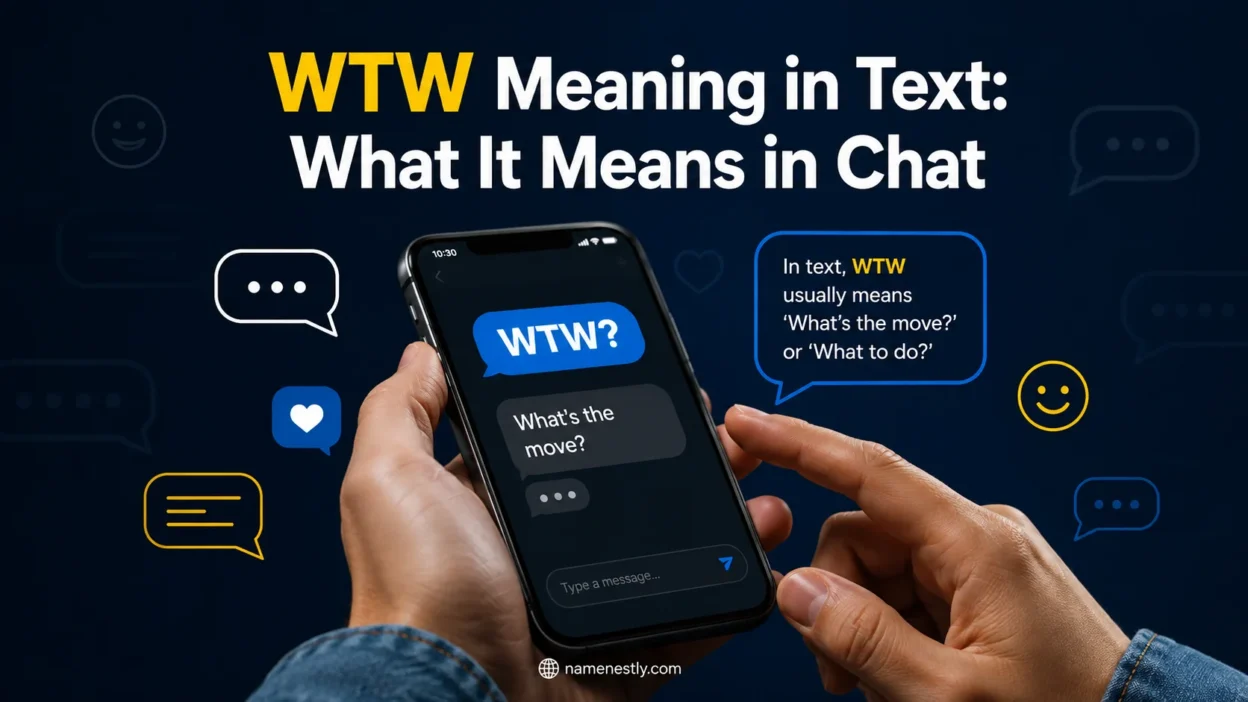
Have you received a message saying “WTW?” and wondered what the sender actually meant? You’re not alone. This three-letter abbreviation appears in text messages, Snapchat conversations, Instagram DMs, TikTok comments, and online chats.
WTW usually means “What’s the word?” In casual conversations, people use it to ask what’s happening, what’s going on, or whether someone has plans. Depending on the conversation, it can also express surprise or confusion, similar to saying “What the what?”
However, the exact meaning depends on the situation. A friend asking “WTW tonight?” probably wants to make plans, while someone reacting to unexpected news might use WTW to express disbelief.
Understanding the context helps you interpret the message correctly and respond naturally. This guide explains WTW’s meanings, texting examples, social media uses, and the best ways to reply.
Quick Answer: What Does WTW Mean in Text?
WTW means “What’s the word?” in common texting and social media conversations. It’s a casual way to ask what’s happening, what someone is doing, or whether they have plans.
For example:
- Friend: “Hey, WTW?”
- You: “Not much, just chilling. You?”
Here, WTW works as a conversation starter. The sender wants to know what’s going on and may be looking for something to discuss or do together.
WTW can also mean “What the what?” when someone reacts to something unexpected. This interpretation is less common in everyday greetings and depends heavily on context.
Comparison Overview
WTW belongs to the same family of informal texting abbreviations as WYD, WYA, WSG, and WTM. Although these expressions can appear in similar conversations, each one asks something slightly different.
| Abbreviation | Full meaning | Common purpose |
| WTW | What’s the word? | Asking what’s happening or what’s planned |
| WYD | What are you doing? | Asking about someone’s current activity |
| WYA | Where you at? | Asking about someone’s location |
| WSG | What’s good? | Greeting someone or asking how things are going |
| WTM | What’s the move? | Asking about plans or the next activity |
| HRU | How are you? | Asking how someone feels or is doing |
For example, someone might text “WYD?” to find out what you’re doing right now. They might send “WTW tonight?” when they want to know what’s happening later.
These abbreviations overlap, but they aren’t interchangeable in every situation.
Main Differences Between WTW Meaning in Text and Other Interpretations
WTW usually asks for an update, a conversation, or a plan. However, its meaning can change depending on the wording and situation.
| Context | Likely meaning | Example |
| Everyday texting | What’s the word? | “WTW?” |
| Making plans | What’s happening or what should we do? | “WTW this weekend?” |
| Social media DMs | What’s going on? | “WTW, haven’t talked in a while.” |
| Unexpected news | What the what? | “WTW just happened?” |
| Gaming chat | What’s happening or what’s the plan? | “WTW after this match?” |
The first four-letter expansion isn’t the only interpretation people may use. Context matters more than the abbreviation itself. Read the complete message before deciding what the sender means.
What Does WTW Mean in Different Contexts?
WTW can communicate slightly different ideas depending on where you see it. The platform may provide clues, but the surrounding conversation usually matters more.
WTW Meaning in Text Messages
In regular text messages, WTW most often stands for “What’s the word?” People use it to start a conversation, check what’s happening, or ask about plans.
For example:
Person A: “Yo, WTW?”
Person B: “Nothing much. Just got home.”
The first person isn’t necessarily asking for a detailed update. They’re opening the door to a casual conversation.
WTW can also invite someone to suggest an activity. If a friend texts “WTW later?” they may be asking whether you’re free to hang out.
Common reasons people send WTW include:
- Starting a conversation without a long greeting.
- Finding out what friends are doing.
- Checking whether someone has plans.
- Asking what’s happening in a group.
- Moving a conversation toward an activity.
Its informal tone makes it suitable for friends, relatives, and people who regularly communicate through text.
WTW Meaning on Snapchat
On Snapchat, WTW commonly serves as a quick conversation starter. Someone might send it in a direct message after viewing your Story or starting a new chat.
For example:
Snapchat message: “WTW? You out tonight?”
Possible reply: “Not yet. Thinking about going somewhere.”
In this example, the sender wants to know what’s happening and whether you might be available.
The meaning can also depend on what you posted. If your Story shows you getting ready to go out, someone sending WTW might be asking about your plans.
However, the abbreviation doesn’t automatically mean the sender wants to meet you. They could simply be making conversation.
WTW Meaning on TikTok
On TikTok, WTW may appear in comments, captions, and private messages. Its meaning depends on whether someone is greeting you or reacting to content.
For example:
- In a DM: “WTW? Haven’t seen you in a minute.”
- In a comment: “WTW with this video?”
- In a conversation about plans: “WTW this weekend?”
The first example suggests a casual greeting. The second asks what’s going on with the video and could express confusion or curiosity.
When you see WTW in a TikTok comment, examine the video and the surrounding replies. Those details can help distinguish a greeting from a reaction.
WTW Meaning on Instagram
Instagram users may write WTW in direct messages, Story replies, and informal comments.
Imagine posting a Story from a concert. A friend replies, “WTW? Who’s playing?”
Here, the friend wants more information about the event. In a different conversation, “WTW tonight?” might be an invitation to discuss plans.
WTW can also restart a conversation that has gone quiet. Someone might use it instead of sending a longer message asking how you’ve been.
Still, a single WTW message doesn’t reveal the sender’s entire intention. Look at your relationship and the messages that follow.
WTW Meaning in Gaming and Online Chats
In gaming communities, WTW can ask what the group plans to do next or what’s happening in the lobby.
For example:
Player A: “WTW after this match?”
Player B: “Let’s run another round.”
The abbreviation helps players communicate quickly without typing full sentences. This is especially useful during fast-moving multiplayer sessions.
In a group chat, someone might also ask “WTW tonight?” to find out whether friends are playing together.
The meaning remains informal. Unless the conversation clearly establishes a different interpretation, the sender probably wants an update or a plan.
How Is WTW Used in Texting?
Although WTW often means “What’s the word?”, people use it for several related purposes. The sentence around it helps reveal the intended message.
Asking What’s Happening
Someone may send WTW when they want a quick update about a situation.
Example:
- A: “WTW over there?”
- B: “Everyone’s getting ready for the party.”
Here, the sender wants to know what’s going on. They’re not necessarily asking about your personal schedule.
Asking About Someone’s Plans
WTW often appears when friends want to arrange something together.
Example:
- A: “WTW this Friday?”
- B: “I’m free after seven. What’s up?”
The phrase invites the other person to share their plans or suggest an activity. Depending on the relationship, it could lead to dinner, gaming, a party, or a casual meetup.
Starting a Casual Conversation
Sometimes, WTW doesn’t refer to a specific event. It simply gives someone an easy way to start chatting.
Example:
- A: “Hey, WTW?”
- B: “Just relaxing. How about you?”
Think of it as a short conversational opener. The sender may have something to discuss, or they may simply want to reconnect.
Checking What’s Going On
A person might use WTW when they feel out of the loop.
Example:
- A: “WTW in the group chat?”
- B: “They’re deciding where to eat.”
The sender wants information about a conversation or situation. In this case, WTW functions as a request for an update.
Expressing Surprise or Confusion
In some contexts, WTW stands for “What the what?” This interpretation conveys surprise, disbelief, or confusion.
Example:
- A: “He bought three cars in one week.”
- B: “WTW? Seriously?”
The reaction signals that the information seems unexpected. The punctuation and surrounding words help communicate the tone.
This interpretation isn’t the default for every WTW message. When someone sends only “WTW?” as a greeting, “What’s the word?” is usually the more natural reading.
WTW Meaning in Different Conversations
The same abbreviation can feel different depending on the relationship between the people involved. However, WTW alone doesn’t establish a specific emotional intention.
WTW Between Friends
Friends commonly use WTW to check in or make plans without writing a long message.
Example:
“WTW, bro? You coming over?”
The sender wants to know what’s happening and whether the other person will join them.
You can usually respond casually with an update or a question about the plan.
Read More: What Does SMH Mean in Text? Meaning, and Usage in 2026
WTW in Flirty Conversations
WTW can appear in flirtatious conversations, especially when someone wants to see whether you’re available.
Example:
“WTW tonight? We should do something.”
This message may suggest interest in spending time together. However, the abbreviation itself isn’t a romantic signal.
Consider the full conversation. A personal invitation, playful messages, and mutual interest provide stronger clues than WTW alone.
WTW in Group Chats
In group chats, WTW often helps coordinate activities or gather updates from several people.
Example:
“WTW this weekend, everyone?”
Someone might reply with a restaurant suggestion, a gaming session, or an invitation to hang out.
The phrase works well in groups because it’s short and leaves room for different suggestions.
WTW in Casual Dating Conversations
People may use WTW when checking whether someone is free or interested in meeting.
Example:
“WTW later? Want to grab coffee?”
The invitation gives the message a clearer purpose. Rather than simply asking what’s happening, the sender suggests spending time together.
Still, WTW doesn’t guarantee a date or romantic interest. The explicit invitation provides more useful information than the abbreviation.
WTW in Professional Messages
WTW is generally too informal for professional emails, client communication, and formal workplace discussions.
A coworker might understand it in an established team chat. However, a clearer message usually works better.
Instead of writing:
“WTW with the project?”
Try:
“What’s the latest update on the project?”
The second version communicates the request directly and avoids confusion. Use WTW only when the workplace culture and relationship make informal shorthand appropriate.
WTW Texting Examples and Their Meanings
Examples make the abbreviation easier to understand because its intended meaning often depends on a few surrounding words.
| Text message | Likely meaning | Why it fits |
| “Hey, WTW?” | What’s happening? | Opens a casual conversation |
| “WTW tonight?” | What are the plans tonight? | Asks about evening activities |
| “WTW, wanna hang out?” | What’s going on, and are you free? | Leads into a possible meetup |
| “WTW with you lately?” | What’s been happening in your life? | Requests a personal update |
| “WTW after class?” | What are we doing afterward? | Asks about upcoming plans |
| “WTW in the server?” | What’s happening in the chat? | Requests an online update |
| “WTW this weekend?” | What are the weekend plans? | Starts a planning conversation |
| “WTW? That was wild.” | Possibly an expression of surprise | Reacts to something unexpected |
| “WTW, you disappeared!” | What’s going on with you? | Reopens a conversation |
| “WTW for lunch?” | What should we do for lunch? | Invites suggestions |
These examples show why the complete sentence matters. WTW can ask for information, open a conversation, or lead into an invitation.
A Short Case Study: Understanding WTW From Context
Consider three messages that use the same abbreviation.
Situation A: A friend texts “WTW?”
You haven’t spoken all day. The friend probably wants to start a conversation or ask what’s happening.
Situation B: Someone texts “WTW Friday night?”
The reference to Friday night suggests they’re asking about plans. They may want to coordinate an activity.
Situation C: Someone texts “WTW? He did what?”
The follow-up question signals surprise or disbelief. In this case, “What the what?” may fit better than “What’s the word?”
The key lesson is simple: interpret WTW alongside the words, timing, and situation surrounding it.
What Does WTW Mean From a Guy or Girl?
People sometimes wonder whether WTW carries a hidden meaning when it comes from someone they’re interested in. The honest answer depends on the rest of the conversation.
FAQs:
What Does WTW Stand for in Texting?
WTW most commonly stands for “What’s the word?” People use it to ask what’s happening, what’s going on, or what plans someone has. In some contexts, it can mean “What the what?” to express surprise.
What Does WTW Mean on Snapchat?
On Snapchat, WTW usually starts a conversation or asks about someone’s plans. A message like “WTW tonight?” may suggest that the sender wants to discuss an activity or find out whether you’re available.
What Does WTW Mean From a Guy?
A guy sending WTW may be checking in, starting a conversation, or asking about your plans. It doesn’t automatically mean he likes you. His follow-up messages and overall behavior provide better clues.
How Do You Respond to WTW?
You can reply with “Not much, you?”, “Just chilling. What’s up?” or “Nothing planned yet. What’s your idea?” Choose a response that matches the conversation and whether you’re interested in making plans.
Does WTW Mean What’s the Word or What’s the What?
“What’s the word?” is the more common interpretation in casual texting. “What the what?” can express surprise or confusion. The surrounding message usually makes the intended meaning clearer.
Conclusion:
WTW usually means “What’s the word?” in text messages, Snapchat, Instagram DMs, TikTok conversations, and online chats. People use it to ask what’s happening, start a conversation, or find out about plans. In other situations, WTW can express surprise through the phrase “What the what?” The surrounding words and conversation help distinguish these meanings.