Have you ever received a text that says “CTFU” and wondered what the sender meant? You might see this abbreviation in a group chat, under a funny TikTok video, or in a friend’s Instagram comment. If you’re unfamiliar with internet slang, those four letters can look confusing at first.
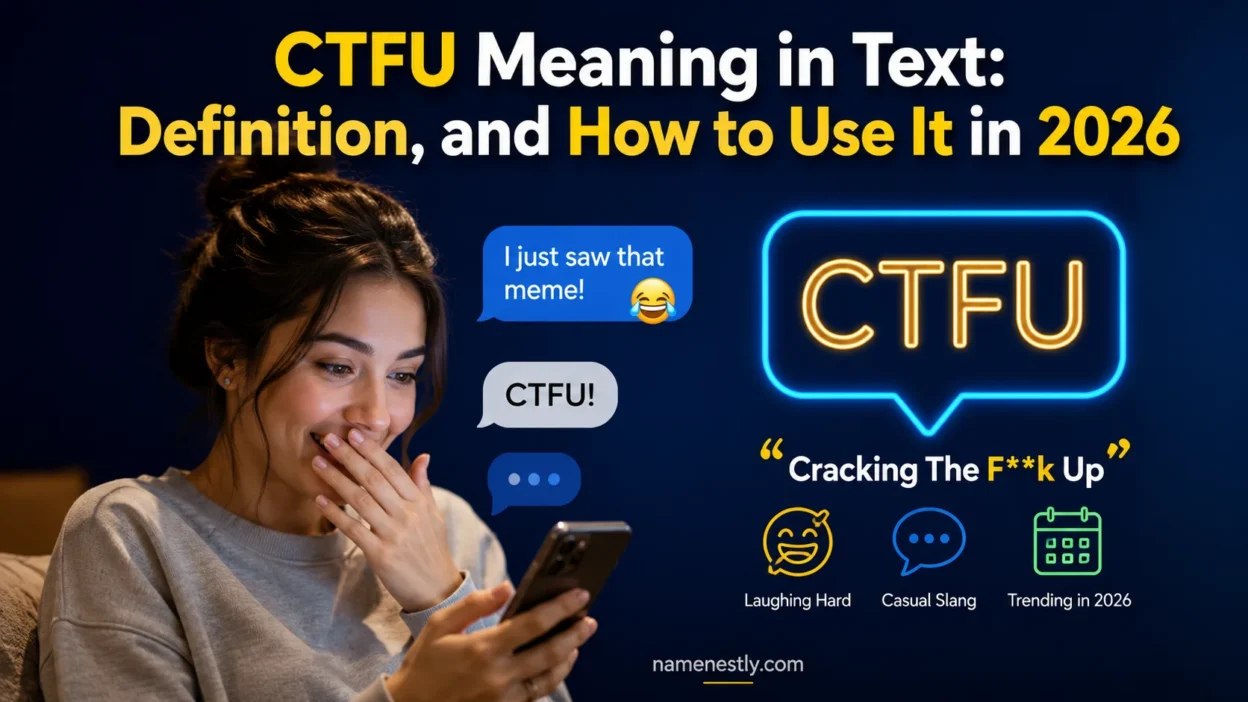
CTFU means “Cracking the Fuck Up.” People use it in text messages and online conversations to express strong amusement or laughter. It usually means something is extremely funny, although the exact tone depends on the conversation.
Unlike some common texting abbreviations, CTFU contains profanity in its full form. That makes it a natural fit for many casual conversations but a poor choice for professional messages. Understanding its meaning, tone, and context helps you interpret it correctly.
In this guide, you’ll learn what CTFU stands for, how people use it, how it compares with LOL and LMAO, and what to say when someone sends it to you.
Quick Answer:
CTFU stands for “Cracking the Fuck Up.” It’s an informal internet abbreviation that expresses intense laughter or amusement. Someone might send it after reading a hilarious joke, watching a funny video, or hearing an unexpected story.
For example:
- Friend A: “My dog stole my sandwich and ran straight into the glass door.”
- Friend B: “CTFU 😭”
In this conversation, CTFU means the second person finds the story hilarious. The crying emoji adds emphasis and usually represents laughter rather than sadness.
The abbreviation doesn’t always mean someone is literally laughing uncontrollably. People also use it to show that something is amusing, ridiculous, or unexpectedly funny.
Comparison Overview
CTFU belongs to the same family of internet expressions as LOL, LMAO, and ROFL. All four communicate laughter, but they differ slightly in tone, wording, and intensity.
| Slang | Full Form | General Meaning | Tone |
| CTFU | Cracking the Fuck Up | Laughing very hard | Informal and profane |
| LOL | Laughing Out Loud | Finding something funny | Casual and versatile |
| LMAO | Laughing My Ass Off | Laughing a lot | Informal and emphatic |
| LMFAO | Laughing My Fucking Ass Off | Expressing intense amusement | Very informal and profane |
| ROFL | Rolling on the Floor Laughing | Finding something extremely funny | Playful and exaggerated |
These expressions often overlap. One person might use CTFU for a joke that another person would describe with LOL.
The biggest practical difference is that CTFU explicitly contains profanity when written out. LOL is generally more suitable for everyday conversations, including messages where you want to keep your language clean.
Main Differences Between CTFU Meaning in Text and Similar Slang
CTFU, LOL, LMAO, and ROFL all express amusement. However, their wording and social tone can affect how a message comes across.
CTFU vs. LOL
LOL stands for “Laughing Out Loud.” People use it to express amusement, acknowledge a joke, or soften a message that might otherwise sound serious.
CTFU usually conveys stronger laughter. It also carries a more explicit tone because its full form includes profanity.
Example:
- “LOL, that’s a good joke.”
- “CTFU, that joke caught me completely off guard.”
Both messages communicate amusement, but the second sounds more emphatic and informal.
CTFU vs. LMAO
LMAO means “Laughing My Ass Off.” Like CTFU, it expresses strong amusement in casual digital conversations.
The expressions aren’t identical in wording, but their practical meanings overlap considerably. Your choice often comes down to personal preference, community habits, and the tone you want.
Example:
- “LMAO, I can’t believe he said that.”
- “CTFU, I wasn’t expecting that answer.”
Both reactions suggest that the speaker finds the situation hilarious.
CTFU vs. ROFL
ROFL stands for “Rolling on the Floor Laughing.” It’s a playful expression that exaggerates how funny something seems.
CTFU communicates a similar reaction without describing the speaker’s body or actions. ROFL is also commonly understood as an older style of internet shorthand, although people still use it.
Example:
- “ROFL, that video is ridiculous.”
- “CTFU, the ending was even funnier.”
Neither abbreviation guarantees that someone is physically laughing. Both can simply emphasize amusement.
What Does CTFU Stand For?
CTFU is formed from the initial letters of the phrase “Cracking the Fuck Up.” To understand the expression, it helps to look at the phrase behind it.
- Cracking: Part of the expression “cracking up,” which means laughing hard.
- The: Connects the words in the phrase.
- Fuck: Adds profanity and emotional emphasis.
- Up: Completes the phrasal expression “crack up.”
The key phrase is “cracking up.” In everyday English, someone who is cracking up is laughing a great deal, often because something catches them off guard.
Adding the expletive makes the expression more forceful and informal. In texting, however, most readers recognize CTFU as a complete slang abbreviation rather than mentally expanding each letter.
You may see the abbreviation written in uppercase as CTFU. Some people also use lowercase forms such as “ctfu” because casual messaging doesn’t always follow standard capitalization.
Important: The capitalization doesn’t usually change the meaning. The surrounding conversation matters much more.
What Does CTFU Mean in Slang?
In slang, CTFU means that something is very funny or that a person is reacting with strong amusement. It often appears when ordinary laughter expressions don’t seem enthusiastic enough.
People may use it in several situations.
- A hilarious joke: Someone makes a clever or unexpected comment.
- A funny video: A clip captures an absurd moment.
- An embarrassing mishap: A friend tells a story about a harmless mistake.
- A surprising response: Someone delivers an unexpected comeback.
- A playful group conversation: Friends exchange jokes and humorous stories.
For example, imagine your friend accidentally sends a voice message containing their cat’s loud meowing instead of the intended recording. You might respond, “CTFU, your cat took over the conversation.”
The message communicates amusement without requiring a long explanation.
However, context can change the emotional meaning. If someone uses CTFU while discussing another person’s humiliation, the expression may seem mocking rather than friendly. The abbreviation signals laughter, but it doesn’t automatically reveal whether that laughter is kind or unkind.
How Is CTFU Used in Text Messages?
CTFU works as a quick reaction, a comment within a sentence, or an expression of amusement after someone shares a story. Its role depends on how the sender structures the message.
CTFU as a Reaction to a Funny Joke
One common use is responding to a joke that genuinely makes someone laugh.
Example:
Alex: “I studied all night and still dreamed about being late for the exam.”
Jordan: “CTFU, your brain won’t even let you rest.”
Here, Jordan uses CTFU to show that Alex’s situation sounds funny. The follow-up comment keeps the conversation going.
CTFU in Response to Memes and Videos
Memes and short videos often rely on unexpected endings, exaggerated reactions, or relatable situations. CTFU works as a short response when a person finds that content hilarious.
Example:
Mia: “Look at this video of a toddler trying to boss around a giant dog.”
Sam: “CTFU 😭 that dog looks so confused.”
The abbreviation conveys amusement while the rest of the message identifies the funny detail.
Read More: LWK Meaning in Text: What Does LWK Mean in Slang?
CTFU When Something Unexpected Happens
Sometimes the humor comes from an unexpected outcome rather than a prepared joke.
Example:
Chris: “I waved at someone across the street. Turns out they were waving at the person behind me.”
Taylor: “CTFU, that awkward moment is too real.”
This example shows how people use CTFU to react to everyday mishaps. The sender may relate to the experience while laughing at the situation.
CTFU in a Full Sentence
CTFU can appear alongside other words instead of standing alone.
Common informal constructions include:
- “I’m CTFU right now.”
- “That had me CTFU.”
- “CTFU at this comment.”
- “I’m still CTFU about what happened.”
- “We were CTFU in the group chat.”
These constructions are common in casual online writing, but they aren’t formal grammatical standards. People use them because abbreviated language favors speed and shared understanding.
CTFU Meaning in Realistic Text Conversations
Short conversations make it easier to understand the abbreviation’s tone. Here are several original examples showing how it works in different situations.
CTFU Between Friends
Conversation:
Ava: “My brother tried to cook pasta and forgot to add water.”
Noah: “CTFU, how did he even manage that?”
Meaning: Noah finds the mistake funny and responds with playful disbelief.
CTFU in a Group Chat
Conversation:
Liam: “Our group project has 40 slides, and nobody knows who made slide 17.”
Emma: “CTFU, that slide has become a mystery.”
Meaning: Emma laughs at the group’s confusion. The response adds another joke instead of simply reacting.
CTFU on Social Media
Conversation:
Post: “Me opening the fridge for the fifth time, expecting new food to appear.”
Comment: “CTFU because why is this so accurate?”
Meaning: The commenter finds the situation funny because it reflects a familiar habit.
CTFU After an Embarrassing Moment
Conversation:
Riley: “I said ‘you too’ when the waiter told me to enjoy my meal.”
Morgan: “CTFU, I’ve done that before.”
Meaning: Morgan laughs at a common social mistake while showing they can relate to it.
CTFU as a Sarcastic Reaction
Conversation:
Jamie: “He said he would arrive in five minutes. It’s been an hour.”
Casey: “CTFU, very reliable.”
Meaning: Casey uses laughter to emphasize sarcasm. The actual message expresses criticism rather than straightforward amusement.
These examples demonstrate an important point: CTFU usually signals laughter, but the surrounding words determine the exact tone.
What Does CTFU Mean on Social Media?
CTFU generally keeps the same meaning across social platforms. However, the type of content and the relationship between users can influence how it comes across.
CTFU Meaning on Instagram
Instagram users may write CTFU in comments, direct messages, and reactions to Reels. It often appears when someone shares a funny clip, an entertaining caption, or a relatable meme.
Example: “CTFU, the last part got me.”
The message means the ending was especially funny. In a direct message, the abbreviation may also help friends keep a casual conversation lively.
CTFU Meaning on TikTok
TikTok’s short videos, skits, reaction clips, and comedy trends provide plenty of opportunities for expressions of laughter.
Someone might comment “CTFU” after watching an unexpected punchline or a creator’s exaggerated reaction. The abbreviation can stand alone or appear with laughing emojis.
Example: “CTFU 😭 why did he turn around like that?”
The sender is reacting to a particular moment in the video.
CTFU Meaning on Snapchat
On Snapchat, CTFU may appear in private chats, group conversations, or responses to funny snaps.
Example:
Friend: “I tried to take a serious selfie, and my little brother jumped into the background.”
Reply: “CTFU, send me the picture.”
The abbreviation shows amusement and encourages the sender to share the photo.
CTFU Meaning on WhatsApp and Group Chats
WhatsApp conversations often involve friends sharing jokes, voice notes, family stories, and videos. CTFU provides a quick way to react without interrupting the flow.
In a busy group chat, a message like “CTFU, read what he just said” can draw attention to a funny comment.
The abbreviation doesn’t have a special WhatsApp-specific definition. Its meaning remains the same as in other informal digital conversations.
Is CTFU Rude or Inappropriate?
CTFU can be inappropriate in certain settings because its full form contains an expletive. Whether it sounds rude depends on the audience, the situation, and the way someone uses it.
Among close friends who regularly use profanity, the expression may feel completely normal. In a formal email, workplace discussion, classroom assignment, or conversation with someone you don’t know well, it can come across as unprofessional.
Consider these situations:
| Situation | Is CTFU Appropriate? | Reason |
| Private chat with close friends | Often | Friends may share an informal communication style |
| Funny meme in a casual group chat | Usually | The expression fits the humorous context |
| Message to a manager | Generally not | The profanity may appear unprofessional |
| School assignment | No | Standard academic writing calls for appropriate language |
| Conversation about someone’s painful experience | Usually not | Laughing may appear insensitive |
| Public comment on an unfamiliar person’s post | Depends | The tone may be misunderstood |
It’s also important to distinguish laughter from ridicule. If someone shares a genuinely upsetting experience, replying with CTFU may suggest that you’re making fun of them.
When you aren’t sure how the recipient will interpret it, choose a cleaner alternative such as “That’s hilarious” or “I’m cracking up.”
How to Respond When Someone Texts CTFU
The best reply depends on what made the person laugh. You don’t need a special response every time someone sends the abbreviation.
When You Want to Keep the Joke Going
If the other person enjoyed your joke, you can continue the playful exchange.
Try these replies:
- “I knew you’d laugh at that.”
- “It gets even worse.”
- “Wait until you hear the rest.”
- “I can’t believe that actually happened.”
- “The funniest part is still coming.”
These responses work when both people understand the joke and feel comfortable with the humor.
When Someone Laughs at Your Story
If a friend responds with CTFU after hearing your story, you can acknowledge their reaction.
Examples include:
- “I’m glad someone appreciates my suffering.”
- “I wish I were making this up.”
- “You should’ve seen it happen.”
- “That wasn’t even the best part.”
- “My life is one long comedy show.”
Use a response that matches your personality. A short, natural reply often works better than forcing another joke.
FAQs:
What Does CTFU Mean in a Text Message?
CTFU means “Cracking the Fuck Up.” People use it to express strong laughter or amusement after hearing a joke, seeing a funny video, or reading an entertaining message.
What Does CTFU Stand For?
CTFU stands for “Cracking the Fuck Up.” The expression comes from “cracking up,” which means laughing hard. The full phrase contains profanity, so the abbreviation is mainly suited to informal communication.
Is CTFU Stronger Than LOL?
CTFU often sounds more emphatic than LOL because it conveys strong amusement and contains profanity in its full form. However, people use both expressions differently depending on their habits and the conversation.
Is CTFU Considered a Bad Word?
The abbreviation itself is shorthand, but its full form contains the word “fuck.” It’s common in casual online slang, yet it may be inappropriate in professional, academic, or other formal settings.
What Should I Reply When Someone Says CTFU?
You can respond with “LOL,” “That’s hilarious,” or “I’m cracking up too.” If you don’t understand their reaction, ask what they found funny. Choose a reply that fits the situation and your relationship.
Conclusion:
CTFU means “Cracking the Fuck Up” and expresses strong laughter in text messages, social media comments, and casual online conversations. People commonly use it to react to funny jokes, unexpected moments, entertaining videos, and amusing stories. Although it serves a similar purpose to LOL, LMAO, and ROFL, CTFU has an explicitly profane full form. That makes it more suitable for informal conversations than professional or academic communication.