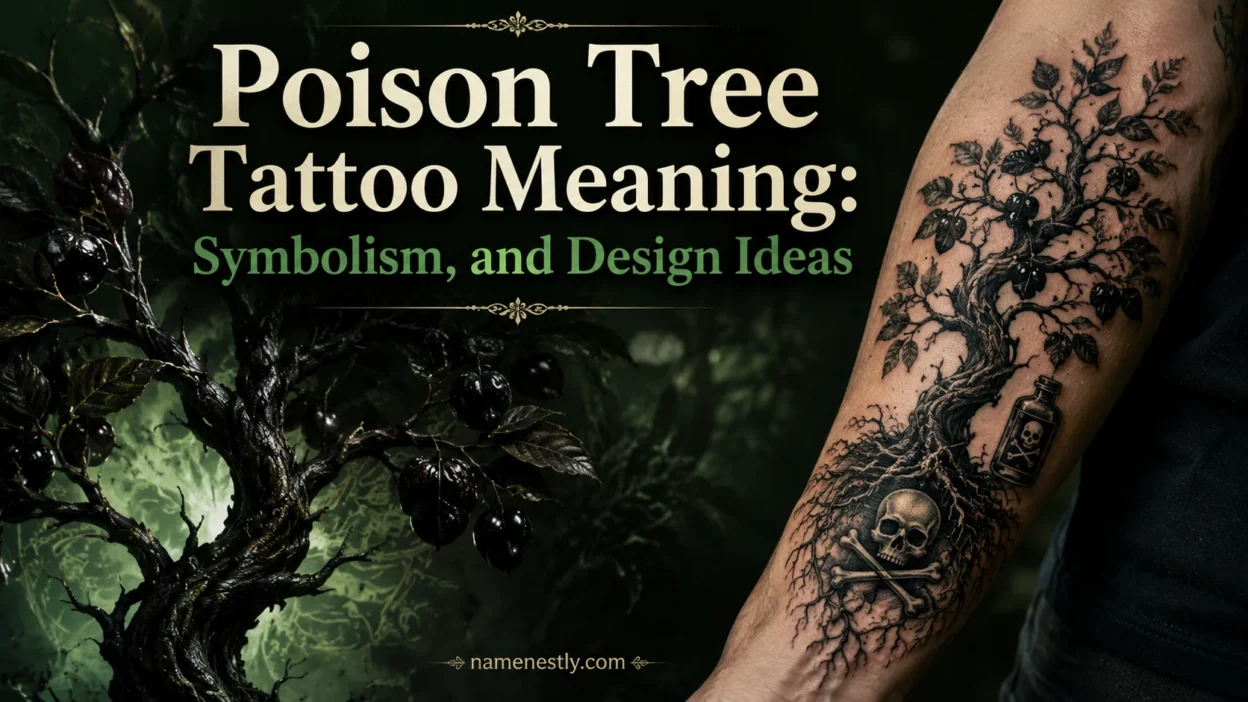
A tree usually represents life, growth, strength, and renewal. However, a poison tree carries a much darker message. Its beauty can hide danger beneath the surface, making it a powerful symbol of complicated emotions and human behavior.
The poison tree tattoo meaning often connects with suppressed anger, resentment, betrayal, deception, temptation, and the consequences of hidden emotions. For some people, it represents a painful experience. Others choose it as a reminder to recognize toxic patterns before they grow into something destructive.
This tattoo also has a fascinating literary connection. William Blake’s famous poem A Poison Tree explores how concealed anger can develop into something harmful. Its imagery of a growing tree and a tempting apple gives this tattoo a deeper meaning beyond its dark appearance.
Whether you appreciate gothic artwork, literary symbolism, or meaningful nature tattoos, understanding this design can help you choose the right interpretation. Let’s explore its origins, symbolism, popular designs, and placement ideas.
Quick Answer: What Does a Poison Tree Tattoo Mean?
A poison tree tattoo commonly symbolizes hidden anger, suppressed resentment, toxic relationships, deception, temptation, revenge, and the consequences of unresolved emotions. Its meaning comes partly from William Blake’s poem A Poison Tree, which describes how concealed anger can grow into something destructive. Depending on its design, the tattoo can also represent emotional awareness, personal boundaries, and lessons learned from painful experiences.
Comparison Overview
A poison tree tattoo can communicate several messages depending on the elements included. The tree, roots, branches, and poisonous fruit each contribute to its overall symbolism.
| Tattoo Element | Common Symbolism | Possible Personal Meaning |
| Poisonous tree | Hidden danger and negativity | Recognizing harmful behavior |
| Deep roots | Buried emotions and resentment | Unresolved personal experiences |
| Twisted branches | Inner conflict and complications | Emotional struggles |
| Poisonous apple | Temptation and deception | A harmful choice or relationship |
| Dead leaves | Loss and endings | Moving beyond painful memories |
| Snake | Danger and temptation | Awareness of hidden threats |
| New growth | Renewal and change | Learning from past mistakes |
| Thorns | Pain and protection | Establishing personal boundaries |
The same design can communicate different ideas. For example, a dead poison tree might represent the end of a painful chapter. A tree with fresh leaves could suggest recovery and personal growth.
Main Differences Between Poison Tree Tattoo Meaning and Similar Symbols
Although several tattoos feature dark trees, poisonous fruit, and twisted branches, their symbolism isn’t identical.
| Tattoo Design | Main Meaning | Key Difference |
| Poison Tree Tattoo | Suppressed anger and hidden danger | Focuses on destructive emotions and consequences |
| Tree of Life Tattoo | Growth and connection | Celebrates life and interconnectedness |
| Dead Tree Tattoo | Loss and endings | Focuses on decay or the end of something |
| Poison Apple Tattoo | Temptation and deception | Emphasizes the dangerous fruit |
| Snake Tree Tattoo | Temptation and danger | Combines serpent and tree symbolism |
| Thorn Tree Tattoo | Pain and protection | Highlights suffering and defensive boundaries |
| Withered Rose Tattoo | Lost love and heartbreak | Uses a fading flower to represent emotional loss |
The poison tree stands apart because its symbolism often involves something harmful developing over time. It isn’t simply about darkness or sadness. It can represent the connection between hidden feelings, personal choices, and their eventual consequences.
The Origin of Poison Tree Tattoo Symbolism
The poison tree tattoo has a strong connection to literature, particularly William Blake’s poem A Poison Tree. Understanding this connection reveals why the design carries such powerful emotional symbolism.
William Blake’s Poem A Poison Tree
William Blake published A Poison Tree in 1794 as part of Songs of Experience. The poem explores anger, dishonesty, resentment, and the destructive consequences of hiding emotions.
The speaker describes two different reactions to anger. When he feels angry with a friend, he communicates his feelings. His anger eventually disappears.
However, when he feels angry with an enemy, he keeps everything inside. Instead of addressing the problem, he allows resentment to grow.
Blake compares this growing anger to a tree. The speaker waters it with fear and tears while hiding his true feelings behind pleasant smiles. Eventually, the tree produces a bright apple that attracts his enemy.
The ending reveals the destructive result of this carefully nurtured resentment. The enemy lies dead beneath the tree, while the speaker expresses satisfaction.
This unsettling conclusion gives the poison tree its central literary meaning: hidden anger can develop into something dangerous when people feed it through fear, dishonesty, and revenge.
How the Poem Influences Poison Tree Tattoos
Blake’s poem provides the foundation for many modern interpretations of poison tree tattoos. Its imagery makes complicated emotional experiences easier to express through body art.
A tattoo inspired by the poem might include:
- A twisted tree representing growing resentment.
- Deep roots symbolizing buried emotions.
- A bright apple representing temptation or revenge.
- Dark branches reflecting inner conflict.
- A shadowy garden suggesting secrecy and deception.
Someone who chooses this design might connect with the poem’s warning about emotional suppression. Another person might simply appreciate its dark literary atmosphere.
The important distinction is that the poem offers an established literary interpretation. A person’s tattoo can carry additional meanings based on individual experiences.
The Difference Between Literary Meaning and Personal Tattoo Meaning
The original poem focuses on the consequences of concealed anger. Modern tattoo interpretations often extend beyond that message.
For example, someone might choose a poison tree after leaving a harmful relationship. The tree could represent the emotional damage that developed during that experience.
Another person might connect it with betrayal, broken trust, or a difficult personal decision. These interpretations aren’t direct statements from Blake’s poem. They’re personal associations inspired by its imagery.
| Literary Interpretation | Personal Tattoo Interpretation |
| Suppressed anger | Unspoken emotional pain |
| Growing resentment | Lingering memories |
| Deceitful behavior | Broken trust |
| Poisonous fruit | Harmful decisions |
| Destructive consequences | Lessons learned through experience |
This distinction matters because a poison tree tattoo doesn’t have one universal definition.
Main Symbolic Meanings of a Poison Tree Tattoo
The poison tree is a layered symbol. Its meaning changes depending on the emotions, experiences, and design elements connected to it.
Suppressed Anger and Hidden Resentment
One of the strongest meanings behind a poison tree tattoo is anger that someone never expresses openly.
Sometimes people hide frustration because they fear arguments, rejection, or uncomfortable conversations. Although silence might temporarily prevent conflict, unresolved feelings can continue affecting their relationships.
The growing tree represents this emotional process. Its roots suggest where resentment begins, while its branches show how deeply those feelings can spread.
Someone might choose this tattoo after realizing how much unspoken anger affected their life. It can serve as a reminder to communicate honestly instead of allowing bitterness to take control.
Toxic Relationships and Emotional Damage
A poison tree can also represent relationships that look attractive from the outside but cause emotional harm.
Some connections begin with affection, excitement, and promises. Over time, however, repeated dishonesty, manipulation, disrespect, or broken trust can turn them into unhealthy relationships.
The poisonous fruit offers a fitting visual metaphor. Something appears beautiful and desirable, yet its consequences can be harmful.
People sometimes choose this tattoo after ending a relationship that negatively affected their confidence or emotional well-being.
It can represent:
- Recognizing unhealthy relationship patterns.
- Learning to establish personal boundaries.
- Recovering from emotional manipulation.
- Understanding the difference between affection and control.
- Refusing to repeat destructive relationship patterns.
The tattoo doesn’t necessarily mean the wearer feels bitter toward another person. It might represent the decision to recognize harmful behavior and move forward.
Deception and False Appearances
A poison tree can look beautiful while hiding something dangerous. This contrast makes it an effective symbol of deception.
Its bright fruit, attractive branches, and dark interior create an interesting visual contradiction. The design suggests that appearances don’t always reveal the truth.
For some wearers, this symbolism connects with people who presented themselves differently from their actual behavior. Others associate it with situations where they trusted someone and later discovered dishonesty.
A poison tree tattoo can therefore represent caution, awareness, and the importance of looking beyond appearances.
Revenge and Its Consequences
Revenge is another important interpretation connected to Blake’s poem.
The speaker doesn’t simply experience anger. He secretly cultivates it until it becomes destructive. The poisonous tree eventually harms another person and reveals the speaker’s own corrupted emotions.
This makes the design more complicated than a simple revenge symbol.
It can represent:
- The desire to retaliate after betrayal.
- The emotional cost of holding grudges.
- The danger of allowing anger to control decisions.
- The realization that revenge rarely repairs emotional damage.
- A reminder to avoid repeating harmful behavior.
Some people choose this design to remember a difficult period without celebrating what happened.
Read More: BTA Meaning in Text: What Does BTA Mean in Chat?
Temptation and Forbidden Desires
The poisonous apple adds another layer of symbolism.
Apples have appeared in many religious, literary, and artistic traditions. Their meanings vary depending on the story and cultural context.
In Blake’s poem, the bright apple attracts the enemy toward the dangerous tree. Its beauty hides its destructive nature.
This imagery can connect a poison tree tattoo with temptation, forbidden desires, and choices that carry unexpected consequences.
A wearer might use the apple to represent a decision that once seemed appealing but eventually caused problems.
Pain, Betrayal, and Emotional Scars
Not every poison tree tattoo represents anger toward another person. Sometimes it reflects the pain left behind after betrayal or disappointment.
The tree can symbolize an experience that changed someone’s outlook on trust, friendship, or relationships.
Its damaged branches might represent emotional scars. Deep roots could suggest memories that remain difficult to forget.
For someone who has experienced betrayal, the design can serve as a visual reminder of an important lesson.
It doesn’t need to communicate sadness to everyone who sees it. Its meaning can remain deeply personal.
Self-Awareness and Emotional Healing
Although poison tree tattoos often feature dark imagery, their meanings don’t always remain negative.
A person might choose this design to acknowledge past mistakes and recognize destructive emotional patterns.
The tree represents what happened, while new leaves or flowers can suggest a different direction.
For example, someone who once struggled with resentment might use the tattoo as a reminder to communicate better and establish healthier boundaries.
In this interpretation, the poison tree becomes a symbol of awareness rather than revenge.
What Different Elements of a Poison Tree Tattoo Represent
Small design details can completely change the message of a poison tree tattoo. Understanding each element helps you choose artwork that reflects your intended meaning.
The Poisonous Tree
The tree represents the central idea behind the design. Its shape, condition, and surrounding details influence the overall interpretation.
A large twisted tree might represent deeply rooted resentment. A smaller tree with a few poisonous branches could communicate a more subtle message about hidden danger.
The tree’s condition also matters. A living tree suggests something that continues developing, while a dead tree may represent the end of a destructive chapter.
The Roots
Roots represent the hidden foundation beneath visible emotions and behavior.
In a poison tree tattoo, they can symbolize:
- Childhood or past experiences.
- Deep-seated resentment.
- Unresolved emotional conflicts.
- Memories that continue influencing decisions.
- Problems that developed gradually.
Exposed roots create an especially meaningful design because they reveal what usually remains hidden beneath the surface.
The Twisted Branches
Twisted branches often represent complicated emotions, inner conflict, and destructive thought patterns.
Their tangled appearance creates a sense of disorder. Some designs use sharp branches to suggest danger, while others feature delicate curves for a more artistic appearance.
Branches reaching in different directions can also symbolize difficult choices and competing emotions.
The Poisonous Apple
The apple is one of the most recognizable elements associated with William Blake’s poem.
Its bright appearance contrasts with the dangerous tree. This makes it a powerful symbol of temptation, deception, and consequences.
A single red apple can create a dramatic focal point against black-and-gray artwork.
Some people also connect the apple with the biblical story of Adam and Eve. However, the biblical text describes forbidden fruit without identifying it specifically as an apple.
Dead Leaves and Bare Branches
Dead leaves and bare branches give the design a sense of loss and emotional exhaustion.
They might represent:
- The end of a difficult relationship.
- A period of personal hardship.
- Lost trust or broken connections.
- Emotional distance.
- Leaving an unhealthy situation behind.
A leafless tree can also suggest winter, dormancy, or a temporary period of change rather than permanent destruction.
The Snake Around the Tree
Adding a snake introduces another established symbol with several possible interpretations.
Depending on its artistic and cultural context, a snake can represent temptation, danger, transformation, renewal, or hidden knowledge.
When combined with a poison tree, the serpent can strengthen themes of deception and temptation.
A snake wrapped tightly around the trunk creates a dramatic composition. Its position can also make the artwork feel more mysterious and unsettling.
Popular Poison Tree Tattoo Designs and Their Meanings
Poison tree tattoos come in different artistic styles. Some emphasize literary details, while others focus on dark botanical imagery.
Traditional Poison Tree Tattoo
A traditional poison tree tattoo uses recognizable outlines, strong shapes, and clearly defined details.
The design might feature a dark tree with one bright apple. Some versions incorporate decorative leaves, roots, or ornamental borders.
This approach works well when you want the symbolism to remain recognizable without excessive detail.
Dark Gothic Poison Tree Tattoo
Gothic designs emphasize mystery, darkness, and dramatic visual contrasts.
Artists might use twisted branches, heavy shadows, thorny vines, and unusual silhouettes. Some designs also incorporate skulls, ravens, or old-fashioned garden elements.
This style suits people who appreciate dark fantasy and symbolic artwork.
FAQs:
What Does a Poison Tree Tattoo Symbolize?
A poison tree tattoo commonly represents suppressed anger, resentment, deception, temptation, revenge, and emotional consequences. Its literary connection to William Blake’s poem gives it an especially strong association with hidden hostility and destructive emotions.
Is a Poison Tree Tattoo Based on William Blake’s Poem?
Yes. Many interpretations connect the tattoo with William Blake’s 1794 poem A Poison Tree. The poem describes how concealed anger grows like a tree and eventually produces destructive consequences.
What Does the Apple Mean in a Poison Tree Tattoo?
The apple commonly represents temptation, deception, and the consequences of harmful choices. In Blake’s poem, its bright appearance attracts the speaker’s enemy toward the poisonous tree.
Does a Poison Tree Tattoo Represent Toxic Relationships?
It can. Some people use the design to represent relationships involving manipulation, dishonesty, broken trust, or emotional harm. Its poisonous fruit can symbolize something attractive that eventually becomes damaging.
Is a Poison Tree Tattoo a Symbol of Revenge?
Revenge is one possible interpretation. Blake’s poem explores how hidden anger can develop into destructive hostility. The tattoo can also serve as a reminder of why holding grudges can become harmful.
Conclusion:
A poison tree tattoo carries a deeper message than its dark appearance suggests. It can represent suppressed anger, resentment, betrayal, temptation, deception, and the consequences of unresolved emotions. Its connection to William Blake’s A Poison Tree makes the design particularly meaningful. The poem reminds readers that hidden anger can grow when people continue feeding it through fear and dishonesty.