“Tung Tung Tung Sahur” is a catchy phrase that connects a real Ramadan tradition with one of the internet’s most recognizable absurdist memes. You may have heard it in TikTok videos, gaming clips, or funny posts featuring a strange wooden character. But what does the phrase actually mean in English?
The answer starts with sahur, the pre-dawn meal Muslims eat before beginning their daily Ramadan fast. The repeated words “tung tung tung” imitate a rhythmic beating sound, similar to the percussion used to wake people for the meal. Online, however, the phrase has taken on another identity through a fictional character and viral meme culture.
Understanding both sides makes the phrase much easier to explain. Its cultural roots are meaningful, while its modern internet version relies on surreal humor, catchy repetition, and an intentionally bizarre character.
Quick Answer:
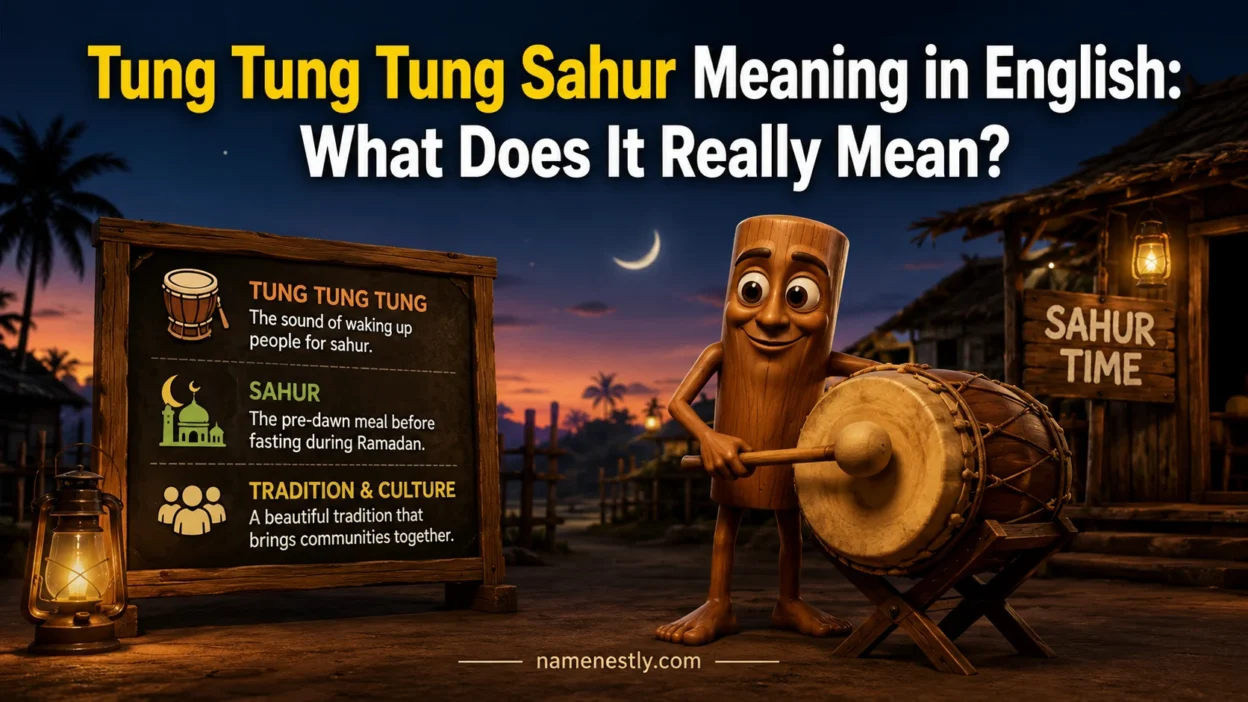
Tung Tung Tung Sahur roughly means a rhythmic “bang, bang, bang” wake-up call for the pre-dawn meal during Ramadan. “Tung tung tung” imitates a repeated percussion sound, while “sahur” refers to the meal Muslims eat before dawn during their fast.
In traditional Indonesian contexts, rhythmic sounds and drumming can help alert people that it’s time to eat before the fasting day begins. On social media, the phrase also refers to a viral, AI-generated wooden character associated with Indonesian internet humor.
The phrase doesn’t have a precise, word-for-word English translation. It’s better understood as a sound-based call to wake up for sahur.
Comparison Overview
The meaning of Tung Tung Tung Sahur changes depending on where you encounter it. Understanding the context helps you distinguish the cultural expression from the internet joke.
| Feature | Traditional Meaning | Internet Meme Meaning |
| Main idea | A rhythmic call associated with waking people for sahur | A viral phrase linked to a fictional character |
| Language and culture | Indonesian cultural context | Global social media culture |
| “Tung tung tung” | Imitated percussion or drumbeat | A recognizable, repetitive sound |
| “Sahur” | Pre-dawn meal during Ramadan | Part of the meme’s name and identity |
| Purpose | Help people wake up before dawn | Entertain viewers through absurd humor |
| Tone | Practical and connected to Ramadan customs | Funny, surreal, and sometimes deliberately creepy |
| Typical setting | Neighborhoods during Ramadan | TikTok videos, memes, gaming content, and fan edits |
Both uses share the same memorable phrase. However, the traditional wake-up call has a practical cultural purpose, while the viral character belongs to fictional internet entertainment.
Main Differences Between Tung Tung Tung Sahur Meaning in English
The biggest difference lies between the phrase’s cultural meaning and its newer online association. The words connect to a Ramadan meal and a rhythmic sound, but the meme adds a fictional character and an exaggerated story.
- Traditional use: A rhythmic call that helps wake people for the pre-dawn meal.
- Literal sound: “Tung tung tung” imitates repeated percussion.
- Religious context: Sahur is the meal eaten before dawn during Ramadan fasting.
- Meme usage: The phrase identifies a strange wooden character in viral videos.
- Fictional story: Some meme versions portray the character as appearing after people ignore repeated calls to wake up.
- English interpretation: The phrase works as a sound-based wake-up call rather than a standard English sentence.
These distinctions matter because the meme’s fictional details don’t represent established Islamic beliefs or a universal Indonesian tradition. The original cultural context and the later internet joke should remain separate.
What Does Tung Tung Tung Sahur Mean Word by Word?
To understand the full phrase, it helps to examine each part separately. One part imitates a sound, while the other refers to a familiar Ramadan practice.
What Does “Tung Tung Tung” Mean?
“Tung tung tung” is an example of onomatopoeia, a language term for words that imitate sounds. English examples include “bang,” “boom,” “tick-tock,” and “knock-knock.”
In this phrase, “tung” represents a repeated, resonant sound. The exact sound can vary depending on how someone says it or which instrument they use. Repeating it three times creates a rhythm that sounds like someone striking a drum to get attention.
The repetition also makes the phrase memorable. Compare these two calls:
- “It’s time to wake up for sahur.”
- “Tung tung tung, sahur!”
The first communicates information directly. The second adds a beat that people can hear, repeat, and remember.
What Does “Sahur” Mean in English?
Sahur is the pre-dawn meal Muslims eat before beginning their daily fast during Ramadan. It’s also commonly spelled suhoor in English.
During Ramadan, Muslims abstain from food and drink from dawn until sunset. Sahur provides an opportunity to eat and drink before the fasting period begins. The meal’s timing depends on local dawn times, so it varies by location and season.
Sahur isn’t simply breakfast under another name. It has a specific place in the Ramadan routine and can carry spiritual, family, and community significance.
For example, a family might wake before sunrise, prepare rice and eggs, drink water, and eat together before the morning prayer. The meal may be simple or elaborate, depending on the household’s customs.
What Is the Full English Translation of Tung Tung Tung Sahur?
A natural English interpretation is “Bang, bang, bang—time for sahur!” Another way to explain it is “A rhythmic wake-up call for the pre-dawn meal.”
Neither version is a strict literal translation. The phrase combines a sound imitation with the name of the meal, so its meaning depends on context.
| Indonesian expression | English explanation |
| Tung | An imitated resonant beat |
| Tung tung tung | A series of repeated beats |
| Sahur | The pre-dawn meal during Ramadan |
| Tung tung tung sahur | A rhythmic call to wake people for sahur |
The most useful takeaway is simple: the phrase describes a sound-based call, not a complete sentence with a precise English equivalent.
Where Did Tung Tung Tung Sahur Originate?
The phrase draws on Indonesian Ramadan culture, where communities have used different methods to wake people before dawn. Its later internet fame came from a separate development: the creation and circulation of a fictional character.
Keeping these two origins distinct helps explain why the phrase has both a cultural meaning and a meme identity.
The Traditional Ramadan Wake-Up Call
In Indonesia, Ramadan traditions vary from region to region. In some communities, people use drums, percussion, chants, or calls to alert neighbors that sahur time is approaching.
One traditional Indonesian practice is known as kenthongan, which involves striking a hollow wooden instrument to create a signal. Other communities use drums or different local instruments. The exact custom depends on local history and community preferences.
These sounds serve a practical purpose. People need to wake up early enough to eat before dawn, especially when their daily schedules make nighttime meals inconvenient.
A rhythmic call can travel through a neighborhood more easily than a quiet announcement. Its repetition also helps people recognize the signal without needing a clock or phone alarm.
However, not every Indonesian community uses the same instrument or phrase. It would be inaccurate to treat one particular sound as a universal Ramadan custom across Indonesia.
Read More: CBFW Meaning in Text: What Does CBFW Mean in Slang?
The Cultural Meaning Behind Tung Tung Tung Sahur
The phrase captures a familiar part of the Ramadan experience: waking up while it’s still dark to prepare for a day of fasting.
In communities that use neighborhood wake-up calls, the sound can represent more than a reminder. It may reflect shared routines, cooperation, and a sense of community during the holy month.
Consider a neighborhood where volunteers walk through the streets before dawn, beating a drum and calling out to residents. Their goal isn’t to frighten anyone. They want people to wake up in time for their meal.
That practical meaning is important when interpreting the viral phrase. The meme’s strange character may look intimidating, but the cultural practice behind the sahur call is ordinary and purposeful.
Who Created the Tung Tung Tung Sahur Meme?
The modern meme became associated with Indonesian TikTok creator Noxa, known as @noxaasht. Widely circulated accounts trace the character’s early viral appearance to a post dated February 28, 2025.
The character combines an unusual wooden design with a repetitive name and an exaggerated fictional premise. Those features made it suitable for short videos, remixes, reaction posts, and AI-generated meme content.
It’s useful to distinguish the phrase’s older cultural associations from the specific online character. The Ramadan wake-up tradition did not begin with the meme, and the fictional character shouldn’t be treated as an authentic religious figure.
The Original Meme Video
The early viral version presents a bizarre wooden creature associated with the call for sahur. The accompanying narration uses the idea of repeated calls to create a fictional story about what happens when someone doesn’t wake up.
In various retellings, the creature supposedly appears after people ignore three calls. This premise gives the phrase a mock-threatening quality, turning an ordinary wake-up reminder into an absurd horror joke.
The basic idea is easy to understand:
- Someone needs to wake up for sahur.
- A repeated call announces the meal.
- The fictional character becomes part of an exaggerated warning.
- The situation turns into a humorous or unsettling internet story.
The character’s story belongs to fictional meme lore. It isn’t an established Islamic teaching or evidence of a traditional Indonesian supernatural belief.
What Does the Original Meme Story Mean?
The joke exaggerates the familiar problem of waking up early. Anyone who has struggled to leave bed before sunrise can understand the setup.
Instead of relying on an alarm clock or a family member, the meme imagines a strange character showing up to enforce the wake-up call. The result mixes everyday experience with surreal comedy.
This contrast helps explain the meme’s appeal. The underlying situation is relatable, but the imagined consequence is ridiculous.
As the meme spread, creators adapted its character, sound, and premise in different ways. Some versions emphasize comedy, while others use darker imagery or exaggerated action scenes.
What Does the Tung Tung Tung Sahur Character Look Like?
The viral character is typically depicted as a wooden, humanoid creature with a roughly carved body, long limbs, and an expressive face. Many versions also feature a stick or club-like object.
Its appearance is intentionally unusual. Rather than looking like a polished cartoon mascot, the figure resembles an animated wooden object brought to life.
The Wooden Character and Its Drum-Inspired Design
The wooden body connects visually with the phrase’s rhythmic sound. Wood is commonly used to make percussion instruments, including some traditional signaling instruments.
That connection makes the design easy to associate with the name. The repeated sound suggests striking an object, while the character looks as if it could have emerged from a piece of wood.
Still, the design is part of the meme’s fictional presentation. It shouldn’t be interpreted as an accurate illustration of a traditional Indonesian sahur volunteer or a particular cultural symbol.
Why Does Tung Tung Tung Sahur Look Scary and Funny?
The character combines two styles that usually create very different reactions: horror and comedy.
Its proportions, facial expression, and wooden appearance can seem unsettling. Meanwhile, its name sounds rhythmic and almost playful, and its story revolves around waking up for a meal.
That contrast creates much of the humor.
Imagine seeing a dramatic video with ominous music, a strange wooden creature, and a warning about sleeping through breakfast. The serious presentation clashes with the ordinary situation, making the result funny.
Creators can also change the mood by adjusting the music, voice-over, animation, or editing. The same character might appear frightening in one clip and ridiculous in another.
Why Did Tung Tung Tung Sahur Become So Popular?
Viral memes often combine a recognizable sound, an unusual image, and an idea people can adapt quickly. Tung Tung Tung Sahur brings all three together.
Its repeated name is easy to remember, while the character provides a recognizable visual. The story is also flexible enough for creators to make new versions without needing to explain the entire joke.
The Role of TikTok and Short-Form Videos
TikTok and similar platforms make it easy to share short audio clips, reaction videos, character edits, and remixes. A distinctive sound can become recognizable even when viewers haven’t seen the original post.
Tung Tung Tung Sahur fits that format well. The phrase has a clear rhythm, and the character can appear in a video within seconds.
Creators can use the concept in several ways:
- Add the character to a funny waking-up scenario.
- Pair the audio with dramatic music.
- Create an animation or reaction clip.
- Reimagine the character in a game or fictional setting.
- Make a parody involving someone who refuses to get out of bed.
Each version builds on the original idea while giving audiences something new to share.
FAQs:
What Does Tung Tung Tung Sahur Mean in English?
Tung Tung Tung Sahur roughly means “Bang, bang, bang—time for sahur!” The repeated words imitate a rhythmic sound, while sahur refers to the pre-dawn meal during Ramadan.
Is Tung Tung Tung Sahur a Real Indonesian Phrase?
The expression draws on Indonesian cultural references to waking people for sahur. Its modern viral character, however, belongs to internet meme culture rather than an established religious tradition.
Who Created the Tung Tung Tung Sahur Meme?
The character is widely associated with Indonesian TikTok creator Noxa, known as @noxaasht. Accounts of its early viral spread point to a post from February 28, 2025.
Is Tung Tung Tung Sahur Part of Italian Brainrot?
People often group the character with Italian brainrot because it shares the absurd, surreal style associated with that wider meme trend. Its cultural roots and creator are Indonesian, however.
Is the Tung Tung Tung Sahur Monster Real?
No. The wooden creature is a fictional internet character. Its stories about appearing when people ignore repeated wake-up calls are part of the meme, not established religious teachings or evidence of a real supernatural being.
Conclusion:
The meaning of Tung Tung Tung Sahur becomes clear when you separate its cultural background from its viral identity. The repeated words imitate a rhythmic beat, while sahur refers to the pre-dawn meal Muslims eat during Ramadan. Together, the phrase evokes a call to wake up for the meal. Its internet version adds a fictional wooden character, exaggerated storytelling, and the absurd humor that helped it spread across social media.