Texting has changed the way people communicate. Instead of typing complete sentences, people often use short abbreviations to respond quickly. One of the most common examples is YW, which usually means “You’re Welcome.”
You may see YW after someone says “thanks,” “thank you,” or expresses appreciation for a favor. It works as a quick, casual response that acknowledges the other person’s gratitude without repeating the full phrase.
However, the way YW feels can change slightly depending on the conversation. A simple “YW” may sound brief, while “YW!” can feel more enthusiastic. Adding an emoji can make it warmer and more friendly.
If you’ve received YW in a text and wondered whether it carries another meaning, context matters. In ordinary texting, messaging, social media, and online conversations, YW most commonly means “You’re Welcome.”
Quick Answer
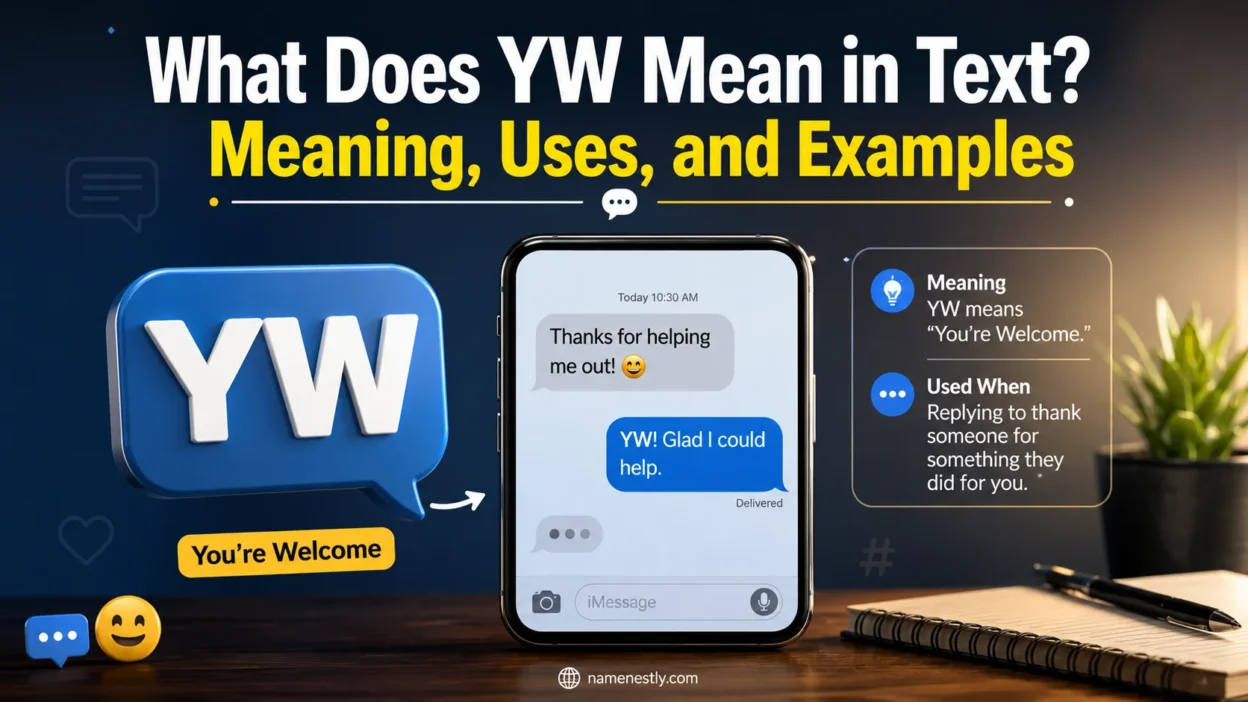
YW means “You’re Welcome” in text messages and online conversations. People usually send it after someone says “thank you” or “thanks.”
For example:
Person A: Thanks for helping me with that!
Person B: YW!
The abbreviation keeps the response short and casual. It’s especially common in texts, direct messages, group chats, comments, and other informal conversations.
What Does YW Stand For?
YW stands for “You’re Welcome.”
It’s an abbreviation rather than a completely different phrase. The letters simply represent the first letters of the two words:
- Y = You’re
- W = Welcome
You may see several forms, including YW, yw, and Yw. In ordinary texting, capitalization usually doesn’t change the meaning.
Is YW a Texting Abbreviation?
Yes. YW is widely used as a casual texting abbreviation for “You’re Welcome.”
People use abbreviations because they make conversations faster. Similar examples include:
- TY = Thank You
- THX = Thanks
- NP = No Problem
- IDK = I Don’t Know
- BRB = Be Right Back
- LOL = Laughing Out Loud
YW belongs to the same general family of quick online expressions.
Comparison Overview
| Expression | Meaning | Typical Tone | Common Setting |
| YW | You’re Welcome | Casual | Texts and chats |
| You’re welcome | You’re Welcome | Neutral | Most conversations |
| NP | No Problem | Casual | Texts and DMs |
| No worries | No problem | Friendly | Casual conversations |
| Anytime | Happy to help | Friendly | Friends and family |
| My pleasure | Glad to help | Polite | More courteous conversations |
| Sure | You’re welcome / okay | Casual | Informal replies |
These expressions overlap, but they aren’t perfectly interchangeable. YW directly responds to gratitude, while phrases such as “no worries” can also reassure someone that their request wasn’t an inconvenience.
Main Differences Between What Does YW Mean in Text?
The main difference lies between YW, the full phrase “You’re Welcome,” and other responses people use after receiving thanks.
| Response | Main Purpose | Tone |
| YW | Short response to thanks | Casual |
| You’re welcome | Direct acknowledgment | Neutral |
| YW! | Friendly acknowledgment | More enthusiastic |
| yw 😊 | Warm casual response | Friendly |
| No problem | Shows the favor wasn’t an issue | Relaxed |
| Anytime | Offers willingness to help again | Friendly |
| My pleasure | Expresses courtesy | Polite |
The important point is simple: YW normally carries the same basic meaning as “You’re welcome.”
What Does YW Mean in Text Messages?
When someone sends YW in a text message, they’re usually responding to your gratitude.
For example:
You: Thanks for picking me up.
Friend: YW!
Here, nothing complicated is happening. The person is simply saying “You’re welcome.”
The abbreviation becomes especially useful when the conversation moves quickly. Rather than typing the entire phrase, someone can reply with two letters and keep the chat moving.
YW After “Thanks”
A common situation looks like this:
You: Thanks for sending the notes.
Them: YW.
The response confirms that the person received your appreciation and doesn’t mind helping.
YW After “Thank You”
You can also see it after a more formal expression of gratitude:
You: Thank you for explaining that.
Them: YW!
Again, the meaning remains “You’re welcome.”
YW After a Favor
People often use YW when someone thanks them for doing something helpful.
Friend: Thanks for saving me a seat.
You: YW!
The abbreviation works because both people already understand the conversational context.
How to Use YW in a Text
Using YW is straightforward. Send it after someone expresses thanks or appreciation.
You can use it when:
- A friend thanks you for helping.
- Someone appreciates information you shared.
- A family member thanks you for doing a favor.
- Someone thanks you in a group chat.
- A person thanks you in a casual direct message.
- Someone appreciates a recommendation or suggestion.
The key is context. YW works naturally in casual conversations because texting often favors speed and brevity.
Example: Helping a Friend
Alex: Thanks for helping me move that box.
Sam: YW!
Example: Sharing Information
Mia: Thanks for sending me the address.
Liam: YW.
Example: Group Chat
Jordan: Thanks everyone for the birthday wishes!
Taylor: YW!
Example: Online Message
Chris: Thanks for answering my question.
Dana: yw 😊
Each example uses the same basic meaning. The surrounding words simply change the conversational tone.
YW Meaning in Different Contexts
Although the definition stays consistent in most casual conversations, the emotional tone can shift depending on the situation.
YW Between Friends
Among friends, YW usually feels relaxed and natural.
Friend: Thanks for grabbing my coffee.
You: YW!
Neither person needs a formal response. A short abbreviation fits the relationship.
YW in Family Conversations
Family members may also use YW when texting.
Sister: Thanks for picking up Mom.
Brother: YW.
The response is brief because the relationship already provides context.
YW in Group Chats
Group chats often encourage shorter messages. People may type YW instead of writing a complete sentence.
For example:
A: Thanks for adding me to the group!
B: YW!
The abbreviation keeps the conversation moving without adding unnecessary text.
YW in Social Media Messages
On social media, people frequently use abbreviations because messages tend to be quick and informal.
You might see:
User: Thanks for sharing this!
Creator: YW!
The meaning remains “You’re Welcome.”
Read More: HYB Meaning in Text: What Does HYB Mean in Texting?
YW Meaning on Social Media and Online Chat
YW can appear across many online communication platforms. The platform usually doesn’t change its standard meaning.
You may encounter it in:
- Direct messages
- Group chats
- Social media comments
- Gaming chats
- Online communities
- Messaging apps
- Text messages
- Informal workplace chats
The important distinction is between the platform and the context. A message on one platform may look different from a message on another, but YW generally still means “You’re welcome.”
YW on Snapchat
On Snapchat, YW can function as a quick response when someone says thanks.
Friend: Thanks for sending that snap!
You: YW
The casual nature of Snapchat makes abbreviations particularly natural.
YW on Instagram
Instagram users may send YW through direct messages or comments.
Follower: Thanks for the recommendation!
Creator: YW!
The phrase doesn’t gain a special Instagram-specific definition.
YW on TikTok
TikTok conversations can also include YW in comments and direct messages.
For example:
User: Thanks for the song recommendation.
Reply: YW!
Again, context makes the meaning clear.
What Does YW Mean in a Conversation?
A useful way to understand YW is to look at what comes immediately before it.
If someone says:
- “Thanks!”
- “Thank you!”
- “Thanks so much!”
- “I appreciate it!”
- “Thanks for helping!”
Then YW almost certainly functions as “You’re Welcome.”
The response follows the normal conversational pattern:
Appreciation → Acknowledgment
For example:
Person A: I really appreciate your help.
Person B: YW!
The second person acknowledges the gratitude without needing a long response.
Is YW Rude or Polite?
YW isn’t inherently rude. It usually sounds casual because abbreviations are associated with informal communication.
However, the tone can depend on the situation.
Compare these responses:
YW
YW!
yw 😊
You’re very welcome!
They all communicate essentially the same basic idea. Yet they don’t create exactly the same emotional impression.
A plain YW can feel efficient or slightly brief. YW! adds energy. An emoji can make the response feel warmer. The full phrase sounds more polished.
Can YW Sound Cold?
Sometimes, yes. A very short reply can feel distant if the conversation calls for more warmth.
Consider this:
You: Thank you so much for helping me through that.
Them: YW.
The response isn’t necessarily rude. Still, the short format may feel less emotionally expressive than:
Them: You’re welcome! I’m glad I could help.
That’s why context matters more than the abbreviation itself.
What Does “YW!” Mean?
YW! still means “You’re Welcome.”
The exclamation mark adds enthusiasm or friendliness.
Compare:
- YW — brief and casual
- YW! — friendly or enthusiastic
- YW 😊 — warm and friendly
- You’re welcome! — complete and expressive
Punctuation can influence how a short message feels. It doesn’t normally create a completely different definition.
What Does “YW 😊” Mean?
YW 😊 means “You’re Welcome” with a friendly or warm tone.
The emoji doesn’t replace the abbreviation’s meaning. Instead, it adds emotional context.
For example:
Person A: Thanks for checking on me.
Person B: YW 😊
The smile suggests warmth and friendliness. The exact emotional meaning still depends on the relationship between the people.
What Does Lowercase “yw” Mean?
Lowercase yw generally means the same thing as uppercase YW: “You’re Welcome.”
People often type abbreviations in lowercase because it feels faster and more casual.
For example:
Thanks for the help!
yw
There’s normally no meaningful difference between:
- YW
- yw
- Yw
Capitalization usually reflects typing style rather than a different definition.
What Does YW Mean From a Girl?
When a girl sends YW, it usually means “You’re Welcome.”
The abbreviation itself doesn’t have a special female-specific meaning.
If someone says:
You: Thanks for helping me!
Her: YW!
The safest interpretation is simply that she’s acknowledging your thanks.
Don’t automatically treat YW as a romantic signal. A person’s overall conversation, wording, relationship, and behavior provide much more useful context.
What Does YW Mean From a Guy?
When a guy sends YW, it generally means “You’re Welcome.”
The abbreviation doesn’t have a special male-specific meaning either.
For example:
You: Thanks for sending me that information.
Him: YW.
The message simply acknowledges your appreciation.
Whether the conversation is friendly, professional, romantic, or purely practical depends on the broader interaction rather than these two letters.
Does YW Have a Romantic Meaning?
YW does not inherently have a romantic meaning.
Someone might use YW while talking to a romantic partner, crush, friend, coworker, or family member. The abbreviation itself doesn’t indicate attraction.
For example:
Person A: Thanks for the flowers ❤️
Person B: YW ❤️
The hearts may contribute romantic context. YW alone doesn’t.
This distinction matters because short texting abbreviations can be easy to overinterpret.
YW vs. You’re Welcome
The difference between YW and You’re Welcome is mainly length and formality.
| Feature | YW | You’re Welcome |
| Length | Very short | Full phrase |
| Meaning | You’re Welcome | You’re Welcome |
| Tone | Casual | Neutral to polite |
| Texting | Very common | Common |
| Formal writing | Usually unsuitable | Appropriate |
| Professional chat | Depends on workplace | Safer choice |
If you’re chatting with a close friend, YW feels perfectly natural. If you’re responding to a client or writing a formal message, the complete phrase often works better.
YW vs. No Problem
YW directly means “You’re welcome,” while No Problem emphasizes that helping wasn’t an inconvenience.
For example:
Thanks for picking me up.
YW!
versus:
Thanks for picking me up.
No problem!
Both responses work. However, they carry slightly different shades of meaning.
YW focuses on accepting the person’s gratitude. No problem reassures them that the favor wasn’t troublesome.
YW vs. No Worries
No worries is another casual response to thanks.
Thanks for sending that over.
No worries!
It can sound relaxed and reassuring. YW is more direct because it corresponds closely to the traditional response “You’re welcome.”
YW vs. Anytime
Anytime suggests that the person is willing to help again.
Thanks for helping me study.
Anytime!
This can feel warmer than a simple YW because it communicates openness to future favors.
YW vs. My Pleasure
My pleasure sounds more polished and courteous.
Thank you for your assistance.
My pleasure.
This response fits situations where someone wants to sound especially gracious. YW, by comparison, feels much more casual.
FAQs:
What does YW mean in texting?
YW usually means “You’re Welcome” in texting. People commonly send it after someone says “thanks” or “thank you.”
What does YW stand for?
YW stands for “You’re Welcome.” It’s a shortened form commonly used in casual digital communication.
Is YW rude?
YW isn’t inherently rude. It can sound brief because it’s an abbreviation, but its tone depends on the conversation and relationship.
What does YW mean from a girl?
YW from a girl generally means “You’re Welcome.” The abbreviation itself doesn’t indicate flirting or romantic interest.
What does YW mean from a guy?
YW from a guy generally means “You’re Welcome.” Its basic meaning doesn’t change based on who sends it.
Conclusion:
YW means “You’re Welcome” in most casual text messages and online conversations. It’s a simple abbreviation that lets people acknowledge thanks quickly. You’ll commonly see it after “thanks,” “thank you,” or another expression of appreciation. The capitalization can vary, so YW, yw, and Yw generally communicate the same message. Tone, however, depends on context. “YW” may feel brief, while “YW!” sounds more enthusiastic. Adding an emoji can make the response warmer.