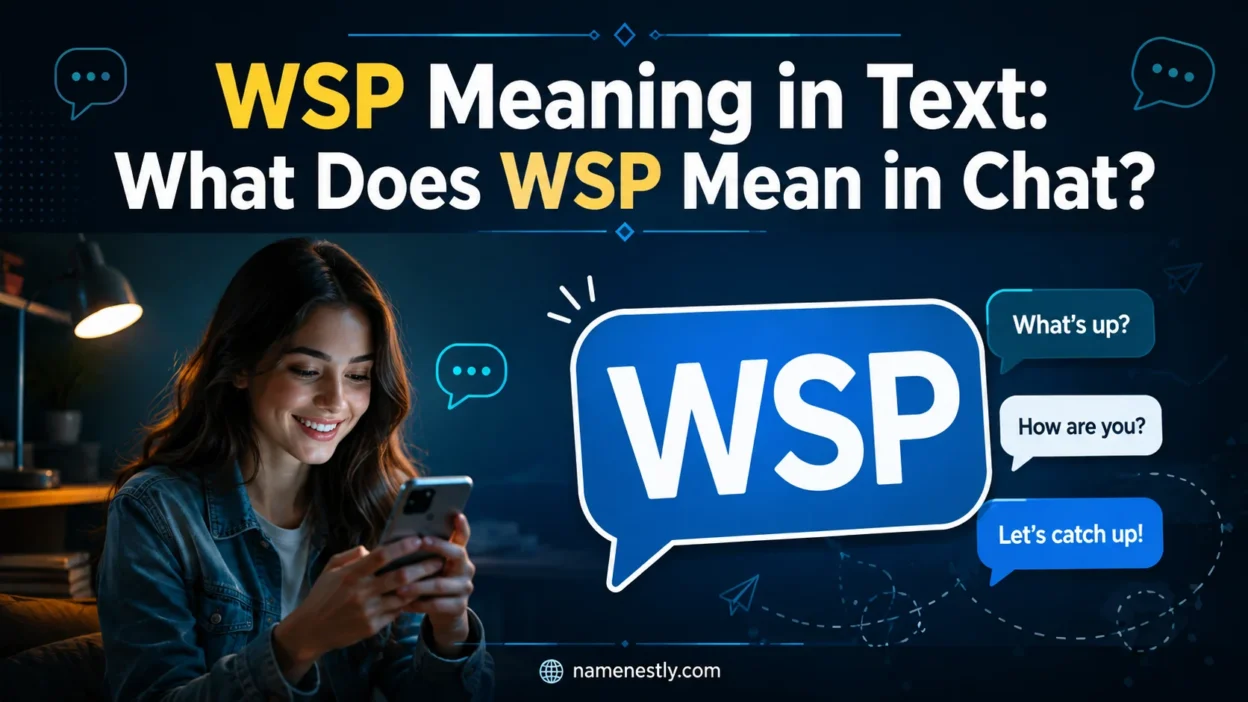
If someone sends you “WSP?” in a text message, you might wonder whether it has a special meaning. In most casual conversations, the answer is simple: WSP means “What’s up?”
People use WSP as a quick, informal way to greet someone, check what they’re doing, or start a conversation. You’ll often see it in text messages, Snapchat chats, Instagram DMs, Discord conversations, gaming chats, and other social platforms.
The abbreviation saves time without changing much of the original phrase. Instead of typing “What’s up?” someone can simply write “WSP?” and expect a casual response.
However, the exact tone depends on the conversation. For example, “WSP bro?” sounds friendly and relaxed, while “WSP tonight?” can act more like a question about someone’s plans.
Quick Answer:
WSP usually means “What’s up?” in text messages and online chats.
It works as an informal greeting or a quick way to ask what someone is doing. In many conversations, it has nearly the same meaning as “What’s going on?”, “How are things?”, or “What are you up to?”
For example:
Alex: WSP?
Jordan: Not much. Just watching a movie. You?
Here, “WSP?” doesn’t necessarily ask for detailed information. Alex is simply opening the conversation.
You might also see WSP used with additional words:
- WSP bro? — What’s up, bro?
- Hey WSP? — Hey, what’s up?
- WSP tonight? — What’s happening tonight?
- WSP with you? — What’s going on with you?
- WSP rn? — What’s up right now?
So, when someone sends WSP by itself, the safest interpretation in casual texting is “What’s up?”
Comparison Overview
The meaning of WSP becomes clearer when you compare it with other common texting abbreviations. Although several abbreviations can appear in similar conversations, they don’t always ask exactly the same question.
| Text Abbreviation | Full Meaning | Main Purpose | Typical Tone |
| WSP | What’s up? | Greeting or general check-in | Casual |
| SUP | What’s up? | Casual greeting | Very casual |
| WYD | What you doing? | Ask what someone is doing | Casual |
| HBU | How about you? | Return a question | Casual |
| HRU | How are you? | Ask about someone’s well-being | Casual |
| HMU | Hit me up | Ask someone to contact you | Casual |
| WBU | What about you? | Return a question | Casual |
The biggest difference lies in what the sender wants to know.
WSP has a broad meaning. The sender might simply want to start talking. WYD, by comparison, focuses more directly on someone’s current activity.
For example:
WSP?
This could simply mean, “Hey, what’s going on?”
But:
WYD?
usually means, “What are you doing right now?”
That small difference matters when you’re trying to understand the tone of a short message.
Main Differences Between WSP Mean in Text
The primary meaning of WSP Mean in Text is “What’s up?” However, the way people use the abbreviation can change depending on the situation.
| Use of WSP | What the Sender Usually Means |
| WSP? | What’s up? |
| Hey WSP? | Hey, what’s going on? |
| WSP bro? | What’s up, bro? |
| WSP tonight? | What’s happening tonight? |
| WSP with you? | What’s going on with you? |
| WSP rn? | What’s up right now? |
The abbreviation can therefore work as both a greeting and a conversation starter.
If someone you haven’t spoken to for several days sends “WSP?”, they’re probably reopening the conversation. If someone sends “WSP tonight?”, they’re more likely asking about your plans.
Context does the heavy lifting.
What Does WSP Stand For?
WSP stands for “What’s up?”
The phrase “What’s up?” has been widely used as an informal greeting for decades. Digital communication shortened the phrase even further as texting and online messaging became faster and more casual.
WSP follows the same general pattern as many other internet abbreviations. People remove unnecessary letters while keeping enough of the original phrase for the reader to understand it.
For instance:
- What’s up → WSP
- What are you doing → WYD
- How about you → HBU
- What about you → WBU
- Hit me up → HMU
The goal isn’t grammatical perfection. It’s quick communication.
That’s why you may see WSP written in different ways, including:
- WSP
- wsp
- Wsp
- WSP?
- wsp bro
- hey wsp
Capitalization usually doesn’t change the meaning.
WSP Meaning in Text Messages
In ordinary texting, WSP usually functions as a casual opener.
Imagine receiving this from a friend:
“WSP?”
They’re probably not asking you to explain everything happening in your life. More likely, they’re simply checking in and giving you an opening to respond.
A natural response could be:
“Not much. Just relaxing. You?”
You can also answer based on whatever you’re currently doing.
For example:
- “Just finished dinner.”
- “Nothing much, watching Netflix.”
- “I’m at the gym.”
- “Working right now.”
- “Just got home.”
- “About to head out.”
- “Playing games with the boys.”
The conversation can then move naturally from the initial greeting into another topic.
WSP Meaning on Snapchat
On Snapchat, WSP can appear in direct messages when someone wants to start a quick conversation.
Snapchat conversations often rely on short messages, so abbreviations like WSP fit naturally into the platform’s casual communication style.
For example:
Person A: WSP
Person B: Nothing much, just chilling
Person A: You going out later?
Here, WSP simply opens the door to a longer conversation.
You might also receive:
“Wsp 👀”
The emoji can add a playful or curious tone. However, the exact intention still depends on the relationship between the people chatting.
A close friend might use WSP casually. Someone you haven’t spoken with for months might use it as a simple way to reconnect.
WSP Meaning on Instagram and TikTok
WSP also appears in social media DMs.
Instagram users may send it when they want to start talking without writing a full sentence. TikTok users can use similar abbreviations when moving from comments into direct messages.
For example:
“WSP, haven’t heard from you in forever.”
Here, WSP works almost like “Hey, what’s up?”
Another example might look like this:
“WSP? You still going tomorrow?”
In this case, the abbreviation starts the conversation while the second sentence introduces the actual topic.
Social media communication often blends greetings, abbreviations, emojis, and short questions. WSP fits neatly into that style.
WSP Meaning on Discord and Gaming Chats
Gaming communities frequently use short messages because conversations move quickly.
A player might type:
“WSP?”
Another player could answer:
“Getting online now.”
The conversation might then become:
“WSP?”
“Getting online now.”
“You joining the lobby?”
“Yeah, give me five.”
In gaming chats, WSP doesn’t necessarily relate to the game itself. It’s simply a fast greeting or check-in.
The same principle applies to Discord servers, group chats, and private messages. The abbreviation lets someone start talking without spending time typing the complete phrase.
How to Reply to WSP
Replying to WSP is easy because you don’t need a complicated answer.
Your response should match the situation and the person who sent the message.
| If You’re… | You Could Reply |
| Doing nothing | “Not much, you?” |
| Relaxing | “Just chilling. What about you?” |
| Working | “Just working right now.” |
| Studying | “Doing some homework.” |
| Going out | “About to head out.” |
| Playing games | “Gaming with friends.” |
| Interested in chatting | “Not much. What’s up with you?” |
| Planning something | “Nothing yet. You got plans?” |
The easiest response is often:
“Not much, you?”
It answers the greeting while returning the question.
That last part matters. If you want the conversation to continue, asking “you?” gives the other person something to answer.
Read More: OTP Mean in Text: What Does OTP Mean in Chat?
WSP Conversation Examples
Realistic examples make the meaning much easier to understand.
Example: Casual Greeting
Person A: WSP?
Person B: Not much, just chilling. You?
Here, WSP functions exactly like a casual “What’s up?”
Example: Making Plans
Person A: WSP tonight?
Person B: Nothing planned yet. Why?
The added phrase “tonight” shifts the question toward plans.
Example: Checking In
Person A: Hey WSP?
Person B: Just got home from work.
The sender may simply want to reconnect.
Example: Gaming
Person A: WSP bro?
Person B: Getting online. You playing?
Here, WSP acts as a friendly greeting between gamers.
Example: Catching Up
Person A: WSP? Haven’t talked in a while.
Person B: I know! I’ve been super busy lately.
The abbreviation starts a conversation that quickly develops into a longer exchange.
Is WSP the Same as “What’s Up?”
In most texting situations, WSP means the same thing as “What’s up?”
The main difference comes from formality and presentation.
“What’s up?” is already informal. WSP makes it even shorter and more suited to quick digital communication.
Compare these messages:
“What’s up?”
and:
“WSP?”
Both can serve as casual greetings.
However, the second version feels more abbreviated and internet-oriented. You’d generally expect it in a text, DM, gaming chat, or social media conversation rather than a formal email.
Is WSP Formal or Informal?
WSP is informal texting slang.
You’d typically use it with friends, classmates, family members, teammates, or people you regularly chat with online.
It isn’t a good choice for formal communication.
For example, these situations usually call for standard language:
- Job applications
- Business emails
- School assignments
- Official requests
- Customer service messages
- Professional correspondence
Instead of writing:
“WSP?”
in a professional setting, you might write:
“Hello, how are you?”
or:
“Hello, I wanted to ask about the project.”
The key issue isn’t that WSP is wrong. It’s that the setting determines whether the abbreviation fits.
WSP Meaning in a Conversation: Understanding the Tone
Short messages can be surprisingly difficult to interpret because they don’t contain much context.
Consider these examples:
“WSP?”
This usually sounds like a simple greeting.
“WSP bro?”
This feels more friendly and familiar.
“Heyy wsp”
The extra “y” and lowercase style can make the message feel relaxed or playful.
“WSP tonight?”
This probably asks about plans or activities later in the day.
“WSP rn?”
The word “rn” means “right now,” making the question more specific.
The words surrounding WSP often reveal more than the abbreviation itself.
Punctuation can also influence the tone slightly. “WSP?” is a direct question, while “WSP 😂” may feel more playful.
Still, punctuation and emojis don’t create a completely different definition. They mainly adjust the conversational flavor.
WSP vs. WYD: What’s the Difference?
WSP and WYD can look similar because both appear in casual conversations. Their meanings, however, aren’t identical.
WSP means “What’s up?”
WYD means “What you doing?” or “What are you doing?”
The easiest way to remember the difference is this:
- WSP = broad check-in
- WYD = current activity
- WSP tonight? = plans for tonight
- WYD tonight? = what are you doing tonight?
Consider this conversation:
Alex: WSP?
Jordan: Not much. You?
Now compare:
Alex: WYD?
Jordan: I’m watching a movie.
WYD usually expects a more specific activity as the answer.
WSP leaves the response much more open.
Common Mistakes When Using WSP
Although WSP is simple, people sometimes misunderstand it because texting abbreviations depend heavily on context.
Mistaking WSP for WYD
Someone might assume WSP always asks what you’re physically doing. That’s not necessarily true.
“What’s up?” can be nothing more than a greeting.
Using WSP in Formal Communication
Internet slang belongs mainly in informal spaces. A professional message should use standard language unless the relationship clearly supports casual slang.
Overthinking Capitalization
WSP, wsp, and Wsp generally communicate the same thing.
You don’t need to search for a different definition simply because someone uses lowercase letters.
Assuming Every WSP Has the Same Tone
A friend saying “WSP 😂” can sound very different from a stranger saying “WSP?”
The words remain similar, but the relationship and surrounding conversation affect the tone.
Expecting a Complicated Response
Someone who sends WSP may simply want to start talking. A short response is perfectly normal.
WSP in Social Media and Online Slang
The rise of digital communication has made abbreviations an everyday part of online language.
People often shorten phrases because typing a few letters feels faster. More importantly, frequent users understand these abbreviations almost instantly.
WSP works particularly well because the original phrase is already familiar.
You don’t need to decode a complicated acronym. Once you’ve seen it a few times, WSP = What’s up? becomes almost automatic.
This kind of shorthand also reflects the conversational nature of online communication. People often write messages the way they speak rather than following formal writing conventions.
That’s why you’ll see combinations such as:
- wsp
- wyd
- hbu
- rn
- idk
- fr
- ngl
- lol
These abbreviations form part of a broader digital vocabulary that changes over time.
FAQs:
What does WSP mean in text?
WSP usually means “What’s up?” It’s an informal greeting or conversation starter commonly used in text messages and social media chats.
What does WSP stand for in texting?
WSP stands for “What’s up?” People use it as a shorter version of the casual phrase.
How do you respond to WSP?
You can reply with something simple such as “Not much, you?”, “Just chilling,” or a description of what you’re currently doing.
Is WSP the same as “What’s up?”
Yes. In casual texting, WSP generally represents the same phrase and serves a similar conversational purpose.
Is WSP slang?
Yes. WSP is informal texting and internet slang. It’s mainly appropriate for casual conversations rather than formal communication.
Conclusion:
WSP means “What’s up?” in most casual text conversations. It’s a short, informal greeting that people use to check in, start conversations, or ask what’s happening. You’ll commonly encounter it in texts, Snapchat messages, Instagram DMs, Discord chats, gaming conversations, and other online spaces.