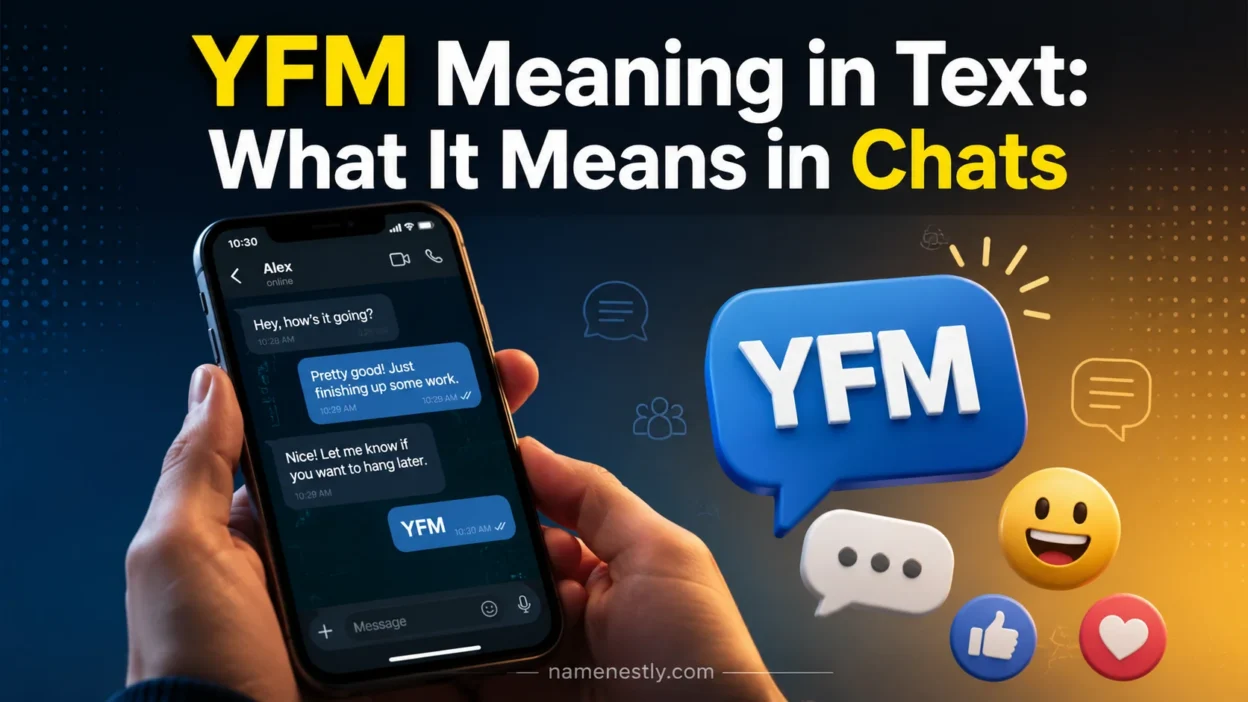
Have you ever received a message ending with “YFM” and wondered what the sender meant? This short abbreviation appears in casual conversations, text messages, and social media discussions. If you understand its meaning, you’ll find it much easier to follow the conversation.
YFM usually stands for “You Feel Me?” People use it to ask whether someone understands their point, agrees with their opinion, or relates to their experience. In everyday English, it can mean “Do you get what I’m saying?” or “You know what I mean?”
For example, someone might text, “Working all week without a break gets exhausting, YFM?” They’re checking whether you understand or share that feeling. The expression sounds informal, so it fits friendly conversations better than professional communication.
However, the exact meaning depends on the surrounding message. Learning how people use YFM will help you understand its tone and respond naturally.
Quick Answer: What Does YFM Mean in Text?
YFM means “You Feel Me?” in common texting and slang usage. People use it to check whether someone understands their point, agrees with their perspective, or relates to what they’re saying.
Example:
- Person A: “Nobody understands how hard I’ve been working, YFM?”
- Person B: “Yeah, I get you.”
Here, the sender wants the other person to understand their experience. They aren’t asking about physical feelings. Instead, they’re looking for understanding or a shared point of view.
Comparison Overview
YFM is a casual expression that helps people check whether others understand what they’re saying. Before exploring its different uses, here’s a quick comparison of the related expressions and their meanings.
| Expression | Full Meaning | Common Purpose | Typical Tone |
| YFM | You Feel Me? | Checks understanding or relatability | Casual |
| FYM | Often “F*** You Mean?” | Questions something with confusion or disbelief | Informal, sometimes confrontational |
| YKWIM | You Know What I Mean? | Checks whether someone follows an explanation | Conversational |
| I Feel You | I understand or relate to you | Shows empathy or shared understanding | Friendly or supportive |
| You Get Me? | Do you understand me? | Checks comprehension or agreement | Casual |
| Right? | Isn’t that correct? | Seeks agreement or confirmation | Depends on context |
The most important distinction is that YFM usually asks for understanding, while “I Feel You” expresses understanding. FYM can carry a much stronger tone, especially when someone uses it to challenge a statement.
For example, “I’m tired of being ignored, YFM?” asks someone to understand the speaker’s frustration. In contrast, “I feel you” tells the speaker that the listener understands their frustration.
Main Differences Between YFM Meaning in Text
Although YFM has a common meaning, people don’t always use it for the same reason. The surrounding conversation helps you identify what the sender wants from you.
YFM as a Request for Understanding
Sometimes, people use YFM to check whether their message makes sense. They may have explained a difficult situation or shared an opinion they want others to understand.
Example:
- Person A: “I need some quiet time after work because dealing with people all day gets tiring, YFM?”
- Person B: “Yeah, I understand that.”
In this exchange, the sender isn’t necessarily asking for agreement. They simply want the other person to understand their point of view.
YFM as a Request for Agreement
People also use YFM when they want someone to acknowledge an opinion or recognize a point they consider important.
Example:
- Person A: “Being honest from the beginning saves everyone trouble, YFM?”
- Person B: “Definitely. It’s better than hiding the truth.”
The sender expects the other person to recognize the value of honesty. However, YFM doesn’t automatically mean that the listener must agree.
YFM as a Sign of Relatability
Another common use involves sharing an experience that someone else might recognize. The sender uses the abbreviation to create a sense of connection.
Example:
- Person A: “That feeling when payday finally arrives after a long month, YFM?”
- Person B: “Absolutely! I’ve been waiting for that moment.”
Here, the sender hopes the listener can relate to the situation. This usage often appears in conversations about work, school, friendships, money, and everyday struggles.
YFM as Conversational Emphasis
People sometimes place YFM at the end of a statement to make their point sound more personal. It can work like a verbal nudge that invites the listener to follow along.
Example:
“Real friends support you when things get difficult, YFM?”
The sender emphasizes the importance of friendship while inviting the other person to understand the message. Depending on the conversation, the phrase may sound thoughtful, confident, or slightly challenging.
What Does YFM Mean in Texting and Slang?
In texting, YFM is an informal abbreviation of “You Feel Me?” Its slang meaning centers on understanding, agreement, and shared experiences.
The word feel doesn’t refer only to emotions here. In casual English, someone can use it to ask whether another person understands an idea or recognizes a situation.
Consider this message:
“Sometimes you have to put yourself first, YFM?”
The sender isn’t asking whether you can physically feel anything. They want to know whether you understand the importance of setting personal boundaries.
YFM can communicate several related ideas:
- Understanding: “Do you get what I’m saying?”
- Agreement: “Can you see my point?”
- Relatability: “Have you experienced something similar?”
- Emotional connection: “Do you understand how I feel?”
- Emphasis: “You see what I’m trying to explain?”
These meanings overlap, so you shouldn’t treat them as completely separate definitions. Context determines which interpretation makes the most sense.
YFM is especially suitable for informal conversations where both people already understand the general topic. If someone uses it in a complicated discussion, asking for clarification may be more helpful than guessing.
How Is YFM Used in Text Messages?
YFM can serve different conversational purposes depending on the sender’s message. Recognizing these patterns helps you understand what someone expects from you.
Checking Whether Someone Understands
A sender might use YFM after explaining a problem, decision, or personal boundary. They want to confirm that the listener understands the point.
Example:
- A: “I can’t keep saying yes to everyone when I’m already overwhelmed, YFM?”
- B: “Yeah, you need time for yourself too.”
The sender wants understanding rather than a detailed solution. A short, supportive response often works well.
Looking for Agreement
People sometimes use YFM when sharing a belief or opinion. The expression invites the listener to consider the point and respond.
Example:
- A: “Actions matter more than promises, YFM?”
- B: “For sure. Anyone can make promises.”
The second person agrees with the idea. Still, the same question would make sense if the listener disagreed respectfully.
Sharing a Relatable Experience
YFM can make an ordinary experience feel more personal. People use it when talking about familiar frustrations, exciting moments, or everyday situations.
Example:
- A: “When you finish a big project and finally relax, YFM?”
- B: “That first evening of freedom feels amazing.”
The sender hopes the listener understands the experience because they’ve felt something similar.
Emphasizing an Important Point
Sometimes, YFM adds weight to a statement. It encourages the reader to pay attention to the message rather than simply reading the words.
Example:
“Your peace matters more than trying to impress everyone, YFM?”
The abbreviation gives the statement a conversational feel. However, it doesn’t automatically make the message more persuasive; the idea itself still matters.
Expressing Frustration or Disappointment
The expression can also appear during serious conversations. A person might use it when explaining a problem and hoping someone understands their frustration.
Example:
- A: “I keep helping everyone, but nobody shows up when I need help, YFM?”
- B: “I understand why that would hurt.”
The phrase isn’t inherently angry. The emotional tone comes from the message, the relationship, and the way the sender communicates.
Read More: NVM Meaning in Text: TikTok, and in Chats
YFM Meaning on Snapchat, TikTok, Instagram, and WhatsApp
YFM generally keeps the same meaning across popular social media platforms. The platform may change how people use it, but it doesn’t automatically give the abbreviation a different definition.
YFM Meaning on Snapchat
On Snapchat, people may use YFM in direct messages, replies, or casual conversations with friends. It can help them check whether someone understands a joke, opinion, or personal story.
Example:
“I’m never trusting that restaurant again after what happened, YFM?”
The sender wants the recipient to understand their frustration. Their exact intention depends on what happened and what the conversation covers.
YFM Meaning on TikTok
TikTok users may use YFM in comments, captions, and conversations about relatable situations. The abbreviation fits informal discussions where people share opinions or experiences.
Example:
“People only notice your progress when you start succeeding, YFM?”
Here, the writer invites readers to understand or relate to the observation. Other users might agree, disagree, or share their own experiences.
YFM Meaning on Instagram
On Instagram, YFM can appear in direct messages, comments, and captions. Friends might use it when discussing relationships, personal goals, everyday frustrations, or shared interests.
Example:
“Protecting your peace is more important than pleasing everyone, YFM?”
The sender wants readers to connect with the message. The phrase remains informal rather than becoming a special Instagram-specific abbreviation.
YFM Meaning on WhatsApp
WhatsApp conversations often involve friends, relatives, coworkers, and group chats. YFM may appear when someone explains a situation or asks others to understand their perspective.
Example:
“Let’s leave early so we can avoid the traffic, YFM?”
The sender checks whether the other person understands the plan. In a practical conversation, a direct reply such as “Got it” may be enough.
Remember: The platform alone doesn’t determine what YFM means. Read the surrounding message and consider the relationship between the people involved.
Real Examples of YFM in Conversations
Examples make slang easier to understand because they show how people use it naturally. Here are several realistic conversations featuring different meanings of YFM.
Example: Talking About a Stressful Day
Conversation:
- Alex: “I’ve had meetings all day and still have more work to finish, YFM?”
- Jordan: “I get you. That sounds exhausting.”
Meaning: Alex wants Jordan to understand how tiring the day has been. The abbreviation invites empathy rather than a specific solution.
Example: Sharing an Opinion
Conversation:
- Alex: “Being loyal means standing by people when life gets difficult, YFM?”
- Jordan: “Absolutely. That’s when loyalty matters most.”
Meaning: Alex wants Jordan to recognize the point about loyalty. Jordan responds with agreement.
Example: Discussing School or College
Conversation:
- Alex: “Studying all night and still worrying about the exam is the worst, YFM?”
- Jordan: “Seriously! I always feel that way before finals.”
Meaning: Alex is describing a familiar student experience and checking whether Jordan can relate.
Example: Talking About Friendship
Conversation:
- Alex: “A real friend tells you the truth even when it’s uncomfortable, YFM?”
- Jordan: “Yeah, honest friends are worth keeping.”
Meaning: Alex emphasizes honesty in friendships and invites Jordan to agree or share a perspective.
Example: Discussing Personal Boundaries
Conversation:
- Alex: “You can’t keep making everyone happy while ignoring your own needs, YFM?”
- Jordan: “I needed that reminder.”
Meaning: Alex wants Jordan to understand the importance of personal boundaries. Jordan recognizes the message’s value.
Example: Making Plans
Conversation:
- Alex: “Let’s meet at the coffee shop around five, YFM?”
- Jordan: “Got it. See you there.”
Meaning: Alex checks whether Jordan understands the plan. In this context, a simple confirmation makes sense.
These examples show that YFM doesn’t have one fixed emotional tone. It can express empathy, invite agreement, or check understanding depending on the situation.
How to Reply When Someone Says YFM
The best response depends on what the sender means. You don’t need to use another abbreviation to reply naturally.
| Your reaction | Possible reply | Why it works |
| You understand | “Yeah, I get you.” | Confirms understanding. |
| You agree | “Exactly!” | Shows agreement. |
| You relate | “I’ve been through that too.” | Shares a similar experience. |
| You feel empathetic | “I understand why you feel that way.” | Acknowledges their feelings. |
| You need clarification | “What do you mean?” | Invites an explanation. |
| You partly disagree | “I see your point, but I look at it differently.” | Keeps the conversation respectful. |
| You want to keep it casual | “Facts!” | Shows agreement in informal slang. |
| You don’t have much to add | “I hear you.” | Acknowledges their point without making a strong claim. |
What If You Don’t Understand YFM?
Don’t pretend to understand a message just because the sender expects agreement. Ask a short question instead.
For example:
- Friend: “Sometimes moving on is better than trying to fix everything, YFM?”
- You: “I think so, but what situation are you talking about?”
This response keeps the conversation open and gives your friend room to explain.
Should You Reply With YFM Too?
You can, especially if the conversation already feels casual. However, repeating the same abbreviation isn’t necessary.
For example:
- Friend: “Hard work pays off eventually, YFM?”
- You: “Yeah, I get what you mean.”
A natural reply is usually better than forcing slang into every message.
Does YFM Mean Something Different From a Guy or Girl?
Generally, YFM means “You Feel Me?” regardless of who sends it. The abbreviation doesn’t have a separate male or female definition.
However, the surrounding conversation can affect its tone. A friend might use it to check understanding, while someone interested in your opinion might use it to build a connection.
Consider these examples:
Between friends:
“School gets overwhelming when everything is due at once, YFM?”
The sender likely wants understanding or agreement about a shared frustration.
In a potentially flirtatious conversation:
“You understand me better than most people, YFM?”
This message may sound personal or affectionate. However, the abbreviation itself doesn’t prove romantic interest.
To interpret the message accurately, consider the full conversation, the sender’s usual communication style, and the relationship you share. One abbreviation isn’t enough to establish someone’s intentions.
FAQs:
What does YFM stand for in texting?
YFM usually stands for “You Feel Me?” People use it to ask whether someone understands their point, agrees with an idea, or relates to an experience.
What does YFM mean on Snapchat?
On Snapchat, YFM generally means “You Feel Me?” Friends may use it in direct messages to check understanding or share a relatable thought. The basic meaning stays the same across platforms.
Does YFM mean you agree with someone?
Not necessarily. YFM can invite agreement, but it may simply ask whether you understand the speaker’s point. Your response depends on whether you agree, relate, or need clarification.
Is YFM the same as FYM?
No. YFM usually means “You Feel Me?” while FYM often means “F*** You Mean?” in informal slang. FYM can express disbelief or frustration, so the two abbreviations may carry different tones.
How should you respond to YFM?
You can reply with “Yeah, I get you,” “Exactly,” or “I know what you mean.” If you’re confused, ask the sender to explain their point.
Conclusion:
YFM usually means “You Feel Me?” It’s a casual expression people use to check whether someone understands their point, agrees with their opinion, or relates to their experience. You’ll commonly see it in text messages, Snapchat conversations, TikTok comments, Instagram discussions, and WhatsApp chats. Although the platform may change, the basic meaning generally stays the same. Once you recognize the context, understanding YFM becomes straightforward. If someone sends it to you, respond naturally and ask for clarification whenever the meaning isn’t clear.