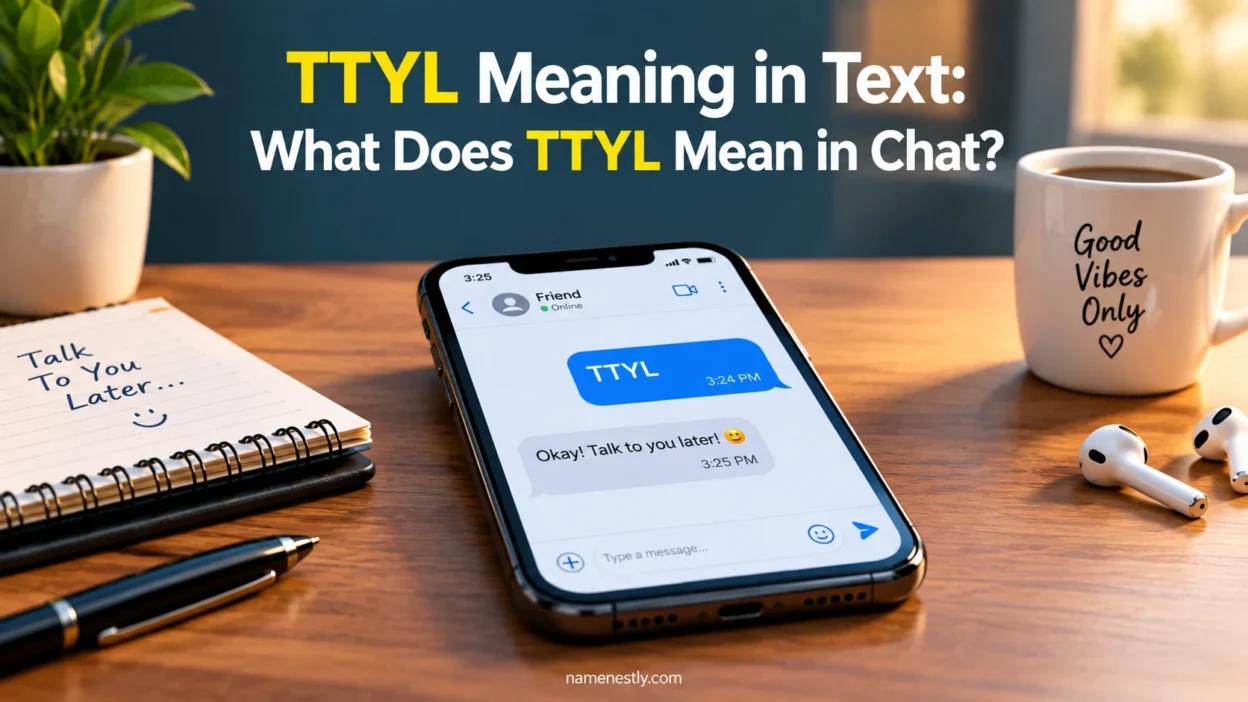
When someone sends “TTYL” in a text, they usually aren’t trying to confuse you. This short abbreviation simply means “Talk To You Later.” People use it when they want to end a conversation for now while leaving the door open to talk again later.
You’ll often see TTYL in text messages, social media DMs, gaming chats, and casual conversations. It can replace a longer goodbye when you’re busy, heading somewhere, going to sleep, or simply ready to pause the conversation.
The interesting part is that TTYL doesn’t specify exactly when the conversation will continue. “Later” could mean a few minutes from now, tonight, tomorrow, or whenever both people have time to talk again. Context usually provides the missing detail.
For example, a friend might say, “I need to finish my homework, TTYL.” Here, the person is stepping away from the conversation. In another situation, “I’m going to bed, TTYL” could suggest that they expect to talk another day.
Quick Answer
TTYL means “Talk To You Later.” It’s a casual texting abbreviation used to end a conversation temporarily. It generally suggests that the person expects to communicate with you again later. TTYL is common in texts, DMs, gaming chats, and other informal online conversations. It usually isn’t appropriate for formal emails, official messages, or professional documents.
Comparison Overview
| Texting Term | Meaning | Main Purpose | Typical Tone |
| TTYL | Talk To You Later | End a conversation temporarily | Casual |
| BRB | Be Right Back | Leave briefly and return soon | Casual |
| GTG | Got To Go | Leave a conversation | Casual |
| BBL | Be Back Later | Leave and return later | Casual |
| CYA | See Ya | Say goodbye | Casual |
| AFK | Away From Keyboard | Indicate temporary absence | Casual/Gaming |
| TTFN | Ta-Ta For Now | Say goodbye playfully | Playful |
Main Differences Between TTYL Meaning in Text
The main difference between TTYL and similar texting abbreviations comes down to what the sender communicates about leaving and returning. TTYL specifically means “Talk To You Later,” so it focuses on future communication.
BRB, for example, means “Be Right Back.” It normally suggests a shorter absence. If someone says “BRB, someone’s at the door,” you can reasonably expect them to return to the current conversation soon.
GTG, meaning “Got To Go,” focuses on the need to leave. It doesn’t necessarily promise that the person will continue the conversation later.
BBL, meaning “Be Back Later,” emphasizes returning after some time. TTYL focuses more specifically on talking again.
These differences are small, yet they can change how a message feels.
What Does TTYL Stand For?
TTYL stands for “Talk To You Later.”
Each letter represents part of the phrase:
- T = Talk
- T = To
- Y = You
- L = Later
The abbreviation became useful because digital conversations often reward speed and brevity. Instead of typing the complete phrase, someone can type four letters and communicate the same basic idea.
For example:
“I’ve got to run. TTYL!”
The message is short, but its meaning remains clear to most people familiar with online texting language.
You may also see it written as ttyl, especially in casual messages. Capitalization generally doesn’t change its meaning.
What Does TTYL Mean in a Text?
In a text message, TTYL means the person is ending the current conversation but expects to communicate again later.
The exact meaning of “later” depends on context. That’s important because TTYL doesn’t establish a schedule.
Consider these examples:
- “Dinner’s ready. TTYL.” → The person is leaving to eat.
- “I have class now. TTYL.” → They’ll stop texting because class is starting.
- “I’m exhausted. TTYL tomorrow.” → They expect to continue another day.
- “Mom needs help. TTYL.” → They have something else to handle.
In each case, TTYL works as a conversational exit.
It can also make a goodbye feel less final. Compare “Bye” with “TTYL.” The first simply ends the exchange. The second suggests another conversation may happen later.
TTYL Meaning on Snapchat, Instagram, WhatsApp, and TikTok
The basic meaning of TTYL doesn’t change between social platforms. Whether someone sends it through Snapchat, Instagram, WhatsApp, TikTok, Discord, or a standard texting app, TTYL usually means “Talk To You Later.”
However, the surrounding communication style can vary.
On Snapchat, for example, TTYL might appear in a quick private message between friends. On Instagram, someone might use it while ending a DM conversation. In gaming communities, TTYL can appear when someone needs to leave a voice or text chat.
The platform doesn’t determine the definition. The conversation determines the tone.
TTYL on Snapchat
Snapchat conversations tend to be informal, so TTYL fits naturally.
Example:
“I have practice now, ttyl!”
Here, the sender simply needs to leave.
TTYL on Instagram
On Instagram, TTYL commonly appears in DMs between friends or acquaintances.
Example:
“I’ll send you the pictures later. TTYL!”
The phrase can combine a future action with a casual goodbye.
TTYL on WhatsApp
WhatsApp users may use TTYL in one-on-one conversations, group chats, or casual discussions.
Example:
“I need to cook dinner. TTYL.”
Again, the abbreviation signals a temporary end to the conversation.
TTYL in Gaming Chats
Gamers may use TTYL when leaving a game, Discord conversation, or group chat.
Example:
“I’ve got school tomorrow. TTYL.”
In this context, TTYL simply means the player is leaving for now.
How to Use TTYL in a Text Message
Using TTYL is straightforward. You can place it at the end of a message when you’re ready to stop talking for the moment.
Here are some natural situations where it fits:
- You need to go somewhere.
- You’re starting work or school.
- You need to eat.
- You’re getting ready for bed.
- You need to handle another task.
- You want to pause a long conversation.
- You expect to speak with the person again later.
For example:
“I have to finish this assignment. TTYL!”
That sounds casual and friendly.
You can also add a time reference:
“I’m heading to bed. TTYL tomorrow.”
This version removes some uncertainty because you’ve indicated when you expect to reconnect.
TTYL Text Examples
| Situation | Example Message | Meaning |
| Work | “My meeting starts now. TTYL.” | The person must leave the chat. |
| School | “Class is starting. TTYL!” | They’ll stop texting temporarily. |
| Food | “Dinner’s ready. TTYL.” | They’re leaving to eat. |
| Sleep | “I’m going to bed. TTYL tomorrow.” | They expect to talk another day. |
| Gaming | “I have to log off. TTYL.” | They’re leaving the game or chat. |
| Errand | “I need to run to the store. TTYL.” | They’re temporarily unavailable. |
| Friends | “I’ll tell you the rest later. TTYL!” | They plan to continue the conversation. |
TTYL Tone: Is It Casual or Formal?
TTYL is strongly associated with casual communication.
It works well when you’re talking with friends, siblings, classmates, gaming friends, or people you regularly message.
However, it isn’t usually suitable for formal communication.
For example, this sounds natural in a casual chat:
“I have to go now, TTYL!”
A professional email would usually sound better with:
“I need to step away now. I’ll speak with you later.”
The difference isn’t about correctness. It’s about register.
Text abbreviations often create an informal atmosphere. Formal communication usually benefits from complete phrases and clearer wording.
Where TTYL Works Well
- Text messages
- Casual DMs
- Group chats
- Gaming chats
- Conversations with friends
- Informal social media messages
Where TTYL Usually Doesn’t Fit
- Formal business emails
- Job applications
- Academic assignments
- Official notices
- Legal documents
- Professional reports
The rule is simple: match your language to the relationship and situation.
TTYL vs Talk to You Later
There is no meaningful difference in the basic meaning of TTYL and “Talk to You Later.”
TTYL is simply the shortened version.
| Version | Meaning | Tone |
| TTYL | Talk To You Later | Very casual |
| Talk to you later | Same meaning | Neutral/casual |
| I’ll talk to you later | Same basic idea | More complete |
| I’ll speak with you later | Similar meaning | More professional |
The abbreviation saves time and fits the fast rhythm of digital communication.
If you’re talking to a close friend, “TTYL” may feel completely natural. If you’re speaking with a client, a complete sentence usually works better.
Does TTYL Mean Goodbye Forever?
No. TTYL normally does not mean a permanent goodbye.
The phrase literally suggests future communication. “Later” indicates that the current conversation is ending while another interaction may happen afterward.
That doesn’t mean the sender has promised to contact you at a particular time.
For example:
“I’m going to sleep. TTYL.”
This generally means the person expects another conversation later, perhaps the next day.
By contrast, a message such as “Goodbye forever” communicates something completely different.
Context still matters. If someone uses TTYL during an emotionally serious conversation, the surrounding messages may carry more meaning than the abbreviation itself.
Read More: MYF Meaning in Text: What Does MYF Mean in Chat?
Can TTYL Sound Rude or Dismissive?
TTYL isn’t inherently rude. However, its tone can change depending on the situation, punctuation, and surrounding words.
Compare these messages:
“TTYL.”
“Okay, TTYL!”
“I’ve got to run, but I’ll talk to you later. TTYL ❤️”
The first is extremely brief. Depending on the relationship, it could feel neutral, rushed, or slightly cold.
The second sounds warmer because of the exclamation mark.
The third provides context and reassurance, so it feels more personal.
What Can Make TTYL Feel Abrupt?
- Sending only “TTYL” during an emotional conversation
- Ending an important discussion without explanation
- Using it repeatedly to avoid a conversation
- Pairing it with very short or cold messages
- Leaving someone waiting without clarifying the situation
Still, you shouldn’t automatically interpret TTYL as dismissive. Text messages don’t carry facial expressions, voice tone, or body language.
A person’s usual communication style provides important context.
TTYL Meaning in Different Relationships
The meaning stays the same across relationships, but the tone can shift.
TTYL Between Friends
Among friends, TTYL usually feels relaxed and natural.
“I’m heading home. TTYL!”
There’s little mystery here. The person is simply ending the conversation.
Friends may also use TTYL playfully:
“TTYL, I’ve got tea to spill later 😂”
The surrounding language creates the personality. TTYL itself remains the same.
TTYL in Romantic Conversations
People may use TTYL with a boyfriend, girlfriend, spouse, dating partner, or romantic interest.
For example:
“I need to finish dinner. TTYL ❤️”
The heart emoji adds warmth, while TTYL still means “Talk To You Later.”
It’s important not to assign a romantic meaning to TTYL by itself. The relationship and surrounding conversation provide that context.
TTYL Between Coworkers
Coworkers may use TTYL in informal workplace chats when the company culture allows casual messaging.
For example:
“I’m jumping into another meeting. TTYL.”
That can work in a relaxed team chat.
However, a formal client email would usually call for a complete sentence instead.
How to Reply When Someone Says TTYL
You don’t need a complicated response when someone says TTYL.
Your reply can be equally casual.
Friendly Replies
- “Sure, ttyl!”
- “Okay, talk later!”
- “Sounds good!”
- “Catch you later!”
- “Sure, message me when you’re free.”
Short Replies
- “TTYL!”
- “Okay!”
- “Later!”
- “Sure!”
Warmer Replies
- “Sure! Talk to you later 😊”
- “Okay, have a good one!”
- “Sounds good. Talk soon!”
The best response depends on your relationship with the sender. A close friend may expect a one-word response. A more detailed reply may fit a serious or personal conversation.
TTYL in a Sentence
Although TTYL commonly appears at the end of a message, you can use it in several natural ways.
At the End
“I need to go now. TTYL!”
This is the most common pattern.
With a Reason
“I have to study for tomorrow’s exam. TTYL.”
The explanation makes the departure clear.
With a Time Reference
“I’m going to bed. TTYL tomorrow.”
The added time reference makes “later” more specific.
With Another Goodbye
“Okay, I’m heading out. Bye, TTYL!”
This can sound slightly repetitive, but people use similar combinations in casual texting.
Common Mistakes When Using TTYL
Even simple abbreviations can cause confusion when people use them outside their usual context.
Using TTYL in Formal Writing
TTYL is informal. A professional message should usually use a complete phrase instead.
Assuming “Later” Means a Specific Time
TTYL doesn’t automatically mean “in five minutes.” The sender may mean later today, tomorrow, or another unspecified time.
Confusing TTYL With BRB
BRB usually indicates a shorter absence and suggests returning to the current conversation.
TTYL generally closes the current exchange and indicates another conversation later.
Treating TTYL as a Promise
TTYL suggests future communication, but it doesn’t guarantee a specific follow-up time.
Using It During a Serious Conversation
If the discussion involves an important issue, simply saying “TTYL” may feel too abrupt. A little context can make the message clearer.
TTYL Capitalization and Punctuation
You may see the abbreviation written several ways:
- TTYL
- ttyl
- Ttyl
All three generally mean “Talk To You Later.”
Capitalization doesn’t usually change the definition.
Punctuation can influence the tone, though.
| Version | Possible Tone |
| TTYL | Neutral or brief |
| TTYL! | Energetic or friendly |
| ttyl 🙂 | Relaxed and warm |
| Okay, ttyl! | Casual and conversational |
| TTYL ❤️ | Warm or affectionate |
These aren’t fixed rules. People develop their own texting habits, so punctuation should always be interpreted within context.
Is TTYL Still Used?
Yes, TTYL remains recognizable and useful in informal digital communication.
Texting language changes constantly. New slang appears, older expressions fade, and some abbreviations move between generations. TTYL has remained relatively easy to understand because its meaning is straightforward.
You’ll encounter it most naturally in casual conversations rather than formal writing.
Its continued usefulness comes from a simple function: it lets someone leave a conversation without making the goodbye sound completely final.
That makes it practical.
TTYL vs Other Texting Goodbye Abbreviations
Understanding related abbreviations helps prevent misreading a message.
| Abbreviation | Full Form | Main Difference |
| TTYL | Talk To You Later | Signals future conversation |
| BRB | Be Right Back | Suggests a short temporary absence |
| GTG | Got To Go | Emphasizes leaving |
| BBL | Be Back Later | Focuses on returning later |
| CYA | See Ya | Casual goodbye |
| AFK | Away From Keyboard | Indicates temporary absence, especially online |
| TTFN | Ta-Ta For Now | Playful goodbye |
The easiest distinction is this:
TTYL = we’ll talk later.
BRB = I’ll be back soon.
GTG = I have to leave.
BBL = I’ll return later.
Those meanings overlap, but each abbreviation carries a slightly different conversational focus.
FAQs:
What does TTYL mean in text?
TTYL means “Talk To You Later.” People use it as a casual way to end a conversation while suggesting they may talk again later.
What does TTYL stand for?
TTYL stands for “Talk To You Later.” Each letter comes from the first letter of the words in the phrase.
What does TTYL mean from a girl?
If a girl sends TTYL, the basic meaning is still “Talk To You Later.” The abbreviation itself doesn’t indicate romantic interest, disinterest, or any specific emotion. Context matters.
What does TTYL mean from a guy?
If a guy sends TTYL, it generally means “Talk To You Later.” His reason for ending the conversation depends on the surrounding messages and situation.
Is TTYL rude?
Not usually. TTYL is a common casual goodbye. However, sending only “TTYL” during an important or emotional conversation can sometimes feel abrupt.
Conclusion:
TTYL means “Talk To You Later.” It’s a simple, casual abbreviation that lets someone step away from a conversation without making the goodbye sound permanent. You’ll most often see TTYL in texts, social media messages, gaming chats, and informal conversations. Its meaning stays consistent across platforms, although the tone can change with context.