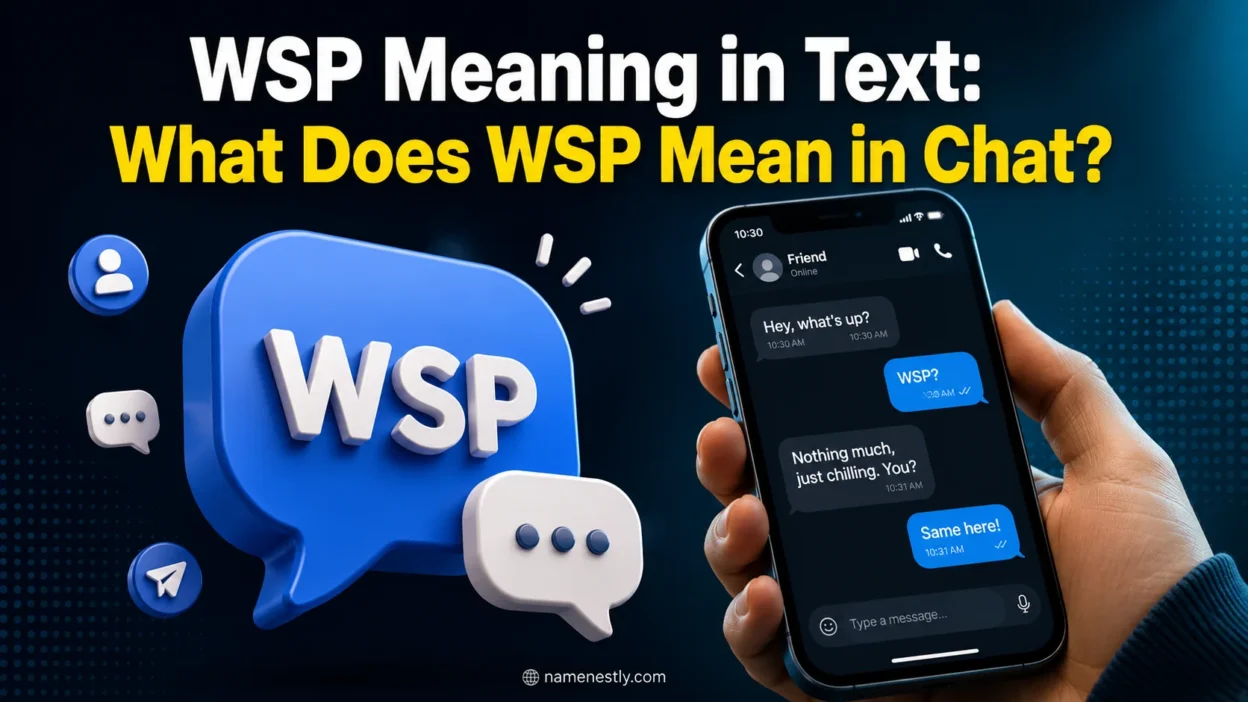
If someone sends you “WSP?” in a text message, they usually want to start a casual conversation. In most texting and social media contexts, WSP means “What’s up?” It works much like a quick greeting, a friendly check-in, or a simple way to ask what someone is doing.
Unlike formal questions, WSP feels relaxed and conversational. A friend might text “WSP?” after school, while someone you haven’t talked to recently might use it to reopen a conversation.
The meaning becomes even clearer when you look at the words around it. For example, “WSP tonight?” focuses more on plans, while “Hey WSP?” usually works as a simple greeting.
This guide explains the WSP meaning in text, how people use it, how to respond, and how it compares with similar abbreviations such as WYD and SUP.
Quick Answer: What Does WSP Mean in Text?
WSP usually means “What’s up?” in texting, messaging, and casual online conversations. People use it to greet someone, check in, ask what they’re doing, or open a conversation.
For example:
Person A: WSP?
Person B: Not much. Just watching a movie. You?
In this exchange, WSP doesn’t require a detailed answer. It simply creates an opening for conversation.
WSP Meaning at a Glance
| Term | Meaning | Common purpose | Tone |
| WSP | What’s up? | Greeting or check-in | Casual |
| WYD | What are you doing? | Asking about someone’s activity | Casual |
| SUP | What’s up? | Short greeting | Very casual |
| HBU | How about you? | Returning a question | Casual |
| HRU | How are you? | Asking about someone’s well-being | Casual |
Comparison Overview
WSP belongs to a large group of abbreviations people use to make digital conversations faster. However, these shortcuts don’t always carry exactly the same conversational purpose.
| Abbreviation | Full Meaning | Main Function | Example |
| WSP | What’s up? | Greeting or general check-in | “WSP?” |
| WYD | What are you doing? | Asking about current activity | “WYD tonight?” |
| SUP | What’s up? | Casual greeting | “Sup?” |
| HBU | How about you? | Returning a question | “I’m good. HBU?” |
| HRU | How are you? | Checking someone’s well-being | “Hey, HRU?” |
| NM | Not much | Common response to WSP | “NM, just relaxing.” |
The key distinction is simple: WSP is broad, while terms such as WYD often ask about one specific thing.
For example, “WSP?” could mean “How are things?” or “What are you up to?” depending on the conversation. “WYD?” more directly asks what you’re doing.
Main Differences Between WSP Meaning in Text
The WSP meaning in text can shift slightly depending on context. Its core meaning remains “What’s up?” but the intention behind the message can vary.
| Context | Likely meaning | Example |
| Friendly greeting | How are you? | “Hey WSP?” |
| Checking activity | What are you doing? | “WSP rn?” |
| Starting a chat | What’s going on? | “WSP bro?” |
| Checking plans | What are you up to? | “WSP this weekend?” |
| Reconnecting | How have you been? | “WSP? Long time.” |
So, don’t treat WSP as a rigid abbreviation with only one conversational purpose. Think of it as a flexible doorway into a casual conversation.
What Does WSP Stand For?
WSP stands for “What’s up?”
“What’s up?” has become a common informal greeting in English. It can ask about someone’s current situation without demanding a specific answer.
When people turn it into WSP, they simply remove the unnecessary words and keep the recognizable shorthand.
The abbreviation fits the way people communicate online. Texting often favors speed, especially when someone wants to send a quick message rather than type a complete sentence.
Why Do People Use WSP Instead of “What’s Up?”
People may choose WSP because it is:
- Short
- Easy to type
- Familiar in casual chats
- Appropriate for quick greetings
- Convenient on mobile devices
- Natural in informal online communities
The shortcut also gives a conversation a relaxed feel. Writing “What’s up?” sounds perfectly casual too, but “WSP?” feels even more abbreviated.
WSP Meaning in Text Messages
In ordinary text messages, WSP usually acts as a conversational opener.
Imagine a friend hasn’t messaged you all day. Instead of writing a complete sentence, they send:
“WSP?”
They might simply be saying hello. They could also be wondering what you’re doing or whether anything interesting is happening.
The surrounding messages usually reveal the intended meaning.
For example:
“WSP?”
“Not much. I’m at home.”
Here, WSP works as a general check-in.
Now consider:
“WSP tonight?”
“Probably nothing. Why?”
In this case, the question leans toward plans or activities.
WSP Can Work as a Conversation Starter
One major reason people use WSP is that it doesn’t require a complicated response.
You could answer:
- “Not much.”
- “I’m good. You?”
- “Just studying.”
- “Nothing really.”
- “Heading home.”
- “Just chilling.”
That flexibility makes WSP useful when someone wants to start talking without choosing a specific topic.
WSP Meaning in Chat and Social Media
On social platforms and messaging apps, WSP generally keeps the same casual meaning.
You may see it in:
- Direct messages
- Group chats
- Text messages
- Gaming conversations
- Casual social media conversations
- Online communities
The platform itself usually doesn’t create a special definition. Context matters more than the app.
For example, someone might write:
“WSP everyone?”
in a group chat. They’re probably greeting the group rather than asking each person for a detailed status report.
Likewise:
“WSP with you?”
usually invites the other person to explain what they’re doing or what’s happening.
How to Use WSP in a Text
Using WSP is easy because the abbreviation doesn’t require a complicated structure.
Starting a Conversation
WSP works especially well when you want to say hello without sounding formal.
Example:
“Hey, WSP?”
This message gives the other person an easy opening to respond.
Checking What Someone Is Doing
Sometimes WSP asks about someone’s current activity.
Example:
“WSP right now?”
The exact wording may vary, but the intention becomes more specific because of “right now.”
Checking In With Someone
You can also use WSP after noticing that someone seems quiet.
Example:
“WSP? Everything good?”
Here, the second sentence adds a clearer check-in.
Read More: Apostles Names: The 12 Disciples, and Biblical Stories
Continuing an Existing Conversation
WSP can restart a conversation after a gap.
Example:
“WSP? Haven’t talked in a while.”
This version combines a greeting with a reason for reaching out.
WSP Texting Examples
Realistic examples make the meaning easier to understand because WSP can feel slightly different from one conversation to another.
| Situation | Example |
| Greeting a friend | “WSP? How’s your day going?” |
| Asking about plans | “WSP tonight?” |
| Starting a chat | “Hey, WSP?” |
| Checking in | “WSP? You good?” |
| Reconnecting | “WSP? It’s been forever.” |
| Group greeting | “WSP everyone?” |
| Asking what’s happening | “WSP over there?” |
Short Conversation Example
Alex: WSP?
Jordan: Not much. Just got home.
Alex: Nice. You doing anything later?
Jordan: Probably gaming.
In this conversation, WSP simply opens the door. The actual topic develops afterward.
How to Reply to WSP
You don’t need a special response when someone sends WSP. A natural answer usually works best.
Casual Replies
If nothing important is happening, keep your answer simple.
- “Not much, you?”
- “Just chilling.”
- “I’m good. What’s up with you?”
- “Nothing much. How about you?”
- “Just watching TV.”
Busy Replies
If you’re occupied, you can mention what you’re doing.
- “Just working right now.”
- “I’m studying at the moment.”
- “Heading out.”
- “Busy with homework.”
- “About to eat.”
Replies That Continue the Conversation
If you want the conversation to continue, answer WSP and ask something back.
Them: WSP?
You: Just relaxing. How about you?
That small follow-up makes the exchange feel more natural.
If You Don’t Know What They Mean
Most of the time, WSP means “What’s up?” However, abbreviations can have different meanings in specialized contexts.
If the surrounding conversation doesn’t make sense, ask:
“What do you mean by WSP?”
Context is your best clue.
WSP vs. What’s Up?
WSP and “What’s up?” usually mean the same thing.
The primary difference is presentation.
| Feature | WSP | What’s up? |
| Length | Very short | Longer |
| Tone | Casual | Casual |
| Main use | Texting and online chats | Spoken and written conversation |
| Formality | Informal | Informal |
| Meaning | What’s up? | What’s up? |
“What’s up?” works naturally in spoken conversation too. WSP is mainly useful when someone wants a quick written version.
WSP vs. WYD
WSP and WYD overlap, but they aren’t identical.
WSP means “What’s up?” while WYD means “What are you doing?”
WYD focuses directly on someone’s activity.
For example:
WSP?
“Not much. Everything’s good.”
But:
WYD?
“I’m watching a movie.”
The first question is broader. The second one points toward a specific activity.
Quick WSP and WYD Comparison
| Feature | WSP | WYD |
| Full form | What’s up? | What are you doing? |
| Focus | General situation | Current activity |
| Typical use | Greeting/check-in | Asking what someone is doing |
| Tone | Casual | Casual |
| Can start a conversation? | Yes | Yes |
WSP vs. SUP
SUP is another casual shorthand for “What’s up?”
The two expressions have almost identical meanings.
| Abbreviation | Full phrase | Typical feel |
| WSP | What’s up? | Casual |
| SUP | What’s up? | Very casual |
You may see “sup?” in older or highly informal internet conversations. WSP also appears as a short digital greeting.
Neither abbreviation belongs in formal business writing.
Is WSP Formal or Informal?
WSP is informal.
It works well between friends, acquaintances, classmates, gaming friends, and people communicating casually online.
It generally doesn’t belong in:
- Business emails
- Job applications
- Academic papers
- Formal letters
- Professional reports
- Official documents
For example, sending “WSP?” to a close friend is completely natural.
Sending “WSP?” to a hiring manager would create a very different impression.
A better professional alternative would be something like:
“Hi, I hope you’re doing well. I wanted to follow up regarding our conversation.”
The difference isn’t about grammar. It’s about register, which means the level of formality appropriate for a situation.
Is WSP Still Used in Texting?
Yes. WSP remains understandable as a casual abbreviation because it represents a familiar phrase.
However, individual texting habits vary. Some people prefer complete words, while others use abbreviations heavily.
That means you shouldn’t assume everyone uses WSP regularly.
If someone sends “WSP?” and you’re familiar with texting abbreviations, the intended meaning is usually obvious. If the person rarely uses slang, they may simply prefer writing “What’s up?”
Does WSP Have Other Meanings?
WSP can represent other terms outside casual texting. The correct interpretation depends on the subject and surrounding conversation.
For example, an abbreviation can represent an organization, technical term, company name, or industry-specific expression. Those meanings shouldn’t automatically replace the common texting interpretation.
If someone messages:
“WSP?”
in a casual conversation, “What’s up?” is the natural interpretation.
If WSP appears inside a technical document, business discussion, or specialized community, look at the surrounding terminology before deciding what it means.
WSP Meaning on Different Platforms
The abbreviation generally keeps the same meaning across major messaging environments.
WSP Meaning on Snapchat
In a casual Snapchat conversation, WSP commonly works as a short form of “What’s up?”
A person may use it to start a chat or ask what you’re doing.
WSP Meaning on Instagram
On Instagram DMs, WSP can function as a quick greeting.
For example:
“WSP? Haven’t seen you online lately.”
The meaning comes from the conversation rather than from Instagram itself.
WSP Meaning on TikTok
Someone may use WSP in TikTok messages or comments when starting a casual interaction.
The surrounding words still determine the exact conversational intention.
WSP Meaning on WhatsApp
WhatsApp conversations often contain informal abbreviations. WSP can simply replace “What’s up?” in a quick message.
WSP Meaning in Gaming Chats
Gamers may use WSP as a fast greeting before discussing a match, strategy, or activity.
For example:
“WSP? You playing tonight?”
Here, the second sentence makes the purpose more specific.
Examples of WSP in Real Conversations
Seeing the abbreviation in different situations helps clarify how flexible it can be.
Conversation Between Friends
Sam: WSP?
Chris: Not much. Just chilling.
Sam: You playing later?
Chris: Yeah, probably.
Here, WSP simply opens the conversation.
Conversation Between New Acquaintances
Taylor: Hey, WSP?
Morgan: I’m good. Just finished class.
Taylor: Same here.
This use feels friendly without being overly formal.
Conversation After a Long Time
Jordan: WSP? It’s been a while.
Alex: Seriously. I’ve been busy with work.
Jordan: Same. We should catch up.
Here, WSP works as a reconnection message.
Group Chat Example
Mia: WSP everyone?
Chris: Just getting home.
Lena: Same here.
Mia: Anyone free later?
The abbreviation starts the group conversation without requiring a detailed response.
FAQs:
What does WSP mean in texting?
WSP usually means “What’s up?” People use it as a casual greeting, check-in, or conversation starter.
What does WSP stand for?
WSP stands for “What’s up?” It is an informal abbreviation commonly used in digital conversations.
How do you respond to WSP?
You can respond naturally with “Not much, you?” or explain what you’re doing. If you want to continue chatting, ask a question back.
Is WSP slang?
Yes. WSP functions as informal texting slang or shorthand for “What’s up?” It isn’t appropriate for most formal writing.
Is WSP formal or informal?
WSP is informal. It fits casual texts, chats, DMs, and online conversations rather than professional documents.
Conclusion:
The WSP meaning in text is usually simple: “What’s up?” People use it to greet someone, start a conversation, check what they’re doing, or casually ask how things are going. The abbreviation remains informal, so it fits naturally in texts, DMs, group chats, and other relaxed conversations. Remember the key distinction: WSP is broader than WYD. WSP can ask about someone’s general situation, while WYD specifically focuses on what they’re doing.